Who Is Known As The Father Of Vedic Mathematics?
Do you know who is known as the father of Vedic mathematics? This legendary Indian scholar passed his 1899 matriculation exam at the top of his class and later decoded sixteen ancient sutras from the Atharva Veda, completely revolutionising mental arithmetic forever.

Ever stop to think about how people thousands of years ago managed to measure the stars or build temples that still make architects scratch their heads? They didn't have calculators or apps. What they did have was Vedic math—a set of mental tricks pulled straight from ancient Indian texts. While we're busy letting our gadgets do the heavy lifting, the Vedas figured out shortcuts that make math feel almost like magic. But who is known as the father of Vedic Maths? In this article, we'll take a look at the life of this mathematician.
Who Is Known As The Father Of Vedic Maths?

The brilliant person behind this system is Swami Bharati Krishna Tirtha Ji. He was born on March 14, 1884, in a small village named Tirunelveli in Tamil Nadu. In his early days, he was known as Venkataraman Shastri. He came from a highly educated family; his father, Shri P. Narasimha Shastri, was a Tahsildar who later became a Deputy Collector.
Venkataraman was exceptionally smart, passing his matriculation exam from Madras University in January 1899 at the very top of his list. By the time he turned 20 in 1904, he had obtained a Master of Arts degree in seven different subjects simultaneously, including Sanskrit, Mathematics, English, History, Philosophy, and Science.
Because of his incredible speech skills, the Sanskrit Association of Madras honoured him with the title "Saraswati" when he was just 16 years old.
A Look At His Life
| Milestone | Details |
| Birth Date & Place | March 14, 1884 – Tirunelveli, Tamil Nadu |
| Childhood Name | Venkataraman Shastri |
| Forest Meditation | 1911 to 1918 (7 years in Sringeri forests) |
| Monastic Titles | Initiated into Sannyasa in 1919; became Shankaracharya of Govardhana Math in 1925 |
| Key Publication | Vedic Mathematics (Published posthumously in 1965) |
| Passing Date | February 2, 1960 |
What Are The Core Secrets Hidden Within Vedic Maths?
The whole system operates on a set of 16 Sutras (which are basically word-formulae) and 13 sub-sutras. Instead of forcing you to memorise long steps, these formulas allow you to solve big calculations by just looking at the pattern.
Academic studies from institutions like Ramanujan College highlight that these 16 principles cover everything from basic arithmetic to advanced calculus. Here are some of the most famous core secrets used to skip long manual calculations:
- Ekadhikena Purvena: This translates to "By one more than the previous one". It makes squaring any number ending in 5 super easy. For 65, you take 6, multiply it by "one more" (7) to get 42, then attach 25 at the end to get 4225.
- Nikhilam Navatashcaramam Dashatah: Meaning "All from 9 and the last from 10". This lets you subtract huge numbers from bases like 1,000 or 10,000 in a split second.
- Urdhva-Tiryagbhyam: This means "Vertically and crosswise". It is a master shortcut that lets you multiply any 2-digit or 3-digit numbers together in just one single line of text.
Some Simple Examples For Easy Understanding:
1. Ekadhikena Purvena ("By one more than the previous one")
This rule is used for squaring numbers that end in 5.
a) Example A: Square of 25 (25 x 25)
- Step 1: Look at the first digit, which is 2. Multiply it by "one more than itself", which is 3.
- So, 2 x 3 = 6.
- Step 2: Always write 25 at the end.
- Answer: Put them together to get 625.
b) Example B: Square of 85 (85 x 85)
- Step 1: Take the first digit, 8. Multiply it by "one more than itself", which is 9.
- So, 8 x 9 = 72.
- Step 2: Always write 25 at the end.
- Answer: Put them together to get 7225.
2. Nikhilam Navatashcaramam Dashatah ("All from 9 and the last from 10")
This rule is used to subtract any big number from base numbers like 100, 1,000, or 10,000. You subtract every digit from 9, except the very last non-zero digit, which you subtract from 10.
a) Example A: 1000 - 764
- Step 1: Subtract the first digit from 9 → 9 - 7 = 2.
- Step 2: Subtract the middle digit from 9 → 9 - 6 = 3.
- Step 3: Subtract the last digit from 10 → 10 - 4 = 6.
- Answer: Put the results together to get 236.
b) Example B: 10000 - 4312
- Step 1: Subtract 4 from 9 → 9 - 4 = 5.
- Step 2: Subtract 3 from 9 → 9 - 3 = 6.
- Step 3: Subtract 1 from 9 → 9 - 1 = 8.
- Step 4: Subtract the last digit 2 from 10 → 10 - 2 = 8.
- Answer: Put them together to get 5688.
3. Urdhva-Tiryagbhyam ("Vertically and crosswise")
This rule lets you multiply two-digit numbers in a single line by multiplying vertically and then diagonally.
a) Example A: 12 x 13
- Step 1 (Vertically on the right): Multiply the right digits → 2 x 3 = 6. This is your last digit.
- Step 2 (Crosswise): Multiply diagonally and add them up → (1 x 3) + (1 x 2) = 3 + 2 = 5. This is your middle digit.
- Step 3 (Vertically on the left): Multiply the left digits → 1 x 1 = 1. This is your first digit.
- Answer: Put them together to get 156.
b) Example B: 21 x 31
- Step 1 (Vertically on the right): Multiply the right digits → 1 x 1 = 1.
- Step 2 (Crosswise): Multiply diagonally and add → (2 x 1) + (3 x 1) = 2 + 3 = 5.
- Step 3 (Vertically on the left): Multiply the left digits → 2 x 3 = 6.
- Answer: Put them together to get 651.
Why Is He Called The Father Of Vedic Maths?
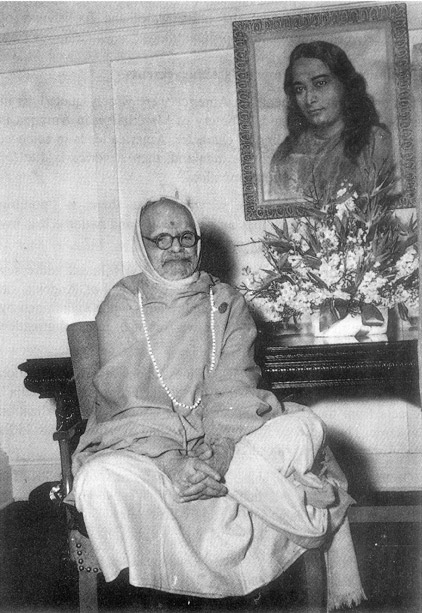
Source: Vedicmathforum.org
Swami Bharati Krishna Tirtha is called the "Father of Vedic Maths" because he single-handedly revived this ancient knowledge from total obscurity. Before his work, people thought the ancient texts only held spiritual songs. He spent over 3 decades of intensive research to unravel the mathematical truths hidden in the scriptures.
Between the years 1911 and 1918, he went away into deep meditation in the forests of Sringeri. It was during these 7 years that he carefully studied the Atharva Veda and reconstructed the entire system. Sadly, his original 16 volumes of handwritten work were completely lost or destroyed by a disciple.
Undeterred by this massive tragedy, he used his powerful memory to rewrite the entire essence into a single, comprehensive book before his passing. Without his personal sacrifice and brilliance, this ancient Indian heritage would have been permanently lost to time.
Why Are the Ancient Vedas Considered More Advanced Than Modern Technology?
Modern computers require complex binary codes and millions of lines of programming to perform big computations. Our brain has to do a lot of hard work to process traditional math steps. However, the ancient Vedas are built directly around how nature and the human mind naturally work. The calculations run linearly, which reduces mental fatigue significantly.
According to research published in the International Journal of Engineering Research and Technology (IJERT), traditional math procedures require a lot of paper and consecutive steps. In contrast, the Vedic system converts those lengthy calculations into simple mental patterns.
The data from comparative studies show that using these ancient techniques reduces human error rates to almost negligible percentages. This is because students can easily verify their answers using alternative sutras. While human-made technology requires a power source and continuous hardware updates, the Vedic system utilises natural logic that stays fast forever.
When and How Was This Ancient Knowledge Reclaimed?
For hundreds of years, people thought the Vedas only contained spiritual hymns and rituals. Many Western scholars in the 19th and early 20th century dismissed the idea that these texts had advanced science inside them.
Swami Bharati Krishna Tirtha changed all that during his intensive research period from 1911 to 1918. He noticed some hidden botanical and mathematical appendices in the Atharva Veda that others ignored.
He realised that the words were written in a special code language where letters represented numbers. By decoding these terms, he unlocked the 16 sutras that had been forgotten for thousands of years. After reclaiming this knowledge, he spent years travelling across India and even visited the United States in 1958 to give lectures.
His book Vedic Mathematics, published in 1965 by Motilal Banarsidass, became the official record that proved ancient India possessed highly advanced mathematical systems long before modern Europe did.
Where Can You Apply Vedic Maths to Speed Up Your Everyday Calculations?
You can use Vedic math almost anywhere you need to handle numbers quickly, especially in school and competitive exams. When you look at examinations like CAT, UPSC, or banking tests, time management is the most critical factor. Traditional calculation methods take up too much space and time on rough sheets.
Statistical data from educational surveys show that learning Vedic math can increase your calculation speed by 10 to 15 times compared to conventional schooling methods. That means a student can solve an arithmetic problem in just 2 to 3 seconds instead of spending a full minute on it.
It is highly useful for checking your answers during examinations to make sure you get 100% accuracy. Today, many schools are adding these 16 tricks into their daily curriculum because they help young kids overcome their fear of math and build a strong memory.

Kriti Barua is a skilled digital journalist and communications professional with 4+ years of experience, currently writing for the General Knowledge section at Jagran New Media. She has established herself as a subject matter expert in History, Geography, Trending National and International News, Sports, Science, and Defence, producing clear, reliable, and search-optimised content that connects with readers worldwide.
Kriti holds a BA degree from Delhi University and a one-year diploma in TV Production and Journalism, an academic background that adds research depth and strong storytelling instincts to her writing. Her experience spans brand writing, content marketing, and digital media, giving her a sharp understanding of what makes content both helpful to readers and visible in search.
At Jagran New Media, she applies this expertise to national and international news coverage, query-based articles, and in-depth pieces across her specialist subject areas. Her content is defined by easy language, factual accuracy, strong keyword strategy, and reader-friendly storytelling.


