Digital India BHASHINI, GeM Sign MoU for Multilingual Access Across India's Public Procurement Ecosystem: Key Details
Digital India BHASHINI and Government e-Marketplace (GeM) have signed an MoU in a bid to strengthen multilingual digital capabilities across India's public procurement ecosystem. Here are the complete details.
Digital India BHASHINI and Government e-Marketplace (GeM), on 15 June 2026, signed an MoU in a bid to strengthen multilingual digital capabilities across India's public procurement ecosystem. The Memorandum of Understanding (MoU) has been signed under 'BHASHINI for Seva/Sanchalan - A BHASHINI Sahayogi Program'.
In June 2025, the Centre for Railway Information System (CRIS) and Digital India BHASHINI also signed an MoU to collaborate on the development and deployment of multilingual artificial intelligence solutions across key public-facing railway platforms. Another MoU was signed in June 2025 between the Ministry of Panchayati Raj and BHASHINI to harness AI-powered language translation technologies in Panchayati Raj governance.
Did you know? In January 2025, Tripura became the 1st North-Eastern state as well as the 8th Indian state to sign an MoU with Digital India BHASHINI for multi-lingual governance.
What are the key features of the MoU signed between Digital India BHASHINI and GeM?
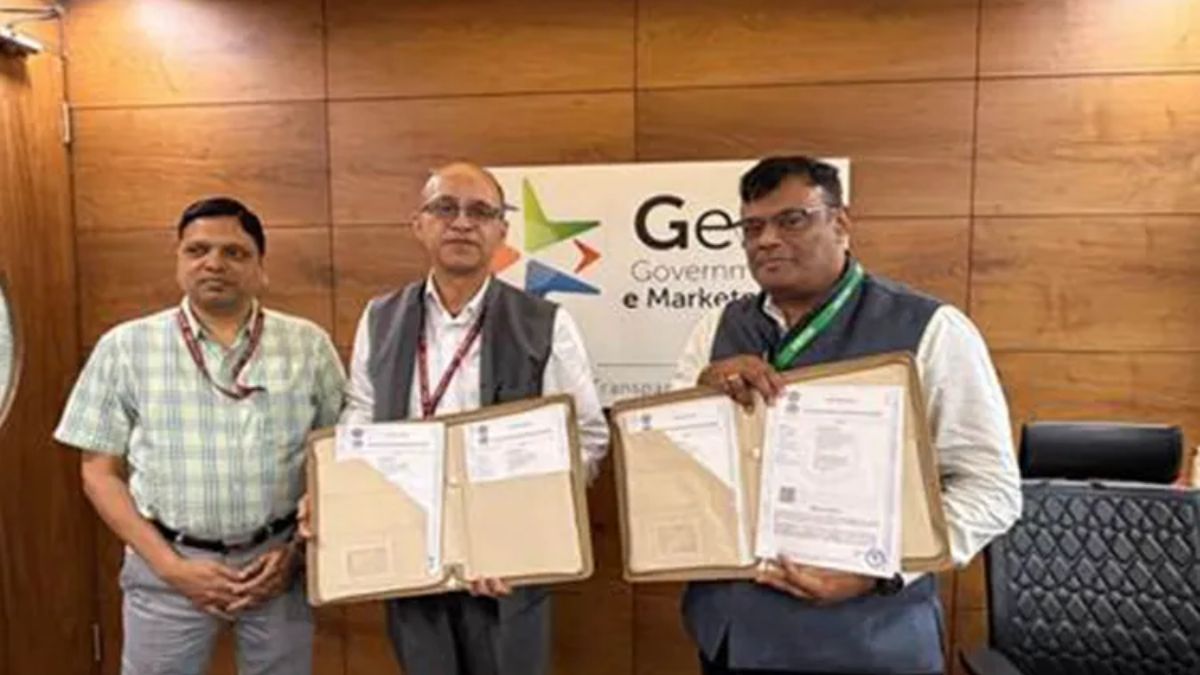
The MoU signed under BHASHINI for Seva/Sanchalan aims to integrate AI-powered language technologies across GeM's digital platforms.
The collaboration will jointly work towards promoting multilingual governance and enabling stakeholders to access information and services in their preferred language.
The initiative aims at advancing Voice First language technology infrastructure, generative AI solutions and seamless interaction across 22 officially recognised Indian languages and other Indian languages.
BHASHINI and GeM aim to eliminate language barriers and Ease of Doing Business (EoDB) by deploying multilingual technologies, thereby expanding acesss to government procurement opportunities and participation from businesses, particularly micro, small, and medium enterprises (MSMEs), startups, entrepreneurs, and local enterprises.
The collaboration will jointly work for the development of a more inclusive public procurement ecosystem and deployment of multilingual digital public resources through initiatives including BHASHINI Udyat, Mitra, Appmitra, Sahyogi, and Pravakta.
The initiative will aid translation API integration, multi-lingual glossary creation, domain-specific language model development, voice bots, voice enabled technologies, reference applications, and linguistic dataset development.
The initiative will work towards strengthening multilingual AI models and language technologies for a more inclusive langauge accessbilitiy across procurement services, seller onboarding, communication, and platform navigation.
The initiative also aims at encouraging language data contributions through Bhashadaan, launching awareness initiatives, promoting capacity-building efforts and wider adoption of multilingual AI tools across stakeholders and institutions associated with the GeM ecosystem.
The collaboration will explore initiatives aimed at enabling broader adoption of language technologies, strengthening multilingual digital infrastructure, and promoting innovation across the public procurement ecosystem.
What is BHASHINI?
BHASHINI full form is BHASHa INterface for India. The Digital India BHASHINI is a National Language Digital Public Infrastructure under the Digital India Corporation (DIC), Ministry of Electronics and Information Technology (MeitY). BHASHINI is India's national initiative for AI-driven multilingual digital inclusion. BHASHINI was launched by PM Narendra Modi on 4 July 2022.
BHASHINI aims to scale speech and text-based AI services across Indian languages for governance, public platforms, and insitutions. BHASHINI has a massive language reach. It supports 36 Indian text languages, 23 Indian voice languages, and 35 international languages. It currently supports over 800 government websites and processes more than 15 million inferences daily.
BHASHINI relies on the National Hub for Language Technology (NHLT) and crowdsourcing initiatives like Bhashadaan to drive dataset creation, open-source innovaiton, and multilingual AI research.

Roopashree Sharma is an experienced broadcast journalist with over 7 years of experience, specialising in beats including geopolitics, defence, and general awareness. She has worked in the roles of correspondent and producer for leading media houses, including Zee, WION, and Economic Times. Currently serving as Deputy Manager – Editorial at Jagran New Media, she produces explainer articles and videos for the General Knowledge (GK) section of the Jagran Josh (English) portal. For inquiries, contact her at roopashree.sharma@jagrannewmedia.com.


