Advancing vs. Retreating Monsoon: Definition, Rainfall, Comparison, and Differences
Learn the differences between Advancing and Retreating Monsoon in India. Understand wind direction, rainfall patterns, months and geography behind it.

One of the distinctive features of India’s climate is the seasonal movement of the monsoon winds. Every year, the weather of the land passes through two distinct phases that are called the Advancing Monsoon (which is also known as the Southwest Monsoon) and the Retreating Monsoon (also called the Northeast Monsoon).
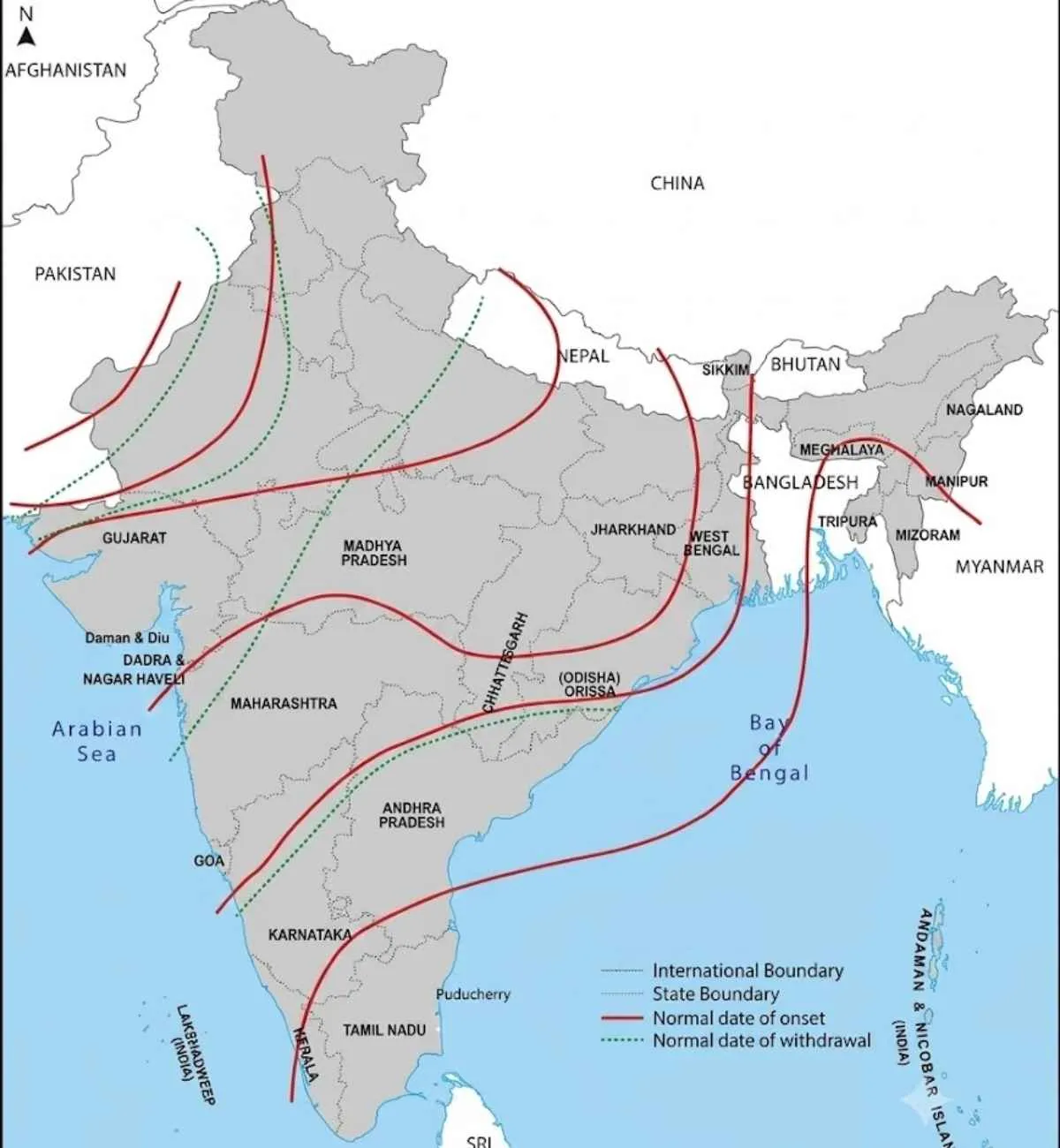
The Advancing Monsoon is associated with the onset of the rainy season that lasts from June to September in most of India whereas the Retreating Monsoon indicates the recession of the winds occurring during the months of October and November.
What is the Advancing Monsoon?
The Advancing Monsoon often known as the Southwest Monsoon signifies the arrival of the rainy season in India. It occurs between June and September and contributes significantly to the annual rainfall in the country.
-
Mechanism: Summer heat causes excessive heating of northern India, resulting in a low-pressure area. Moist wind moves from the elevated pressure ocean region to northern India.
-
Branches: The monsoon divides itself into two major branches:
-
Arabian Sea Branch: Hitting the Western Ghats, this branch brings heavy rainfall in coastal areas like Kerala, Goa, and Maharashtra.
-
Bay of Bengal Branch: It travels towards West Bengal and Northeastern India.
What is the Retreating Monsoon?
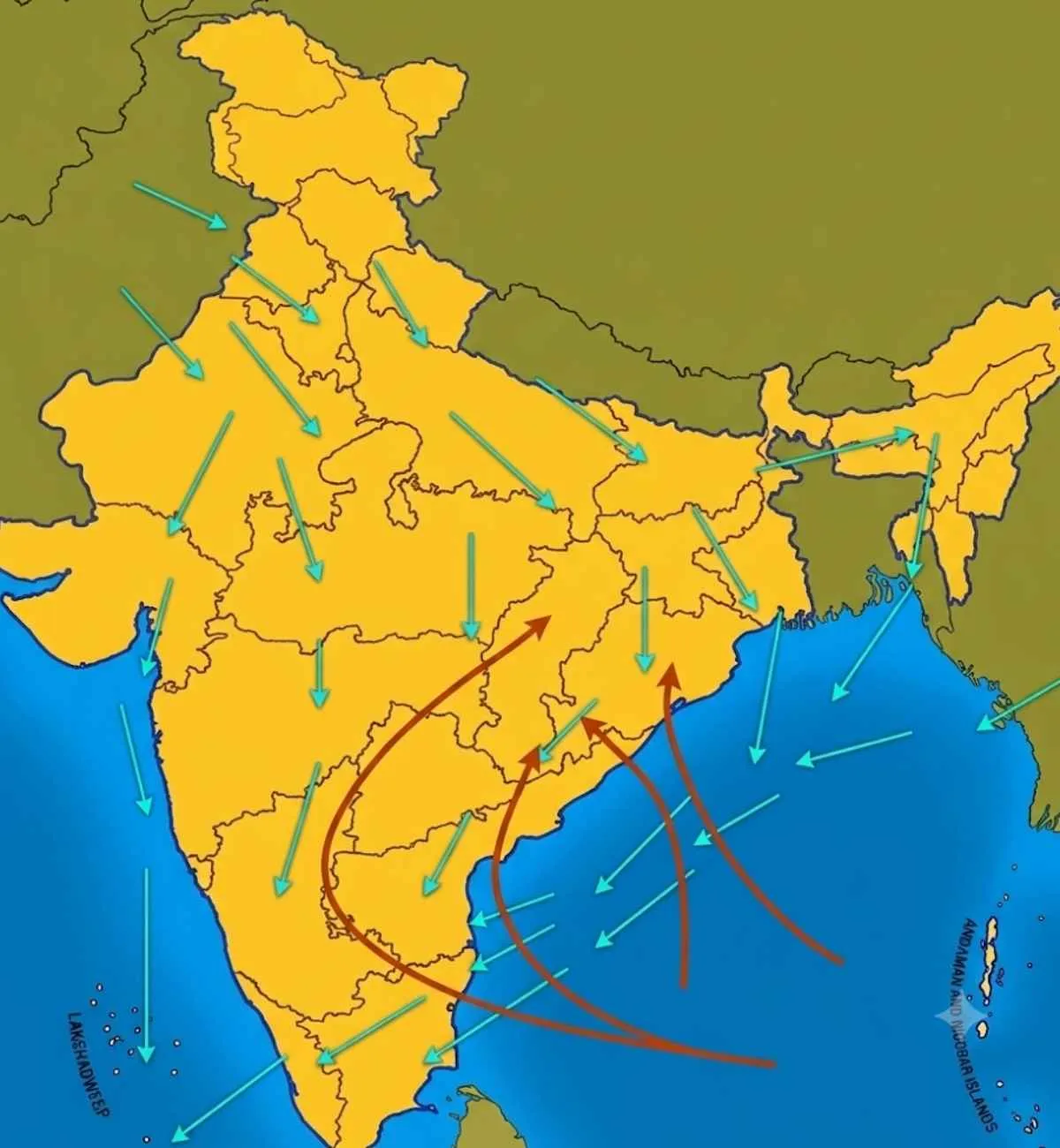
Retreating Monsoon is another name for Northeast Monsoon and occurs in two months, October and November. This is the time when the winds of the monsoon start pulling back from the northern part of India.
-
Meachnism: With the arrival of winter, the northern plains become cooler and are transformed into high pressure area, creating low-pressure trough which moves southwards towards Bay of Bengal.
-
Direction of Winds: The winds are reversed now and blow from the land toward the sea (Northeast to Southwest).
-
October Heat: The change from hot rainy season to dry weather is responsible for hot and humid conditions known as October Heat.
-
Rainfall in Tamil Nadu: The dry winds blowing over Bay of Bengal get moisture while coming and hit the Coromandel Coast creating heavy rainfall in Tamil Nadu and Coastal Andhra Pradesh.
Advancing Monsoon vs. Retreating Monsoon
| Feature | Advancing Monsoon (Southwest Monsoon) | Retreating Monsoon (Northeast Monsoon) |
| Duration / Months | June to September | October to November |
| Wind Direction | Southwest to Northeast (Sea to Land) | Northeast to Southwest (Land to Sea) |
| Moisture Content | High moisture content; brings heavy rainfall across most of India | Mostly dry; picks up moisture only over the Bay of Bengal |
| Pressure System | Low pressure over North India; High pressure over Indian Ocean | High pressure over North India; Low pressure over Bay of Bengal |
| Primary Affected Regions | Western Ghats, Northeast India, Indo-Gangetic Plains | Coromandel Coast (Tamil Nadu, Andhra Pradesh), Odisha |
| Associated Phenomena | Monsoon burst, severe thunderstorms | "October Heat", tropical cyclones in Bay of Bengal |
| Contribution to Annual Rainfall | 75%–80% of India's total rainfall | 10%–15% of India's total rainfall (crucial for Tamil Nadu) |

Manisha Waldia is a distinguished content strategist with 5 years of experience crafting premium educational content for UPSC and State PCS, with a focus on deep conceptual analysis across Polity, Geography, History, and Environment. She currently brings this expertise to Jagran Josh, where she covers major national and international events, current affairs, and static general knowledge. Over her career, Manisha's specialized insights have led her to curate high-impact materials and serve as a UPSC Mains answer-evaluator for India’s top institutes—including Drishti IAS, Shubhra Ranjan IAS, Study IQ, GS Score, and PWonlyIAS. She has also worked alongside leading NGOs like Oxfam India and Avani Kumaon.
Contact: manisha.waldia@jagrannewmedia.com


![[LIVE] RRB Group D Answer Key 2026: Download CBT Response Sheet PDF - Direct Link Shortly](https://img.jagranjosh.com/images/2026/September/792026/rrb-group-d.jpeg)

![[OUT] EMRS Tier 2 Result 2026 Live: Download PRT, TGT and PGT Result PDF at nests.tribal.gov.in](https://img.jagranjosh.com/images/2026/August/3182026/EMRS-Tier-2-Result-2026.jpg)