Total Solar Eclipse 2026 Path Tonight Sweeps Europe: Where to Watch the Rare Celestial Event
Millions of skywatchers are preparing for the total solar eclipse on August 12, 2026. The path of totality will sweep across Greenland, Iceland, and Spain. Here is where you can view this rare celestial phenomenon, key city timings, and safe observation guidelines.
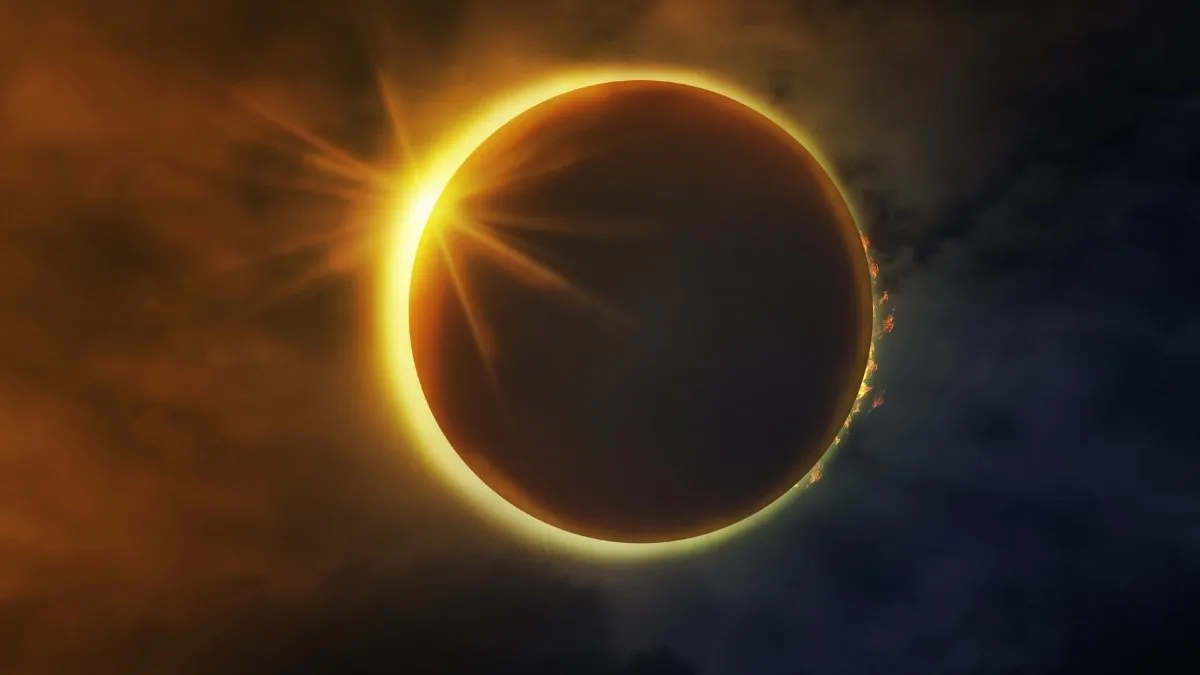
People around the world are checking their calendars for the 2026 total solar eclipse and are wondering if it falls on August 12 or August 13. Official astronomical reports from NASA confirm the total solar eclipse in 2026 happens on Wednesday August 12th.
But the celestial event takes place during the early morning of August 13 for observers in parts of Asia and Australia because of differences in time zones.
Read more about how and when to watch the upcoming solar eclipse based on its visibility across different parts of the world to resolve the confusion around its occurrence.
Solar Eclipse 2026 Exact Universal Timing and Key Phases
The entire sky event takes just over four hours from start to finish. The Moon starts blocking the Sun over the northern Arctic. Then it will move across Greenland, Iceland, and Spain.
| Solar Phase | Coordinated Universal Time (UTC) | Eastern Daylight Time (EDT) |
| Partial Eclipse Begins | 15:34 UTC (Aug 12) | 11:34 AM EDT |
| Full Eclipse Begins | 16:58 UTC (Aug 12) | 12:58 PM EDT |
| Peak of Solar Eclipse (Maximum Eclipse) | 17:46 UTC (Aug 12) | 1:46 PM EDT |
| Full Eclipse Ends | 18:34 UTC (Aug 12) | 2:34 PM EDT |
| Partial Eclipse Ends | 19:57 UTC (Aug 12) | 3:57 PM EDT |
The longest period of total darkness will last 2 minutes and 18 seconds which is going to occur off the coast of Iceland.
On Aug. 12, a total solar eclipse will cross Iceland and Spain. NASA will be there!
— NASA Solar System (@NASASolarSystem) August 5, 2026
The U.S. won’t see totality this time, so we’re bringing the science to you. Follow along this week! ☀️https://t.co/gWolno6fNN pic.twitter.com/4ROPK2aHt9
Global Visibility Status of the Total Solar Eclipse 2026
Only people standing inside a narrow strip on Earth's surface will see the Moon completely block the Sun. Millions of others will only see a partial eclipse.
- Full Dark Path: Greenland, Iceland, and parts of Spain.
- Partial View: Western Europe, eastern parts of the United States and Canada, and North Africa.
- No View: India, most of Asia, and South America cannot see the eclipse because it will be nighttime in those regions.
In Spanish cities like Valencia and Madrid the full eclipse will happen late in the evening which is right before sunset.
How to Watch Free Live Coverage of Eclipse Online
If you live in a region where the eclipse is not visible you can still watch it live on your phone or computer.
NASA and space observatories in Europe will host free live video feeds on YouTube. Broadcasts start around 1:15 p.m. EDT on August 12. It will show telescope views from Iceland and Spain.
This will be the first total solar eclipse visible from mainland Europe since 1999. If you plan to watch the skies or tune in online compare your local clock against UTC to make sure you catch the peak times.

Harshita Singh is an education and general knowledge journalist with over 5 years of experience in educational writing. Specializing in US affairs and GK, Harshita has a track record of breaking down intricate geopolitical and historical subjects into clear, digestible insights for learners. Her strong background in text analysis, coupled with a Bachelor of Arts (Hons) in English from the University of Delhi, helps her produce authoritative, thoroughly researched content that empowers readers to engage confidently with global current affairs. For inquiries or academic insights, you can reach out to her directly at harshita.singh@jagrannewmedia.com.