India’s art history goes back hundreds of years. From the murals in the Ajanta caves to the bright folk art of Madhubani, Indian art comes in many forms. Artists like Nandalal Bose and Amrita Sher-Gil played a significant role in shaping this tradition.
Their paintings capture the spirit of India, mixing old themes with new styles. Today, many of their works are recognised worldwide as icons of Indian culture.
But one artist stood out above the others. He was more than a painter; he was also a poet, musician, and thinker who transformed Indian art.
Do you know who is called the Renaissance Man of India? In this article, we'll explore his life and his remarkable work.
ALSO READ| Who is Known as the Father of Mathematics?
Who is Known as the Renaissance Man of India?
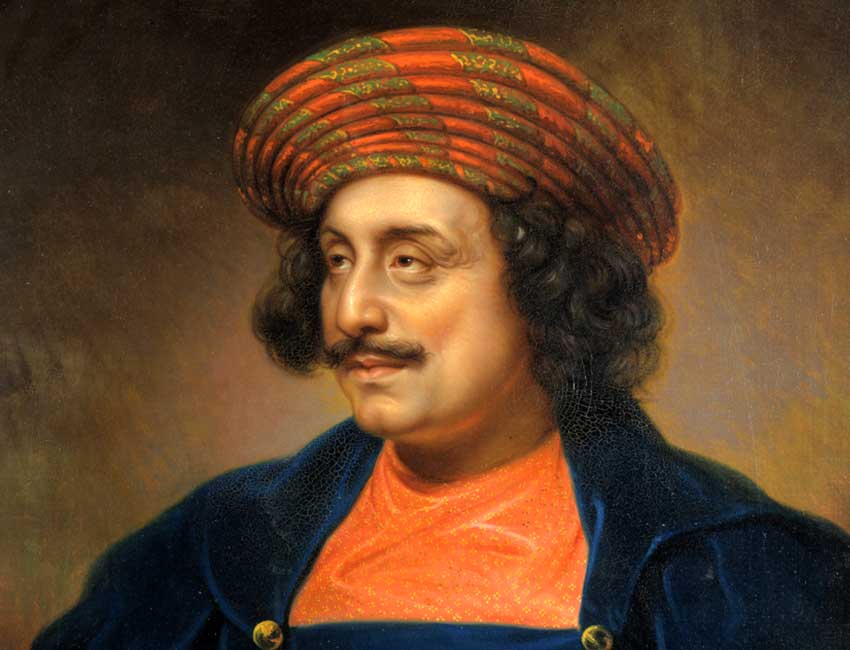
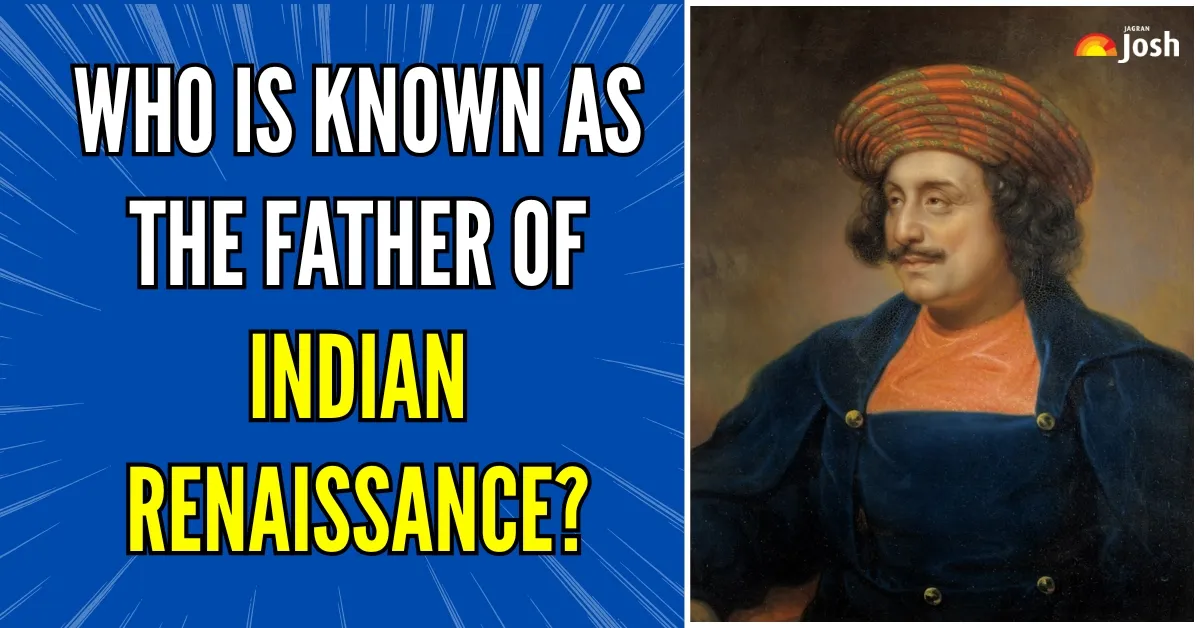
Raja Ram Mohan Roy was a great scholar and a social reformer. He played a vital role in changing Indian society during the 1800s. Because of his modern ideas, he is often called the "Father of the Indian Renaissance".
i. Early Life and Education
- Birth: He was born on May 22, 1772, in a village in Bengal.
- Studies: He was a very bright student and learnt many languages, such as Sanskrit, Arabic, Persian, and English.
- Knowledge: By studying different religions and Western science, he developed a logical way of thinking. This helped him see the need for change in his own country.
ii. Major Contributions to India
- Social Reform: He fought against old, harmful customs. His biggest achievement was helping to ban Sati, a practice where widows were burnt alive.
- Education: He believed in modern education. He helped start the Hindu College in Kolkata to teach science and literature.
- Brahmo Samaj: He founded the Brahmo Samaj. This was a group that promoted the worship of one God and fought against idol worship and the caste system.
- Women's Rights: He spoke up for women's rights, including the right to inherit property and to receive an education.
iii. Timeline of Key Events of Raja Ram Mohan Roy’s Journey
Raja Ram Mohan Roy wanted more than just new laws; he wanted people to think differently. He believed society could only be strong if it treated everyone with dignity and reason, regardless of gender or caste.
| Year | Milestone | Importance |
| 1772 | Birth | Born in Radhanagar, Bengal, into a traditional family. |
| 1803–1814 | East India Company | Worked with the British, which helped him learn English and Western politics. |
| 1814 | Atmiya Sabha | Started this "Society of Friends" in Kolkata to discuss religious truth. |
| 1817 | Hindu College | Helped David Hare set up this college to bring modern education to India. |
| 1821 | Sambad Kaumudi | Launched this Bengali newspaper to spread social awareness. |
| 1828 | Brahmo Sabha | Founded this group (later known as the Brahmo Samaj) to reform Indian religion. |
| 1829 | Abolition of Sati | His hard work led to the legal ban on the practice of Sati. |
| 1830 | Title of "Raja" | The Mughal Emperor gave him the title "Raja" and sent him to England. |
| 1833 | Passing Away | He died in Bristol, England, leaving behind a modern India. |
Why is Rajaram Mohan Roy regarded as the Father of the Indian Renaissance?

Source: Shagun News India
Raja Ram Mohan Roy is known as the Father of the Indian Renaissance because he was the first to inspire a modern intellectual awakening in India.
In the early 1800s, Indian society was marked by many strict superstitions and old customs. He helped guide India from the medieval period into modern times. Here is why he holds this title:
a) He Pioneered Social Reform
Before his time, many harmful practices were deeply rooted in society. He didn't just talk about change; he fought for it legally and socially.
- The Abolition of Sati: His most famous achievement was the campaign against Sati (the practice of widows immolating themselves). Because of his efforts, the British government banned it in 1829.
- Women’s Rights: He was a vocal advocate for women's education and their right to inherit property, a revolutionary idea at the time.
b) He Introduced Modern Education
He believed that for India to progress, people needed to study more than just traditional religious texts.
- Western Science: He promoted the study of English, mathematics, physics, and chemistry.
- Educational Institutions: He helped establish schools and colleges, such as the Hindu College in Calcutta, to impart a modern, scientific outlook to Indian students.
c) He Reformed Religion
He wanted to strip away the superstitions that had clouded original religious teachings.
- Monotheism: Through the Brahmo Samaj, he preached the worship of one God and moved away from idol worship and complex rituals.
- Equality: He used ancient scriptures to argue that the caste system and untouchability were not essential to religion, promoting equality for all.
d) He Was the First "Modern Man" of India
- Journalism: He founded some of the first newspapers in India (such as Sambad Kaumudi) to raise awareness and discuss public issues.
- Political Awareness: He was the first to ask for the "Indianisation" of the government and the separation of the judiciary from the executive branch.
In essence, he revived the Indian spirit by combining the strengths of Indian philosophy with Western logic and science. The word 'Renaissance' itself means rebirth.
IN CASE YOU MISSED| Who is Known as the Father of Ayurveda?
Indian Society: Before and After Raja Ram Mohan Roy
Raja Ram Mohan Roy changed the mindset of the Indian people by showing them the Power of the Press. He launched newspapers to reach ordinary people. For many, this was the first time they learned about their rights.
Further, he encouraged people to question things and not just accept old traditions without thinking.
Additionally, he showed that India could learn useful things from the West, such as science, while still valuing its own spiritual traditions.
| Feature | Before his Reforms | After his Reforms |
| Social Customs | Practices like Sati (widow burning) were common. | Sati was abolished by law in 1829. |
| Education | Mostly focused on traditional religious texts. | Focused on Science, Maths, and English. |
| Women's Status | Women had no rights to property or school. | Voices were raised in support of women's education and inheritance rights. |
| Religion | Many superstitions and complex idol worship. | Moved toward monotheism (worship of one God). |
| Caste System | Very rigid and divided the people. | Promoted the idea of equality for all humans. |
What is the meaning of the Renaissance?
The word "Renaissance" means "rebirth". This period in history saw people move away from old superstitions and start thinking more logically.
During this time, art, science, and literature thrived, and people began to value reason, education, and progress rather than clinging to outdated traditions.
WHAT'S NEXT| Who Is Known As The Father Of History?





Comments
All Comments (0)
Join the conversation