Meet the $150,000-a-Kilo Fungus That Turns Caterpillars Into Zombies Before Growing Out of Their Heads
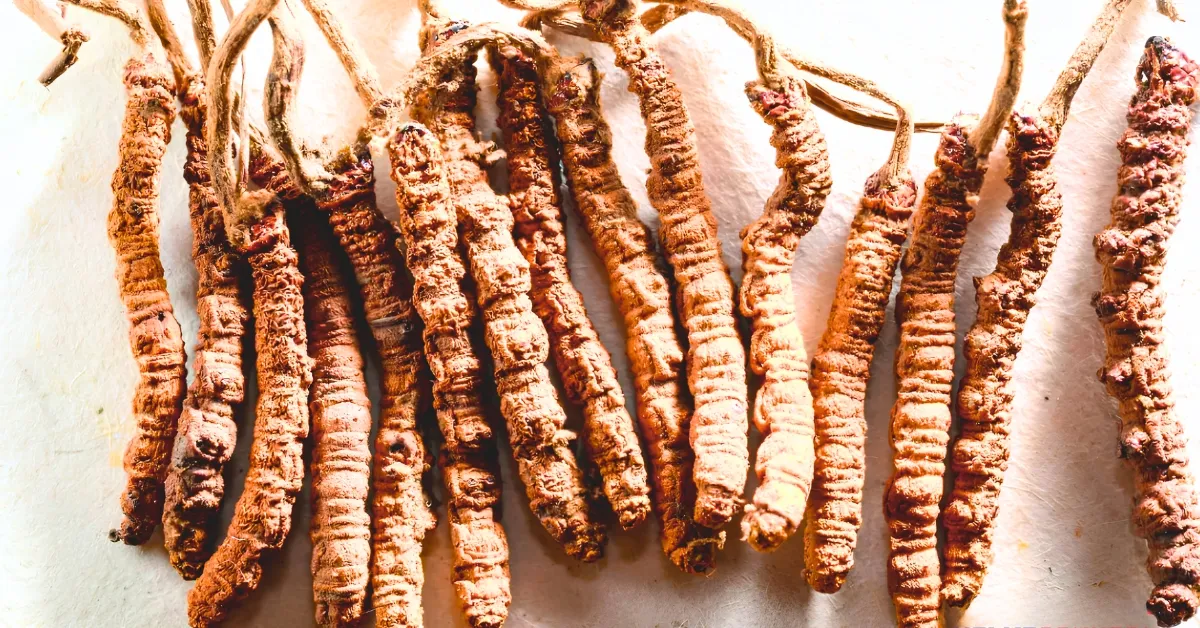
Do you know why yarsagumbu, a rare fungus, is called himalayan gold? Gram for gram, this bizarre parasite can cost up to $50,000 per kilo—frequently beating the price of real gold. It only grows above 3,000 meters. Let's discover why
Key Points
- Ophiocordyceps sinensis, a 'zombie fungus,' infects Himalayan ghost moth caterpillars.
- Its global market value reached $1.45 billion in 2026, projected to hit $2.15 billion by 2030.
- High value stems from uncultivable nature, extreme habitat, and high Traditional Chinese Medicine demand.
When you think of fungus, you probably think of mushrooms on your pizza or the mould that spoils your bread. But did you know that fungi are some of the most fascinating living things on earth? They do not grow like plants from seeds. Instead, they grow from tiny microscopic specs called spores. They spread silently underground or in the air, waiting for the perfect spot to land and grow. Most fungi just eat dead wood or leaves, but there is one super weird "zombie fungus" that does something totally out of this world. It literally takes over a live caterpillar's body and grows right out of its head! It sounds like a scary movie, but it is real, and it is the most expensive fungus on the planet. In this article, we'll take a look at the bizarre life of this creature, why it costs a fortune, and how it compares to real gold.
How Does a Fungus Turn a Caterpillar Into a Mushroom? (The Bizarre Life Cycle Explained)
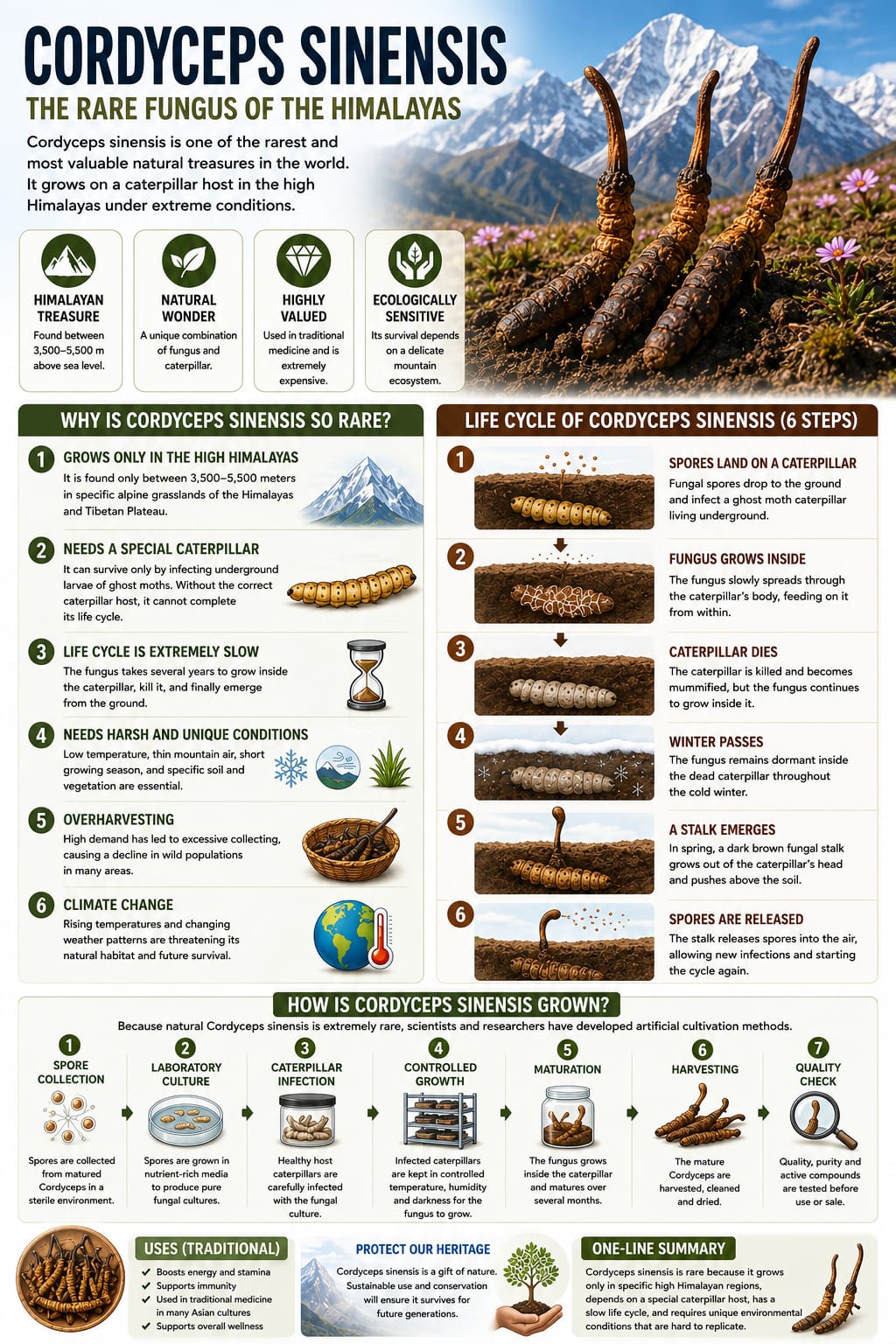
This strange creature is scientifically called Ophiocordyceps sinensis, but people usually call it Cordyceps, or the "caterpillar fungus". In India, it is known by the local name Keeda Jadi, which translates to "insect herb". Its life cycle is incredibly fascinating and a bit spooky.
Everything starts under the ground in the cold Himalayan mountains. Ghost moth caterpillars live in the soil here. During the summer, the fungus releases tiny spores into the air and dirt. If a caterpillar accidentally breathes in a spore or gets it on its skin, the infection begins.
Once inside, the fungus behaves like a puppet master. It eats the caterpillar from the inside out while it is still alive! But it keeps the insect just alive enough to do one final task.
As winter turns to spring, the fungus forces the zombie caterpillar to climb up toward the surface of the ground. The caterpillar dies just a few centimetres below the grass, with its head pointing straight up.
When spring arrives, a dark brown, stick-like mushroom grows right out of the caterpillar’s forehead, poking up through the dirt into the open air. Local villagers look for these tiny sticks in the grass to harvest them.
Why Is This Fungus So Expensive? (Hint: It's Not Just Rarity)
You might wonder why people pay massive amounts of money for a dead bug with a mushroom stuck to its head. According to global market reports published in 2026, the market value for Cordyceps sinensis reached a huge $1.45 billion. It is expected to grow even bigger, up to $2.15 billion by the year 2030! There are three big reasons why the price is so incredibly high:
1. It Cannot Be Artificially Cultivated at Scale
Scientists are great at growing normal mushrooms in factories. However, they have never truly figured out how to reliably grow high-grade wild Ophiocordyceps sinensis in a lab on a commercial scale.
You need the exact live caterpillar, the exact soil bacteria, and the exact wild environment. Because it cannot be mass-produced in a factory, the world depends entirely on what people can find by hand in the wild.
2. It Grows Only in Extreme, Narrow Conditions
This fungus is extremely picky about its home. It only grows in the alpine regions of the Himalayas, across regions like Tibet, India, Nepal, and Bhutan. You can only find it at altitudes between 3,000 and 5,000 meters above sea level. The air up there is very thin, and the weather is freezing. Harvesters have to crawl on their hands and knees for hours in the cold just to find a few pieces.
3. Sky-High Demand in Traditional Medicine
For hundreds of years, Traditional Chinese Medicine (TCM) has treated this fungus like a magical health booster. People believe it cures kidney problems, gives you immense energy, and boosts your immune system.
Because of rising wealth in Asian markets and global wellness trends, the demand has exploded. Since the supply is very low but millions of people want it, the prices keep climbing higher and higher every year.
Gold vs. Cordyceps: Which Is Actually Worth More by Weight?

Let us look at some fun, mind-blowing numbers to see how this fungus stacks up against real gold.
- Gold is usually considered the ultimate symbol of wealth. But if you compare them gram for gram, the caterpillar fungus easily wins the race.
- High-quality wild Cordyceps can sell for anywhere between $20,000 and $50,000 per kilogram, depending on the size and grade.
- That means a single gram of premium wild caterpillar fungus can easily cost between $30 and $50 or more on international markets.
To give you a clearer picture of this massive luxury market, let us look at how the data breaks down:
| Metric | Wild Cordyceps Sinensis | Standard Cultivated Fungi (Militaris) |
| 2026 Global Market Size | Around $1.45 Billion | Part of a $1.57 billion market |
| Price per Kilogram | Up to $50,000 (Premium Wild) | $85 to $300 (Lab Grown) |
| Primary Sourcing Method | Hand-harvested in the high Himalayas | Grown on grain substrates in labs |
| Main Consumer Market | Luxury Traditional Medicine | Fitness & Dietary Supplements |
Because the wild version is worth so much, it has completely changed the economy of small mountain villages. In some remote Himalayan areas, gathering this fungus accounts for more than 75% of a family's annual income. Villagers can earn more money in the two-month harvesting season than they would earn during the rest of the year doing regular jobs.
Conclusion
The story of the caterpillar fungus shows us how wild and surprising nature can be. A tiny spore turns an ordinary underground insect into a biological treasure that is valued more than precious metals. It is a perfect mix of extreme biology, harsh mountain geography, and ancient medical traditions. Because it is so difficult to find and impossible to farm in labs, this zombie mushroom will likely keep its title as the most expensive fungus in the world for a long time. It truly is the "living gold" of the mountains.

Kriti Barua is a skilled digital journalist and communications professional with 4+ years of experience, currently writing for the General Knowledge section at Jagran New Media. She has established herself as a subject matter expert in History, Geography, Trending National and International News, Sports, Science, and Defence, producing clear, reliable, and search-optimised content that connects with readers worldwide.
Kriti holds a BA degree from Delhi University and a one-year diploma in TV Production and Journalism, an academic background that adds research depth and strong storytelling instincts to her writing. Her experience spans brand writing, content marketing, and digital media, giving her a sharp understanding of what makes content both helpful to readers and visible in search.
At Jagran New Media, she applies this expertise to national and international news coverage, query-based articles, and in-depth pieces across her specialist subject areas. Her content is defined by easy language, factual accuracy, strong keyword strategy, and reader-friendly storytelling.


