Why Is It Snowing In The Atacama Desert? Dry Land Turns White in Rare Winter Weather And El Niño Effect
The Atacama Desert turned white after rare winter storms brought snow across northern Chile. Discover how El Niño, cold air and coastal moisture created this unusual weather event.
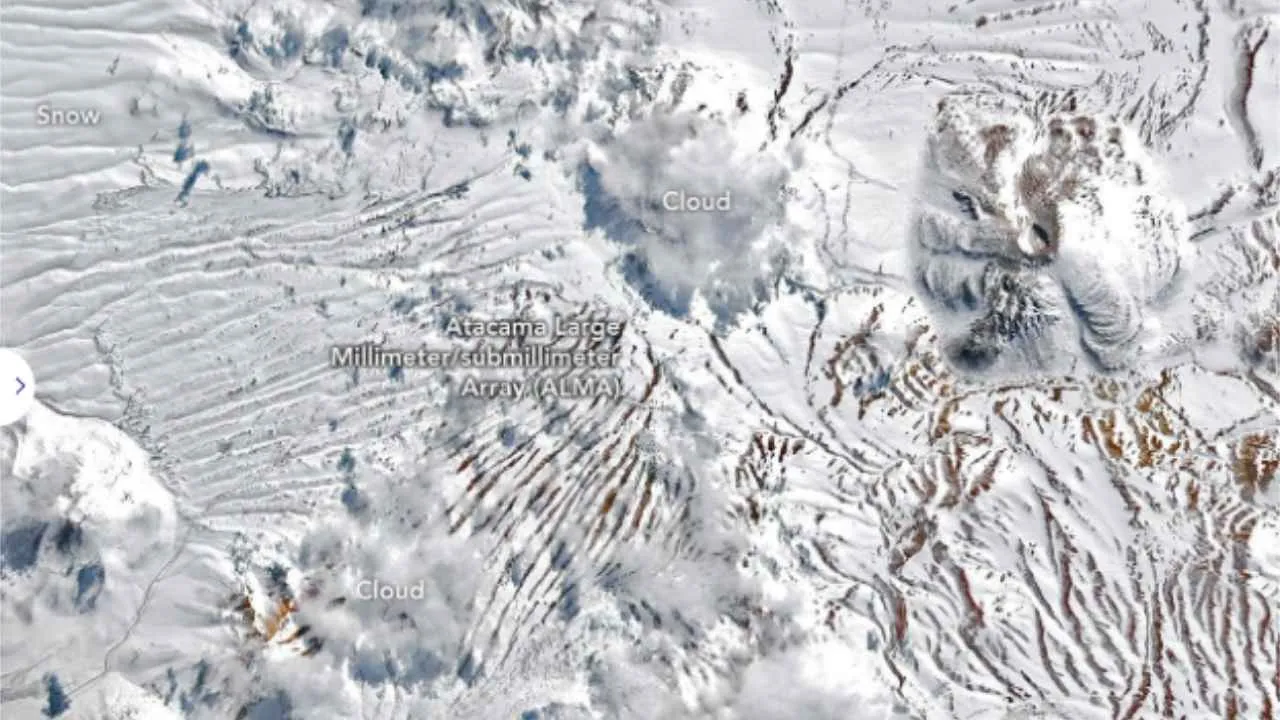
Nature is full of surprises, and we have known this for a while now. There are events that astonish the human eye and sometimes go against the science we have studied. So, something unusual has happened at the driest place on Earth, the Atacama Desert. The Atacama Desert is now covered in snow. Seeing it under the snow has created a buzz. This happened in August 2026. The major reason behind it was winter storms; these storms turned normally dry places into white lands.
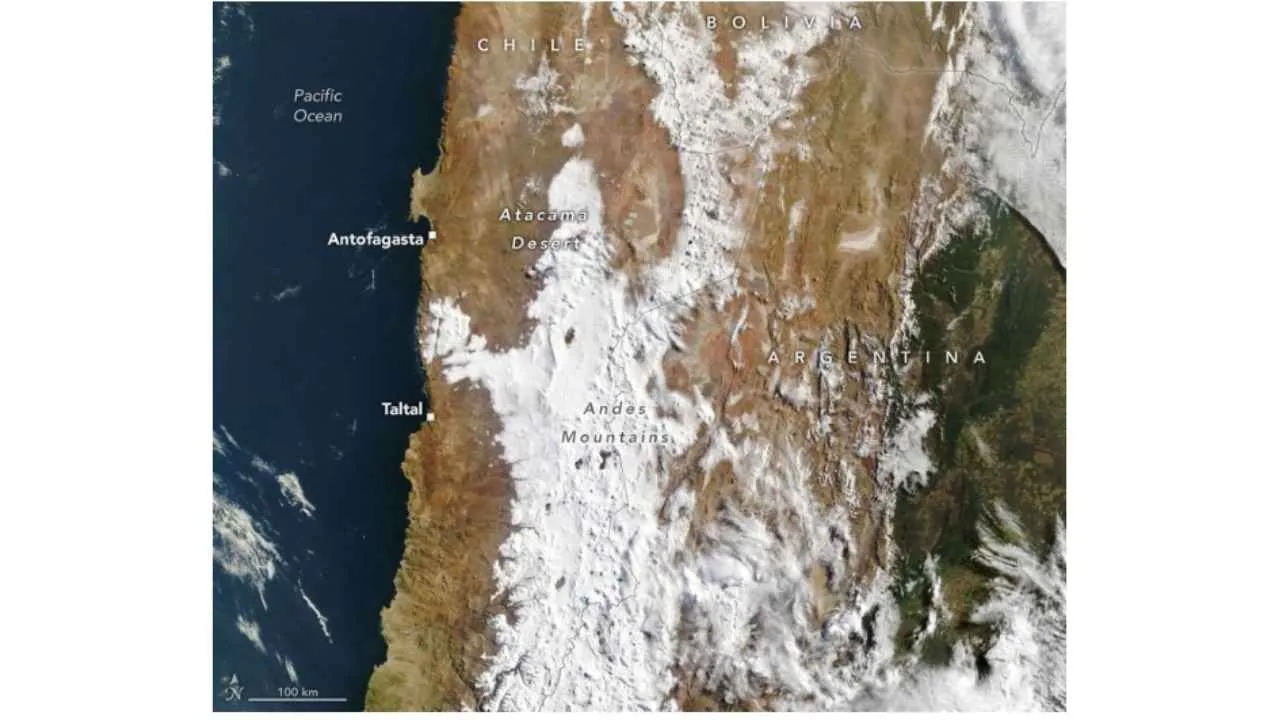
The images that were captured by the NASA satellite show a range of unusual transformations. It shows snow spreading across areas that get no rainfall on normal days.
According to reports of NASA, snowfall has not happened for the first time, it happened before. The scientists are curious about how far it has travelled. This time, the snow can be seen from the Andes across the desert and almost to the Pacific coast.
So, what made this extremely dry desert suddenly look like a winter wonderland?
Why Did It Snow In The Atacama Desert?
-
Cold air: An unusual weather system brought very cold air to northern Chile.
-
Cutoff low: The storms were linked to a cutoff low, a pocket of low pressure that gets separated from the main jet stream.
-
Large weather system: This cutoff low developed from a very large trough that stretched across a huge part of the Southern Hemisphere.
-
Moisture from the coast: At the same time, there was plenty of moisture near the Chilean coast.
-
Snow reached the desert: The combination of cold air + moisture + low pressure allowed rain and snow to travel much farther into the normally dry Atacama Desert.
-
The result: A desert that usually sees almost no rainfall was suddenly covered in snow, making the landscape look like a winter wonderland.
What Role Did El Niño Play?
El Niño has played the most important role in this natural phenomenon. It weakened the Pacific high-pressure system that normally keeps the Atacama dry. Now, this weakening allowed storm tracks to move closer to northern Chile. This brought more moisture, and this increased the chances of unusual rain and snowfall.
From The Andes To The Pacific Coast
This snowfall was noticeable around the high altitude of Chajnantor Plateau. This plateau is home to the Atacama Large Millimeter/submillimeter Array (ALMA). This is one of the world's largest astronomical observatories. This snowfall was so heavy that it forced ALMA to suspend operations and put its antennas in a protective mode.
The last snowfall in August spread the snow a little too far to the west; this was across the hyper-arid desert and close to the Pacific coast.
| Category / Feature | Details |
| What Happened? | Unusual severe weather event (Snow, rain, and strong winds) |
| Location | Atacama Desert, northern Chile |
| Weather Conditions | Snow, rain, and strong winds |
| Period | August 2026 |
| Main Cause | Cutoff low + coastal moisture |
| Climate Factor | Strengthening El Niño |
| Unusual Feature | Snow spread from the Andes towards the Pacific coast |
| Heavy Rainfall Detail | Nearly 40 mm in Taltal over three days |
It Is Rare, But Not Impossible
The idea of snow in the desert almost seems impossible according to our basic knowledge, but let me just upgrade your information. The Atacama Desert has had snowfall earlier as well. The August 2026 snow was not unusual, but the amount of snow was astonishing. Taltal received around 40 mm of rain in three days, and mudflows and flash floods affected parts of northern Chile.

Aishwarya Samant is a journalist with over 4 years of experience navigating the fast-paced corporate media landscape. She specializes in decoding business news, world economy, personal finance, and stock market trends, often adding a subtle touch of political perspective to keep things interesting.
Having worked with reputed organizations like ZEE, TV9, News24, and NewsX, she is no stranger to the newsroom hustle and the demands of real-time storytelling. Her writing style is fast-paced, engaging, and crafted to connect seamlessly with diverse audiences across platforms. She approaches every story from the reader’s point of view, breaking down complex topics into clear, relatable narratives backed by solid facts and credible sources. While she’s confident in expressing strong viewpoints, she ensures balance with insights. Sharp, fact-driven content that informs, engages, and keeps readers coming back for more.