Which is the Tallest Mountain in Japan?
Mount Fuji is the tallest mountain in Japan and is also regarded as one of the three holy mountains of Japan. It is an active stratovolcano that last erupted in 1707. Check its height and other interesting facts here.
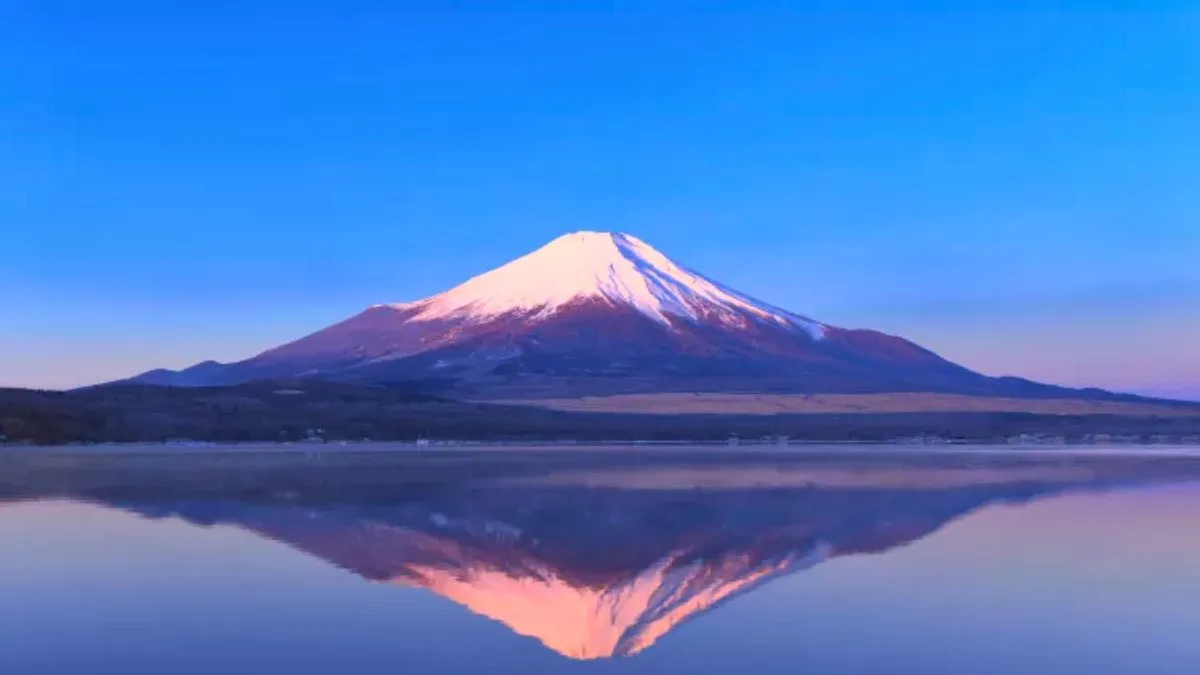
Mount Fuji is the tallest mountain in Japan, it rises to a height of 3776 meters or 12,389 feet above the Pacific coast of central Honshu. Mount Fuji sits directly within the Pacific Ring of Fire, which is a 40,000 km horseshoe-shaped region that is prone to intense volcanic and seismic activity. It is also an active volcano that last erupted in 1707. Let us explore what makes Mount Fuji the largest mountain in Japan along with other interesting facts about Mount Fuji.
Mount Fuji: Tallest Mountain in Japan
Mount Fuji standing at a height of 3776 meters is the tallest structure in Japan, it's summit called Kengamine, sits on the rim of its crater and its height was fixed at 3776 meters by Geospatial Information Authority of Japan. It is about 600 meters taller than the next highest peak in Japan, Mount Kita which is located in the Southern Alps.
How was Mount Fuji Formed?
Mount Fuji contains three volcanoes that got stacked upon each other over a period of 100,000 years. The three layers layers are known by different names: the base is called Komitake, the middle part is called Ko Fuji or Old Fuji, and the upper part is called Shin Fuji or New Fuji. Each volcanic eruption added rock and ash to the cone that came before it, making the mountain grow symmetrically.
Is Mount Fuji still active?
Geologists classify Mount Fuji as an active volcano, it last erupted in the December 1707 during the Edo Period, the volcanic eruption caused volcanic ash to spread as far as Tokyo. Mount Fuji recorded 17 eruptions between 781 CE and 1707 CE.
How does it compare to Japan's other tall peaks?
Here is a comparison of the heights of the other tall mountains of Japan with Mount Fuji.
| Mountain | Height | Location |
| Fuji | 3,776 m | Shizuoka/Yamanashi |
| Kita | 3,193 m | Yamanashi (Southern Alps) |
| Tate | 3,015 m | Toyama (Northern Alps) |
| Hakusan | 2,702 m | Ishikawa/Gifu |
Interesting Facts about Mount Fuji
1. Mount Fuji is an active stratovolcano which is formed by stacking of three volcanoes on top of each other.
2. It was recognised as an UNESCO World Heritage Site in 2013.
3. It is considered as one of the three holy mountains of Japan with Mount Haku and Mount Tate.
Is Mount Fuji the tallest mountain in Japan?
Yes. At 3,776 meters, Mount Fuji is the tallest mountain in Japan, it is around 600 meters taller than the second tallest mountain Mount Kita which is located in Yamanashi prefecture.
When did Mount Fuji last erupt?
Mount Fuji is classified as an active volcano and it erupted last in December 1707 to early 1708.
Which is the second tallest mountain in Japan?
Mount Kita, standing at a height of 3193 meters and located in the Southern Alps is the second tallest mountain in Japan.
Check out other interesting articles from the general knowledge section to boost your knowledge of national and international topics. Stay connected with Jagran Josh.

Mriganka Chakraborty is a seasoned digital journalist and communications professional who is currently working as Deputy Manager at Jagran Josh, where he leads the General Knowledge Section. As a subject matter expert with 8+ years of editorial experience, he has created authoritative content that is trusted by millions of readers around the world in Science, History, Geography, Polity, Economy, Sports, and Technology. His extensive expertise in these subjects enables him to present complex topics in an engaging, accurate, and reader-friendly manner to a global audience, making learning addictive and fun.
His background in a wide range of content areas and his ability to move between them make him a trusted voice to readers who want reliable, well-researched content across a variety of disciplines.
In his leisure time, Mriganka enjoys reading fiction novels and watching action and thriller movies, and cricket, which not only hone his storytelling skills but also keep his editorial vision fresh and dynamic.

-1788350536938_t.webp)