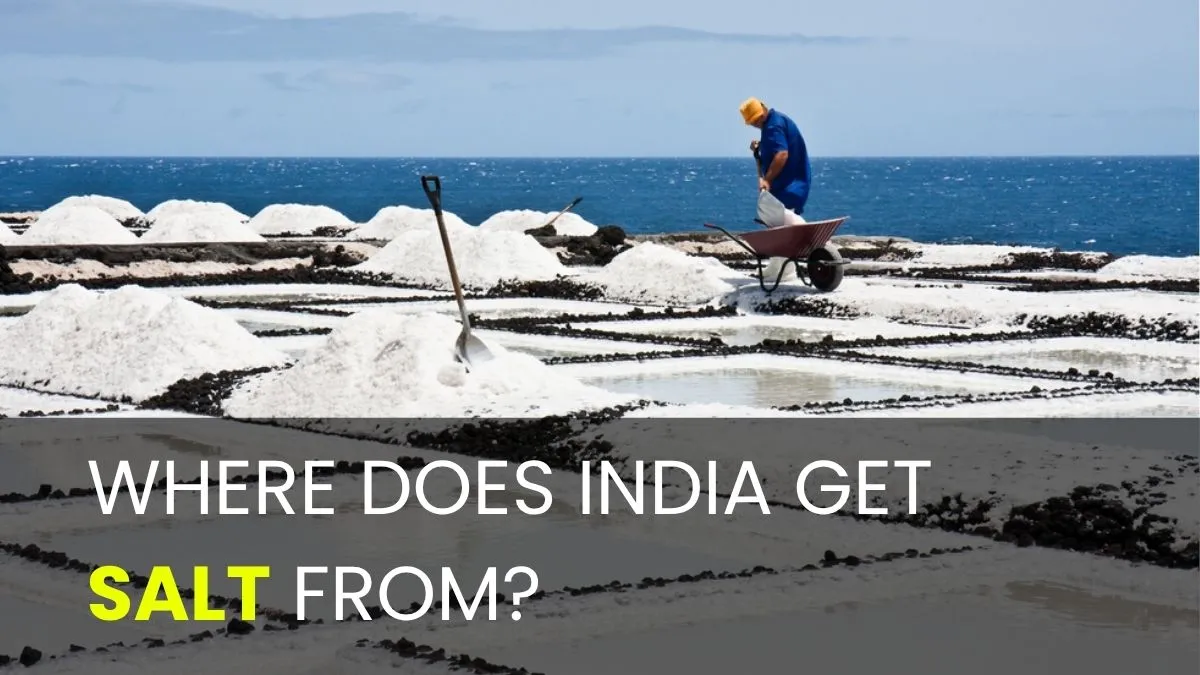
Mahatma Gandhi, on 12 March 1930, set out on foot from his ashram in Sabarmati to the town of Dandi, near Surat. He, along with followers, walked for 24 days and reached Dandi on 6 April 1930, which later came to be known as the 'Dandi March'. Gandhi's Salt March marked a pivotal moment in India's struggle for independence.
But do you know Dandi March was a non-violent protest against the British Salt Act of 1882, which prohibited the Indian population from producing or selling salt? The British government had a monopoly over salt production in India, and Indians were forced to buy heavily taxed salt that was imported.
Today, India is the 3rd largest salt-producing country after China and the US, with an annual capacity of over 30 million metric tonnes. India, in fact, exports the surplus of about 5 to 10 million metric tonnes of salt to countries like Japan, China, and Vietnam.
Where does India get salt from?
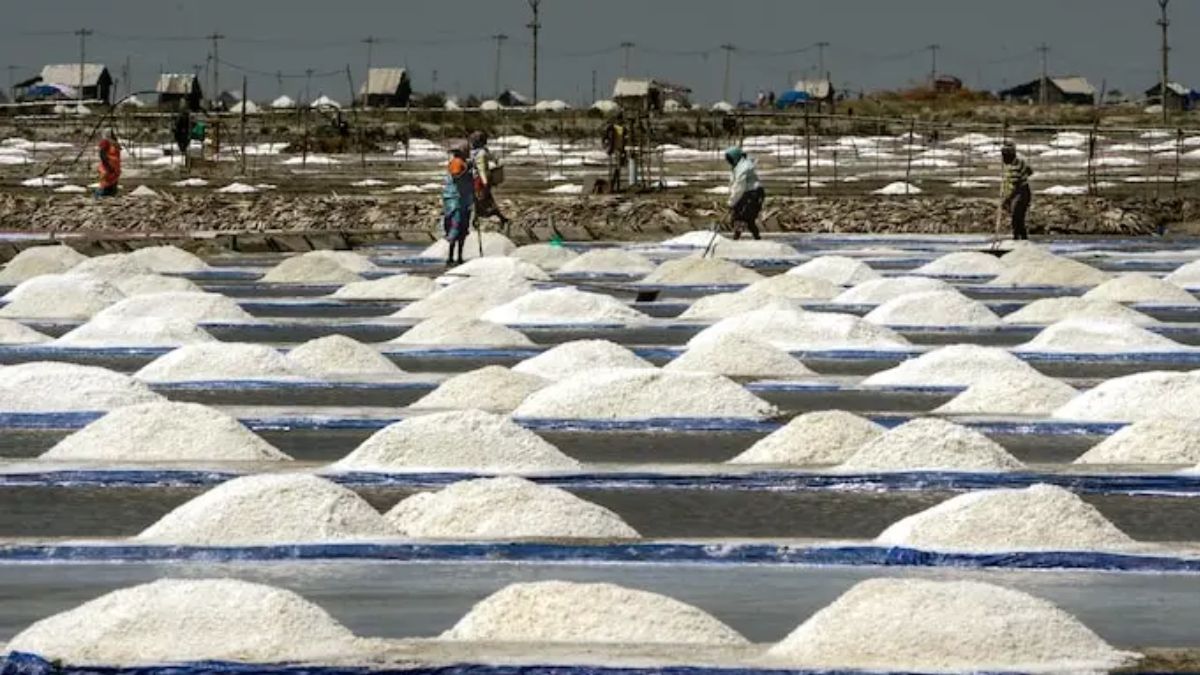
About 98 per cent of India's salt is produced domestically. While the country relies on imports of rock salt. In 2022-23, India produced over 33.8 million tonnes of salt.
Domestic salt production sources
Gujarat, Tamil Nadu, and Rajasthan are the top 3 salt-producing states in India, accounting for about 98 per cent of the country's salt production.
Gujarat is the leading producer of salt in India. The state generates over three-quarters of salt, primarily in the Rann of Kutch region.
Tamil Nadu is the second-largest salt producing state in India.
Rajasthan is the third-largest salt producing state in India. Rajasthan, known for inland salt production, uses sub-soil brine and lake brine.
Gujarat contributes 87.4 per cent to the total production, followed by Tamil Nadu (4.7 per cent) and Rajasthan (6.7 per cent).
The remaining 1.2 per cent production is sourced from Andhra Pradesh Maharashtra, Karnataka, Orissa, West Bengal, Goa, Himachal Pradesh, and Diu & Daman.
India's Salt Import-Export
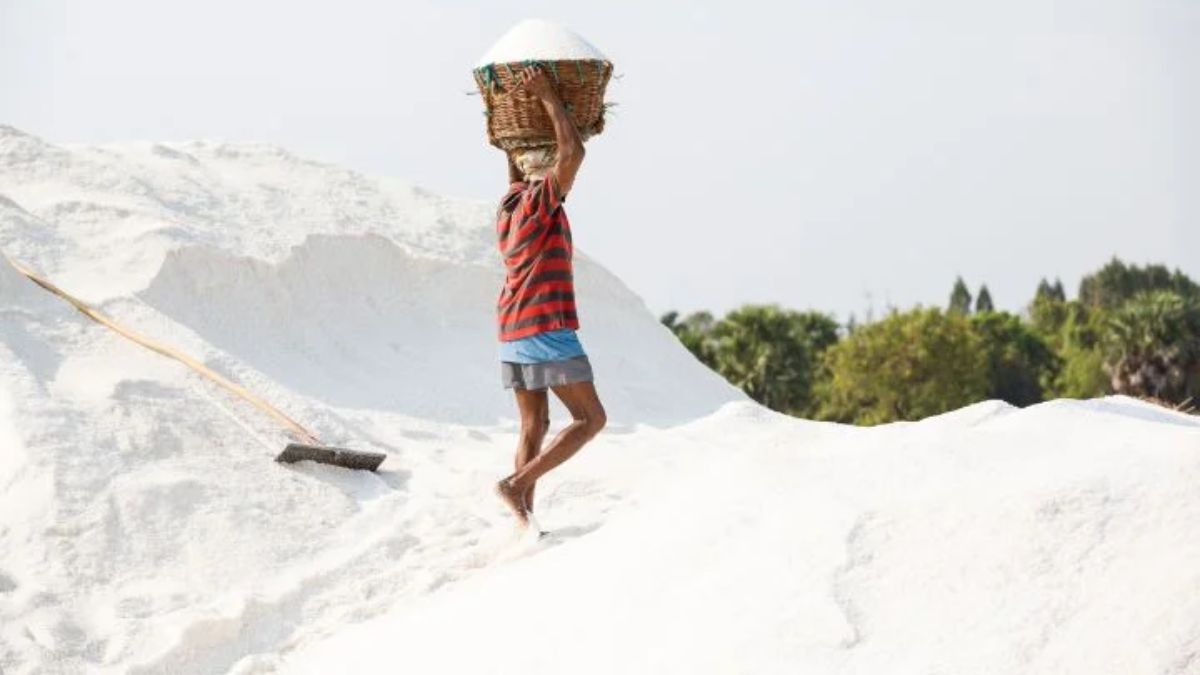
While India is self-sufficient in producing common salt, but it relies on imports for rock salt (sendha namak). Rock salt is also known as Lahori salt, pink salt, Himalayan salt, or halite. India imports rock salt from Pakistan, the United Arab Emirates (UAE), Iran, Malaysia, Afghanistan, Germany, Australia, and Turkey.
India exports surplus production of 5 to 10 million metric tonnes. During the year 2022-23, India exported 12.22 million tonnes of salt to China, Japan, Bangladesh, Indonesia, South Korea, Malaysia, the UAE, Vietnam, and Qatar.
Key Salt Production Types
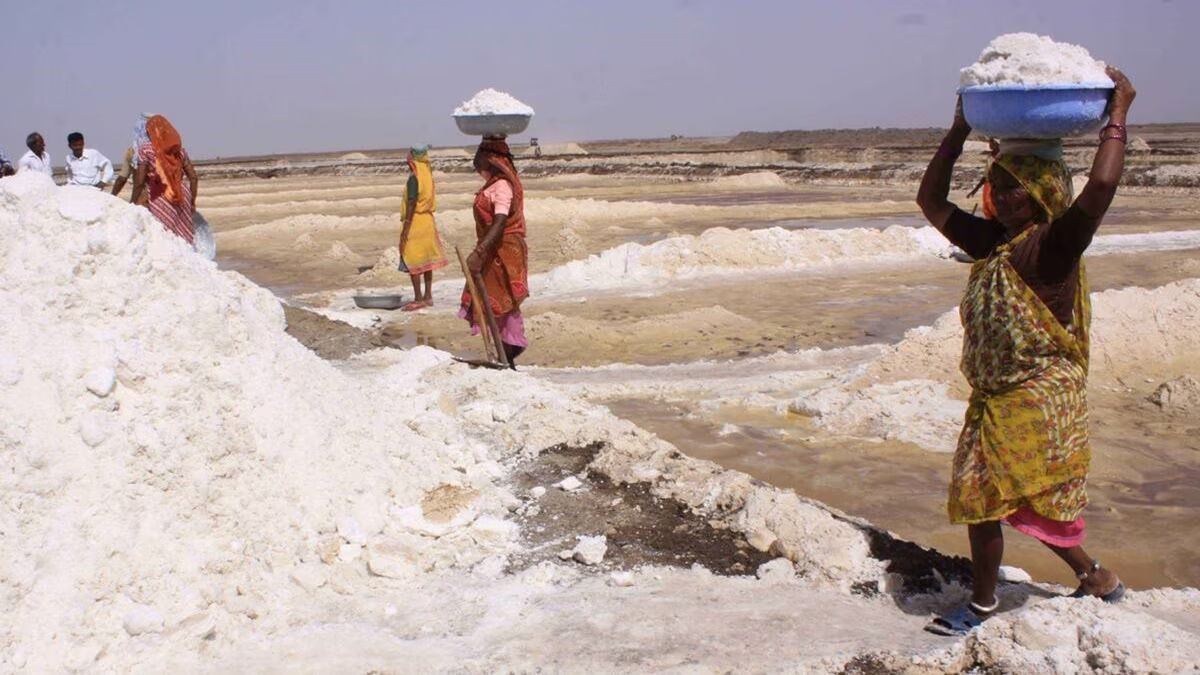
Common Salt is produced mainly by solar evaporation of sea water. Sea salt constitutes about 80 per cent of the total salt produced in India.
Key salt production sources in India are the following:
Sea brine/Marine salt is found in Gujarat and Tamil Nadu.
Inland/Lake brine from salt lakes in Rajasthan.
Sub-soil brine in the Rann of Kutch.
Rock salt deposits in Mandi, Himachal Pradesh (the only state in India that produces rock salt).
Salt is a Central Subject in the Constitution of India
Salt is a Central Subject in the Constitution of India and appears as Item No. 58 in the Union List of the 7th Schedule, which reads:
(a) Manufacture, Supply and Distribution of salt by Union Agencies; and
(b) Regulation and control of manufacture, supply and distribution of salt by other agencies.
The Central Government is responsible for controlling and regulating all aspects of the salt industry.
Also read: Where does India get PNG from?



Comments
All Comments (0)
Join the conversation