How Many States Do You Need To Take The Permit To Stay & Travel, Even For Indians?
Know the 9 Indian states where permits may be required for travel or stay. Learn about Inner Line Permit (ILP), Protected Area Permit (PAP), and special permissions.
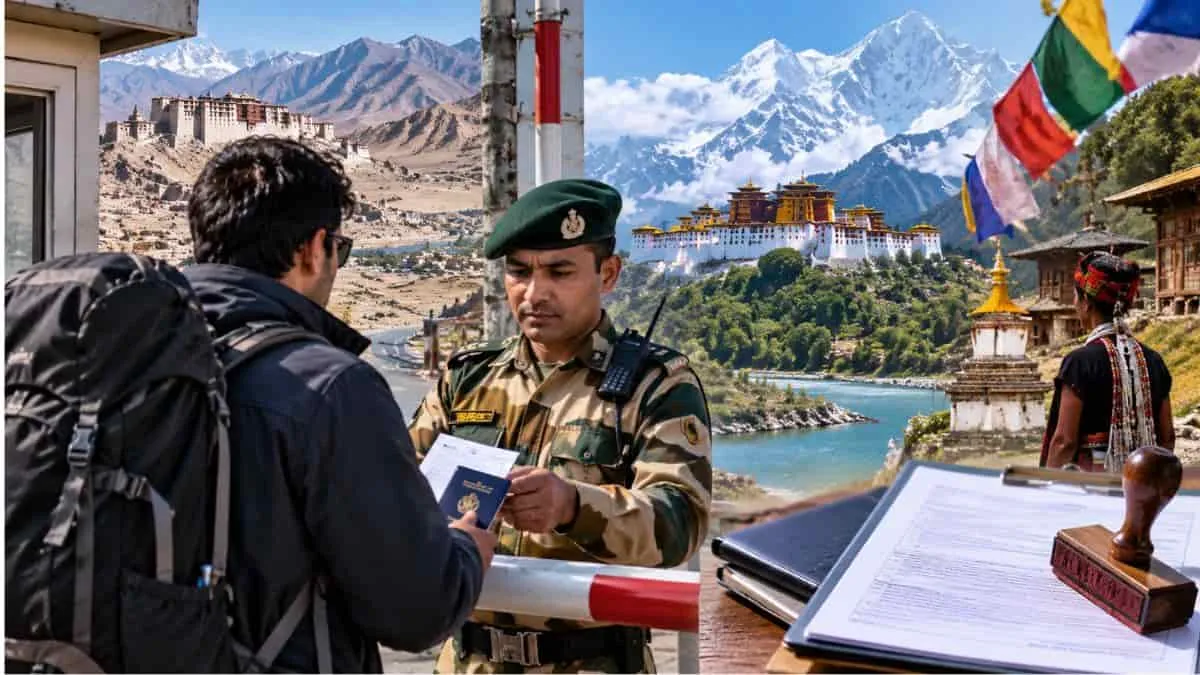
In India, every Indian citizen can stay and travel, and foreigners also have access to travel in India. But in India, there are some states which come under the PROTECTED AND RESTRICTED AREAS. So, do you know how many states you need to take the permit to stay & travel in, even for Indians?
There are nine states, which are Arunachal Pradesh, Himachal Pradesh, Jammu & Kashmir, Manipur, Mizoram, Nagaland, Rajasthan, Sikkim, and Uttarakhand.
Among these 9 states, states are wholly protected and restricted areas, and the other 5 states are partially, which means some part of the states comes under the Protected and Restricted Areas.
To enter these fully protected and restricted areas, you need an Inner Line Permit (ILP) in some states, while in the other five states, you need to take a Protected Area Permit (PAP)/Restricted Area permit.
Let’s explore this article in detail and learn all about these 9 states which come under the Protected and Restricted Areas & you need to take a permit to stay & travel, even for Indians
How Many States Do You Need To Take The Permit To Stay & Travel, Even For Indians?
There are 9 states for which you all need a permit to stay and travel, even for Indians.
These states are:
| ~ | State | Requirement for Indian Travellers | Scope |
| 1. | Arunachal Pradesh | Inner Line Permit | Broadly applicable to entry into the state for outsiders |
| 2. | Manipur | Inner Line Permit | Applicable to Indian citizens visiting the state |
| 3. | Mizoram | Inner Line Permit | Applicable to visitors from outside the state |
| 4. | Nagaland | Inner Line Permit | Applicable to non-indigenous visitors |
| 5. | Sikkim | Special permit/permission for certain areas | Specific protected/restricted destinations |
| 6. | Himachal Pradesh | Special permission may apply | Certain protected/border areas |
| 7. | Jammu & Kashmir | Special permission may apply | Certain protected/border areas |
| 8. | Rajasthan | Special permission may apply | Certain border/protected areas |
| 9. | Uttarakhand | Special permission may apply | Certain border/protected areas |
As per the instructions issued by the Ministry of Home Affairs on 30.12.2010,
“The entire area of the States of Manipur, Mizoram and Nagaland has been excluded from the Protected Area regime notified under the Foreigners (Protected Areas) Order 1958, initially for a period of one year w.e.f. 1.1.2011, which has been extended from time to time. This relaxation has been extended till 31.12.2022 subject to the following conditions:-
(i) Citizens of Afghanistan, China and Pakistan and foreign nationals having their origin in these countries would continue to require prior approval of the Ministry of Home Affairs before their visit to the States of Manipur, Mizoram and Nagaland.
(ii) All foreigners visiting these States will register themselves with the Foreigners Registration Officer (FRO) of the State/District they visit within 24 hours of their arrival.
Myanmar nationals visiting the States of Manipur, Mizoram and Nagaland are also excluded from the requirement of obtaining a Protected Area Permit till 31.12.2022 subject to the following conditions:-
(i) All such Myanmar nationals shall obtain a visa from the Indian Missions/ Posts abroad or e-Tourist Visa facility which has been made available to the nationals of Myanmar under the existing procedure.
(ii) All such Myanmar nationals shall have to compulsorily register themselves with the Foreigners Registration Officer (FRO) of the State/ District they visit within 24 hours of their arrival. No such registration would be required if the Myanmar nationals are only passing through the State by road with no intention of staying in that particular State. ”
What Is an Inner Line Permit?
An Inner Line Permit (ILP) is an official travel document that regulates the entry of Indian citizens from outside a particular state into designated areas.
The system originated from the Bengal Eastern Frontier Regulation of 1873. Today, it is primarily intended to regulate movement and help protect the interests, culture and customary rights of indigenous communities in sensitive border regions.
Which States Require an ILP?
As of 2026, the states commonly associated with the ILP system for Indian visitors are:
1. Arunachal Pradesh: ILP required for visitors from outside the state
2. Manipur: ILP required for Indian citizens visiting the state
3. Mizoram: ILP required for visitors from outside the state
4. Nagaland: ILP required for Indian citizens who are not indigenous inhabitants of Nagaland
States/Areas Where Special Permission May ApplyILP vs Protected Area Permit: What's the Difference?
| Feature | Inner Line Permit (ILP) | Protected Area Permit (PAP) |
| Mainly applicable to | Indian citizens | Primarily foreign nationals |
| Purpose | Regulates entry of outsiders into ILP states | Regulates access to sensitive protected areas |
| Common examples | Arunachal Pradesh, Manipur, Mizoram, Nagaland | Protected/border areas |
| Issuing authority | Concerned state government/authorities | Central/state authorities as applicable |
| Is it a visa? | No | No |
| Applies throughout a state? | Depends on the state's ILP rules | Depends on the designated protected area |

Prabhat Mishra is a Subject Matter Expert and digital journalist with an extensive background in the competitive exam landscape and over 4 years of experience in education, national and international news, and current affairs. Over his tenure with top knowledge platforms like Mentorship India, IAS BABA, IAS SARTHI, and now Jagran Josh, he has a deep understanding of government exams like UPSC and State PCS, including UP and Bihar, as he has already qualified for the UPPCS 2022 Mains and Bihar 68th Mains. With his core expertise in history, polity, geography & current affairs, he specialises in creating well-researched, aspirant-centric content and simplifying complex topics for competitive examinations.


![[OUT] EMRS Tier 2 Result 2026 Live: Download PRT, TGT and PGT Result PDF at nests.tribal.gov.in](https://img.jagranjosh.com/images/2026/August/3182026/EMRS-Tier-2-Result-2026.jpg)