Tsunami Alert Issued After 7.8 Magnitude Earthquake Shakes Southern Philippines


A powerful 7.8 magnitude earthquake shakes part of the southern Philippines, triggering urgent tsunami warnings and collapsing structural buildings in Mindanao. Authorities report at least three casualties as coastal residents flee to higher ground amid threatening aftershocks.
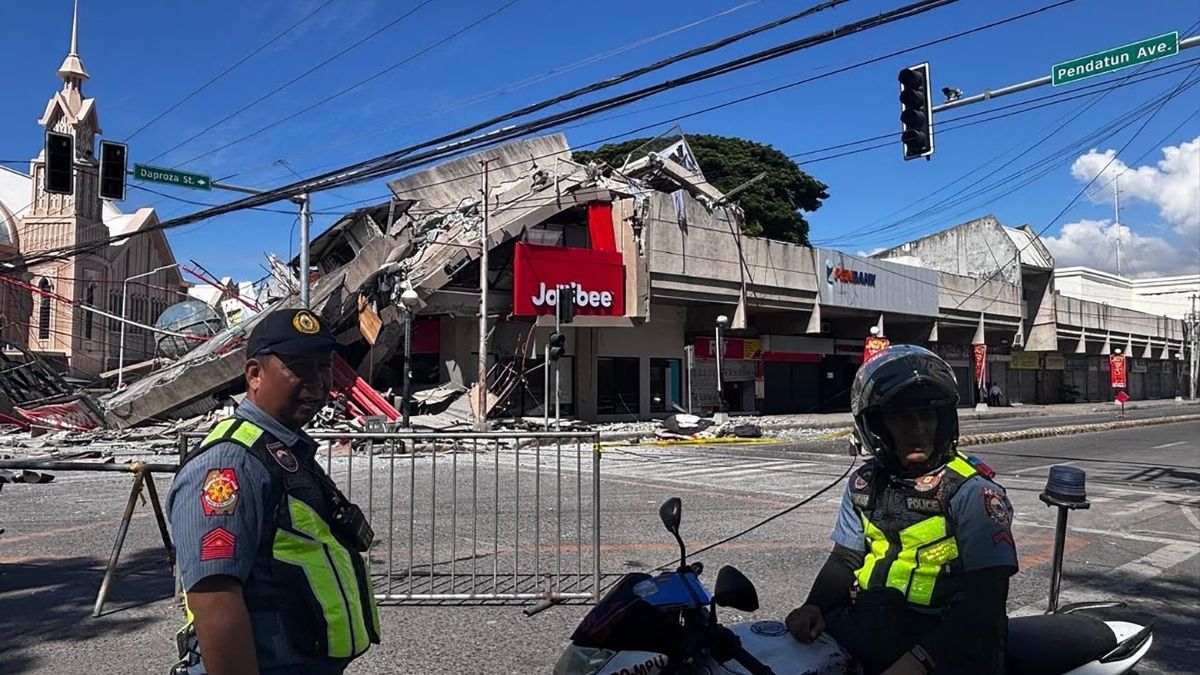
A destructive 7.8 magnitude earthquake shook part of the southern Philippines today, triggering widespread panic and an urgent tsunami warning for coastal communities in the Philippines. The strong quake hit the island of Mindanao on June 8, 2026, at 7:37 am local time, with its epicenter located only 13 kilometers southwest of General Santos City.
Both the Philippine Institute of Volcanology and Seismology (PHIVOLCS) and the U.S. Geological Survey (USGS) confirmed the massive 7.8 magnitude intensity, with a shallow depth that worsened surface shaking. At least three people have been officially confirmed dead, and search-and-rescue efforts are underway as dangerous aftershocks continue to shake the region.
What Areas Face the Primary Philippines Tsunami Risk?
The Pacific Tsunami Warning Center issued immediate alerts following the major earthquake in the Philippines, warning that dangerous waves between 1 and 3 meters (3 to 10 feet) could lash local coastlines. PHIVOLCS Director Teresito Bacolcol urged immediate action for vulnerable populations, stating, "We advise people to evacuate to higher grounds or go further inland."
The threat extends internationally across the western Pacific, though surrounding nations report lower risk levels:
-
The Philippines: Waves up to 1.4 meters have already been recorded in parts of Mindanao, with 3-meter surges remaining possible.
-
Indonesia and Malaysia: Coastal areas are on alert for waves up to 1 meter. Indonesia briefly ordered evacuations in North Sulawesi before lifting its warning.
-
Taiwan and Japan: Minor sea-level fluctuations under 0.3 meters are anticipated.
How Severe is the Structural Damage from the Mindanao Earthquake?
The 7.8 magnitude earthquake shakes part of the southern Philippines with enough force to compromise heavy infrastructure. In General Santos City, verified video footage captured the dramatic collapse of a multi-story Jollibee fast-food restaurant and structural failures at a major commercial complex.
Furthermore, the disaster struck just as public schools reopened for the academic year. In Davao del Sur, a section of a high school building collapsed while students gathered for a morning flag ceremony. Trauma teams from the Philippine Red Cross went to several schools to treat shell-shocked students, but there were no reports of fatalities inside classrooms. Several provinces have been hit by power outages, which make real-time damage assessments difficult.
What is the Official Government Response to the Disaster?
Philippine President Ferdinand “Bongbong” Marcos Jr. made a national address to ask the people to put safety ahead of possessions. Government agencies have mobilized to open localized evacuation hubs and clear critical roads for first responders.
"Do not wait. Your life is more important than anything left behind," President Marcos Jr. emphasized in an official statement, while simultaneously ordering an immediate suspension of all schools in the affected regions.
The islands are located right on the infamous Ring of Fire, a seismically active fault zone that results in regular volcanic eruptions and earthquakes. Emergency response teams are on high alert as structural engineers start assessing the integrity of bridges, hospitals and highways across Mindanao.
When was the Last Major Earthquake in the Philippines?
The region was already witnessing heightened seismic volatility before today’s devastating event, one of the deadliest earthquakes in the recent history. In October 2025, the province of Davao Oriental was hit by a double whammy of strong earthquakes of magnitude 7.4 and 6.7, killing at least eight people and causing widespread cracks in buildings in the entire province of Davao Oriental.
Just days prior to those October tremors, a separate 6.9 magnitude earthquake in the Philippines struck the central province of Cebu on September 30, 2025. According to official government figures, that tragic event triggered widespread landslides, resulting in 76 fatalities and either damaging or completely destroying more than 72,000 homes. The rapid succession of these massive subduction-zone ruptures underscores the ongoing peril faced by the archipelago.
The sudden seismic episode highlights the vulnerability of coastal Mindanao to sudden changes in the lithosphere. The situation has remained critical with already recorded tsunami waves and aftershocks that could pose a threat to already damaged infrastructure. General Santos City emergency crews clear the rubble as residents are told to strictly follow local civil defense instructions.
Harshita Singh specializes in US affairs and general knowledge, simplifying intricate geopolitical and historical subjects into clear, digestible insights for learners. Holding a BA (Hons) in English from the University of Delhi and with over three years of experience in educational writing, she produces authoritative, thoroughly researched content that empowers readers to engage confidently with global current affairs. For inquiries, you can reach out to her at harshita.singh@jagrannewmedia.com.



Comments
All Comments (0)
Join the conversation