Key Points
- The Rwenzori Mountains are known as the "Mountains of the Moon."
- Glaciers have shrunk 75% since 1906 due to rising temperatures.
- Explorer Stanley confirmed their existence in 1888.
Did you know that mountains cover about 25% of the Earth's land surface? These massive structures are more than just piles of rock. They provide water, influence the weather, and offer homes to unique animals.
Furthermore, people often give mountains creative nicknames. For example, Mount Everest is called the "Roof of the World".
But do you know which mountain is known as the mountain of the moon? In this article, we'll take a look at the history, the culture, and the breathtaking beauty of this unique destination.
ALSO READ| Which Mountain Is Known as the Majestic Peak of Asia?
Which Mountain Is Known As the Mountains of the Moon?
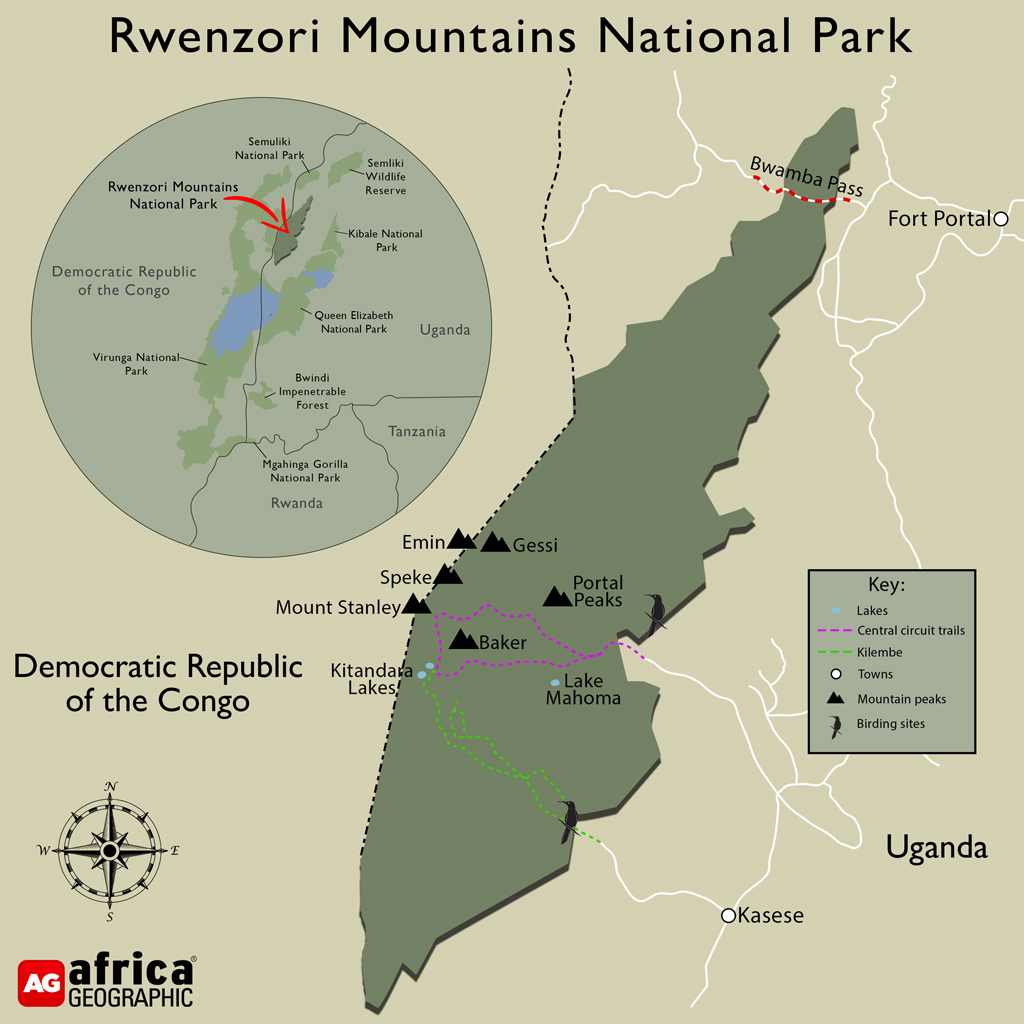
Source: Africa Geographic
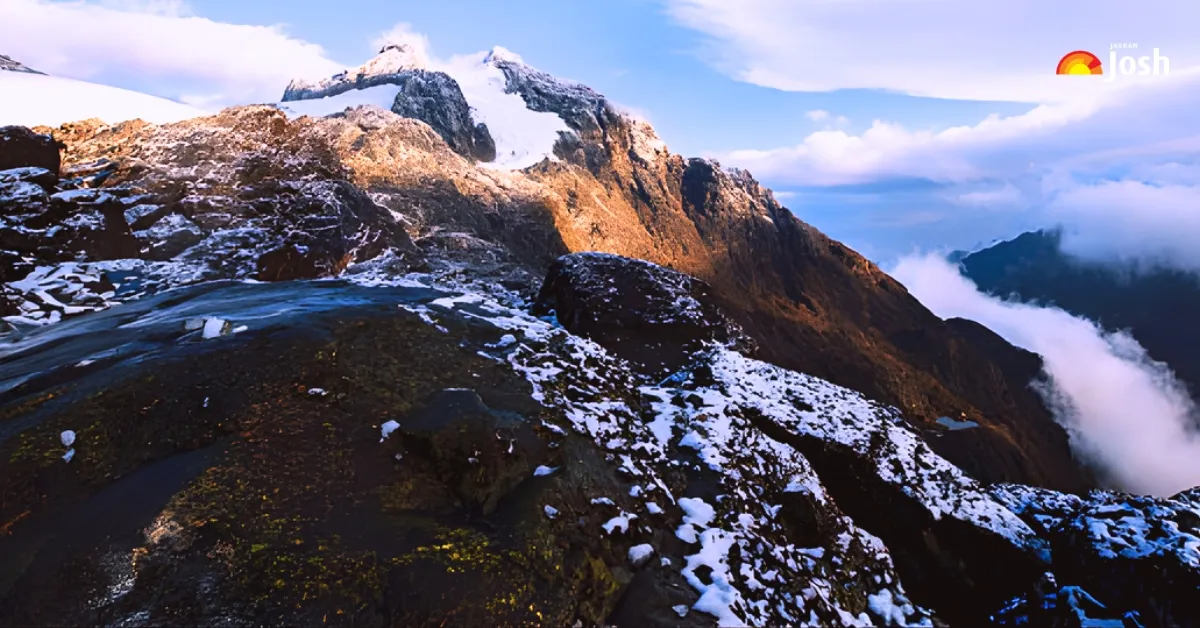
The Rwenzori Mountains, located on the border of Uganda and the Democratic Republic of the Congo, are famously known as the "Mountains of the Moon". This name comes from ancient legends of snow-capped peaks feeding the Nile.
It is called the "White Mountain" because its summits are permanently covered in glaciers and snow, a rare sight just miles from the equator.
What makes it different is its formation; unlike many African peaks, it is a Block Mountain formed by the crust moving upward, not a volcano.
These mountains are roughly 3 million years old and feature jagged peaks and deep Gorges. The flora and fauna are surreal, featuring "giant" versions of common plants like lobelias and groundsel.
10 Lesser-known Facts About the Rwenzori Mountains
- Unlike Mount Kilimanjaro, these are tectonic "block" mountains pushed up from the Earth's crust.
- Science shows the glaciers have shrunk by over 75% since 1906 due to rising temperatures.
- It is the third-highest point in Africa, with Margherita Peak reaching 5,109 meters.
- It hosts "botanical big-game," like heathers that grow 10 meters tall.
- It is one of the wettest places on Earth, receiving over 2,500mm of rain annually.
- The Greek geographer Ptolemy first labelled them "Lunae Montes" in 150 AD.
- The mountain's peat bogs store massive amounts of carbon, helping regulate the local climate.
- It is a UNESCO World Heritage site with many species found nowhere else on Earth.
- The range is part of the Albertine Rift, a hotspot for geological activity.
- Its local name, Rwenzururu, literally means "Place of Snow."
IN CASE YOU MISSED| Which Mountain Is Known As White Mountain?
Why is Mountain Rwenzori called mountain of the Moon?

The name "Mountains of the Moon" carries a sense of mystery and goes back nearly 2,000 years. It wasn't a name given by local people; instead, it was a legendary title used by ancient explorers and geographers.
Here is why the Rwenzori Mountains received this mystical nickname:
i) The Ancient Search for the Nile
For centuries, people have wondered about the source of the River Nile. In the 2nd century AD, the Greek geographer Ptolemy wrote about a mountain range with snow-covered peaks in the heart of Africa.
He claimed that melting snow from these mountains flowed into lakes that eventually fed the Nile. He named them Lunae Montes, which means the Mountains of the Moon.
ii) A Literal Description
The name probably comes from the mountain's look. Since the Rwenzori range is close to the hot equator, early travellers were surprised to see shimmering white glaciers and snow.
At night, the white snow reflects the moonlight, making the peaks appear as if they are glowing or part of the moon itself.
iii) The "Cloud-King" Effect
The Rwenzori Mountains are famously hard to see. Thick mist and clouds cover them for most of the year. This hidden nature adds to the legend. Explorers would pass nearby and never see them, making the mountains feel like a mythical place that only showed up under certain lunar or atmospheric conditions.
FOR YOU| Which Mountain Is Known as the Roof of the World?
Key Facts at a Glance
| Feature | Detail |
| Original Name | Rwenzururu (Local name meaning "Rain-Maker") |
| First Map | Ptolemy's World Map (150 AD) |
| Scientific Reason | Glacial runoff does indeed contribute to the Nile's flow |
| Visual Reason | High-altitude snow creates a lunar-like, white landscape |
Who Discovered the Mountains of the Moon?
:max_bytes(150000):strip_icc()/Henry-Morton-Stanley-2534-3x2gty-56a48a123df78cf77282df1d.jpg)
For over 1,500 years, the "Mountains of the Moon" were seen as a legend. Ancient maps displayed them, but no explorers from outside could locate them. This was mainly because the peaks are nearly always covered in thick, heavy clouds.
In 1888, the explorer Henry Morton Stanley saw the snow-capped peaks. He was the first Westerner to confirm they existed.
He realised that the ancient stories were true. There really were snowy mountains in the middle of Africa. Stanley's discovery helped scientists understand how the Nile River gets its water.
Today, we know these mountains as the Rwenzori Range. They continue to captivate people due to their rare glaciers and unusual plants.
WHAT'S NEXT| Which Mountains Are Called the Blue Mountains?


Comments
All Comments (0)
Join the conversation