Key Points
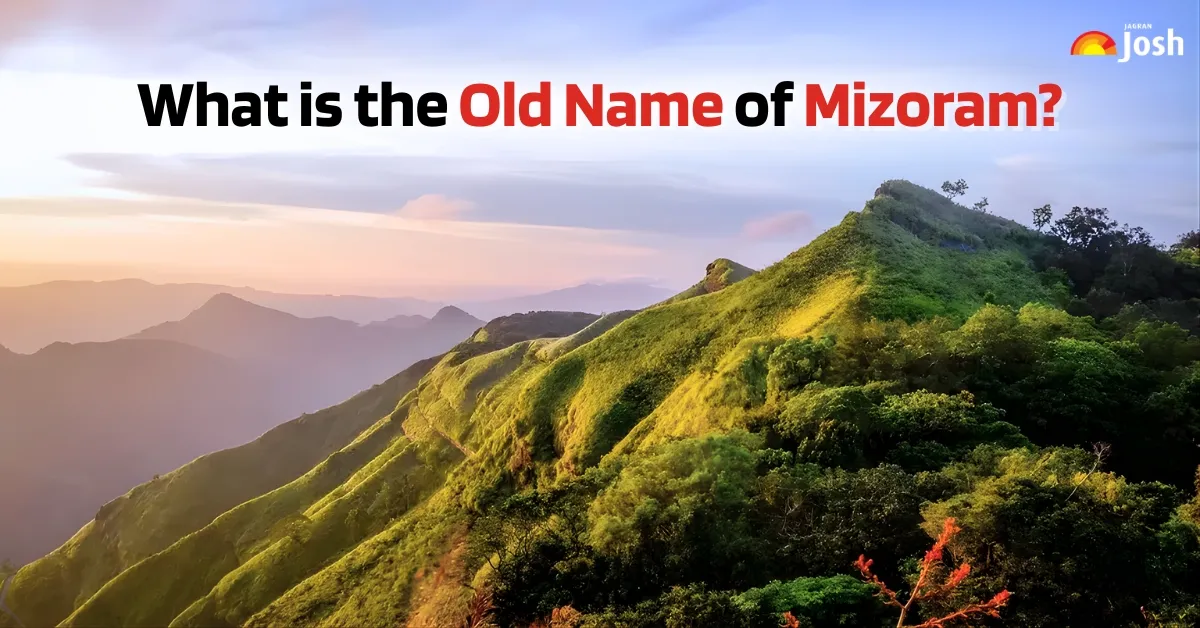
- Originally called Lushai Hills by British in 1891 due to the Lusei tribe.
- In 1954, it was renamed Mizo Hills to represent all tribes equally.
- Mizoram achieved full statehood on February 20, 1987.
India has a rich and lively history. Over thousands of years, many cities and regions have changed names. These names often reveal stories of ancient kings, colonial rule, and local cultures.
For example, the modern city of Patna was known as Pataliputra in ancient times. Similarly, Varanasi has been called Kashi for centuries.
Every corner of India has a unique story behind its name. But what about the beautiful northeastern state we know today? Do you know what Mizoram was called in the past?
In this article, we will explore the interesting history of this hilly area and uncover the names it had before becoming the beloved state it is today.
ALSO READ| What is the Old Name of Uttarakhand?
Mizoram: State at a Glance
The state of Mizoram shares about 722 km of its border with Myanmar and Bangladesh. Additionally, it is often ranked as one of the most educated states in the country, with the Aizawl and Serchhip districts frequently nearing a 100% literacy rate.
Further, most of the population still practices Jhum Cultivation, or shifting agriculture, which is closely linked to their traditional festivals like Chapchar Kut.
| Feature | Details |
| State | Mizoram |
| Capital | Aizawl |
| Population (2026 Est.) | Approximately 1.43 Million (14.3 Lakhs) |
| Official Languages | Mizo and English |
| Number of Tribes | 15+ Scheduled Tribes (under the Indian Constitution) |
| Major Tribes | Lusei (Lushai), Ralte, Hmar, Mara, Lai (Pawi), and Chakma |
| Date of Creation | February 20, 1987 (Achieved full Statehood) |
| State Bird | Mrs Hume’s Pheasant (locally called Vavu) |
| State Fruit | Passion Fruit |
| State Animal | Himalayan Serow (locally called Saza) |
| State Flower | Red Vanda (locally called Senhri) |
| State Tree | Ironwood Tree (locally called Herhse) |
| Primary Dance Forms | Cheraw (Bamboo Dance), Khuallam, and Chailam |
| Famous Places | Phawngpui (Blue Mountain), Vantawng Falls, Solomon's Temple, and Reiek Tlang |
| Literacy Rate | ~91.33% to 98% (One of the highest in India) |
| Forest Cover | Over 85% of the total land area |
What Is The Original Name Of Mizoram?

Mizoram's history features several important name changes that show its evolving identity. Before becoming the state we recognise today, the area was mainly called the Lushai Hills.
British colonial officials named it in the late 19th century, around 1891, due to a mispronunciation of the "Lusei" clan, which was the main tribe then.
Here are the key milestones in its naming history:
- 1898: The British combined the North and South Lushai Hills into one administrative unit called the Lushai Hills District in the Assam province.
- 1954: After Indian independence, the local people wanted a name that represented all tribes, not just one. The government then passed an act to rename it the Mizo Hills District.
- January 21, 1972: The region became a Union Territory and was officially named Mizoram. The word "Mizo" means the people (Mi = people, Zo = hills), and "Ram" means land.
- February 20, 1987: Mizoram finally gained full statehood, becoming the 23rd state of India.
IN CASE YOU MISSED| What Was The Old Name Of Bihar?
10+ Lesser-known Facts about Mizoram
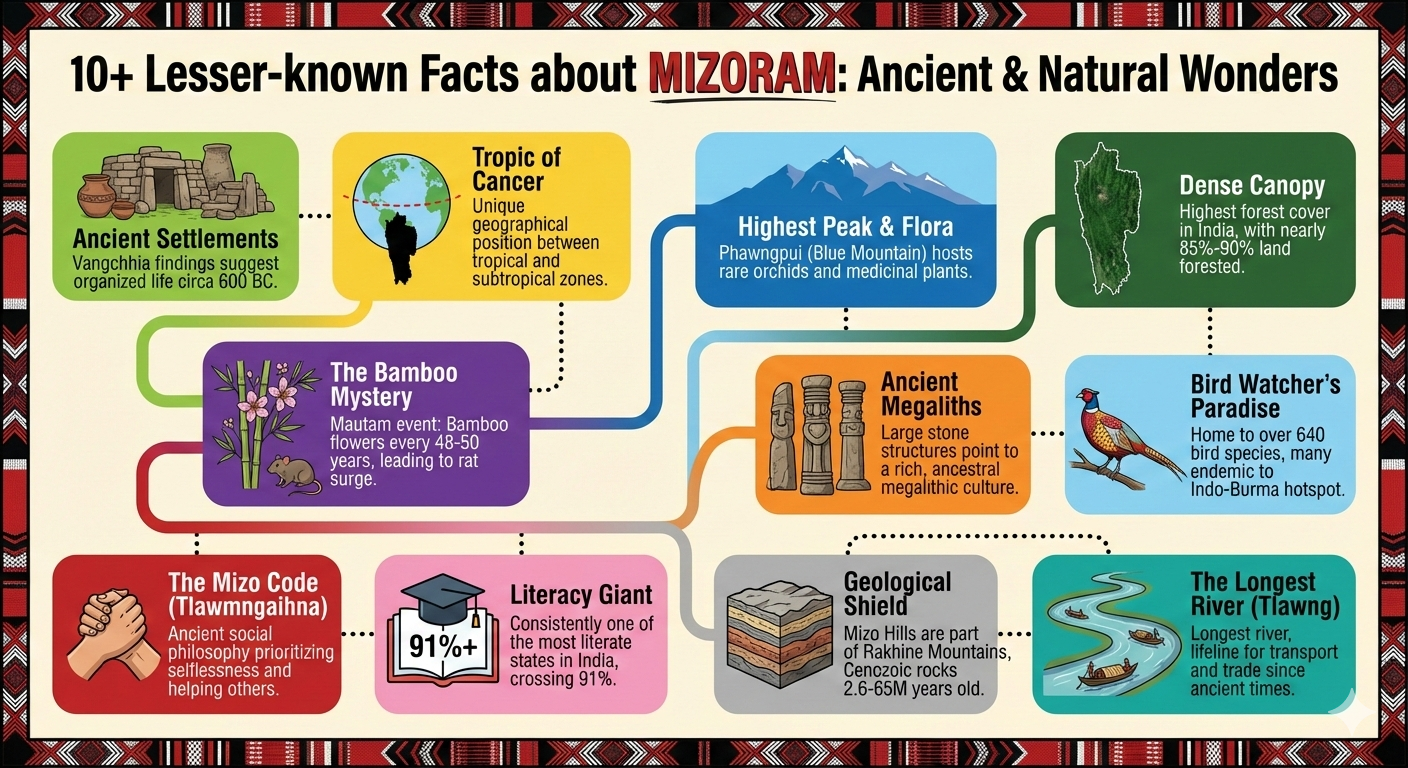
- Archaeological findings in Vangchhia suggest that organised civilisations existed in the region as far back as 600 BC.
- The Tropic of Cancer passes directly through the state, putting it in a unique geographical position between the tropical and subtropical zones.
- Every 48 to 50 years, the state experiences Mautam, a biological phenomenon where bamboo forests flower simultaneously, followed by a massive surge in the rat population.
- The highest point is Phawngpui, also known as the Blue Mountain, which is home to rare species of orchids and medicinal plants.
- Mizoram has one of the highest percentages of forest cover in India, with nearly 85% to 90% of its land being lush green forest.
- Large stone structures and carvings found in the hills point to a rich, ancient megalithic culture practised by ancestral tribes.
- The state is home to over 640 species of birds, many of which are endemic to the Indo-Burma biodiversity hotspot.
- Ancient Mizo society followed a code called Tlawmngaihna, a unique social philosophy that prioritises being selfless and helpful to others.
- Despite its rugged terrain, Mizoram consistently ranks as one of the most literate states in India, often crossing the 91% mark.
- The Mizo Hills are part of the Rakhine Mountains, consisting of Cenozoic rocks that are between 2.6 and 65 million years old.
- The Tlawng River is the longest in the state and has been the lifeline for transport and trade since ancient times.
What Is The Nickname Of Mizoram State?
Mizoram has a few beautiful nicknames that highlight its culture and geography. Here are the two most popular ones:
i. Land of the Hill People
Mizoram is known as the "Land of the Hill People." This name comes from the word "Mizo." Here, "Mi" means people and "Zo" means hills. It perfectly describes the state’s rugged mountains and the resilient, warm community that lives in these beautiful heights.
ii. Songbird of the East
Another popular nickname is the "Songbird of the East." This shows the strong connection the Mizo people have with music and choral singing. Whether in remote villages or busy cities, the state is always filled with sweet melodies. This makes it one of India’s most musical and rhythmic regions.
Why Was The Name 'Lushai' Replaced By 'Mizo'?

When the British arrived in the 1800s, they encountered the Lusei tribe, who were the most dominant group at the time. The British mispronounced "Lusei" as "Lushai" and named the entire region the Lushai Hills.
However, this was technically incorrect because the land was home to over 15 clans, including the Ralte, Hmar, Paite, and Poi.
Calling the land "Lushai" made other tribes feel left out of their own identity. To fix this, local leaders pushed for a more inclusive name. They chose "Mizo", which is a combination of two words: "Mi" (meaning people) and “Zo" (meaning hills).
By renaming the region Mizo Hills in 1954, the government created an "umbrella term" that treated every tribe as equal. This name change was a vital step in bringing unity to the diverse people of the hills.
How Did The 'Mautam' Bamboo Famine Of 1959 Change The Political Map Of Mizoram Forever?
In Mizoram, history was shaped by a strange biological event called Mautam. Every 48 to 50 years, the bamboo forests in the region flower all at once.
This creates a massive amount of seeds, which leads to a population explosion of black rats. Once the rats finish eating the seeds, they swarm the farms and eat all the human food, causing a devastating famine.
When this happened in 1959, the people felt the government of Assam (which then controlled the region) did not provide enough relief.
In response, local citizens formed the Mizo National Famine Front to feed the hungry. This group eventually turned into a political movement seeking a separate identity and more control over their land.
Because of the anger and unity caused by this famine, the region eventually broke away from Assam to become the Union Territory of Mizoram in 1972. It is a rare case where a natural disaster led to the birth of a new state name.
WHAT'S NEXT| What was the Old Name of Delhi?


Comments
All Comments (0)
Join the conversation