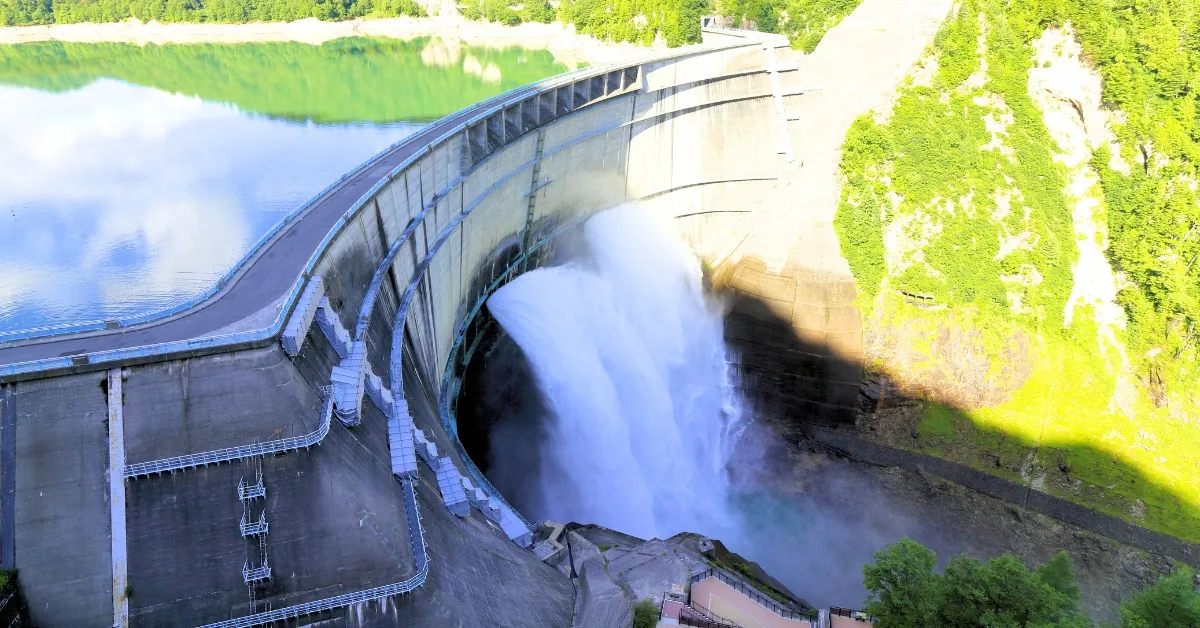
Dams play a vital role in managing India’s water, supporting both agriculture and electricity needs. India now has more than 5,300 large dams, ranking third in the world. Some of the most well-known dams include the Tehri Dam, which is the tallest in India, and the Hirakud Dam, the longest in the world. The Kallanai Dam in Tamil Nadu is the oldest, built almost 2,000 years ago. But do you know which major dam stands on the Narmada River? In this article, we will explore the history and significance of this impressive engineering achievement.
ALSO READ| Which is the Highest Dam in India?
Which Dam is Built on the Narmada River?
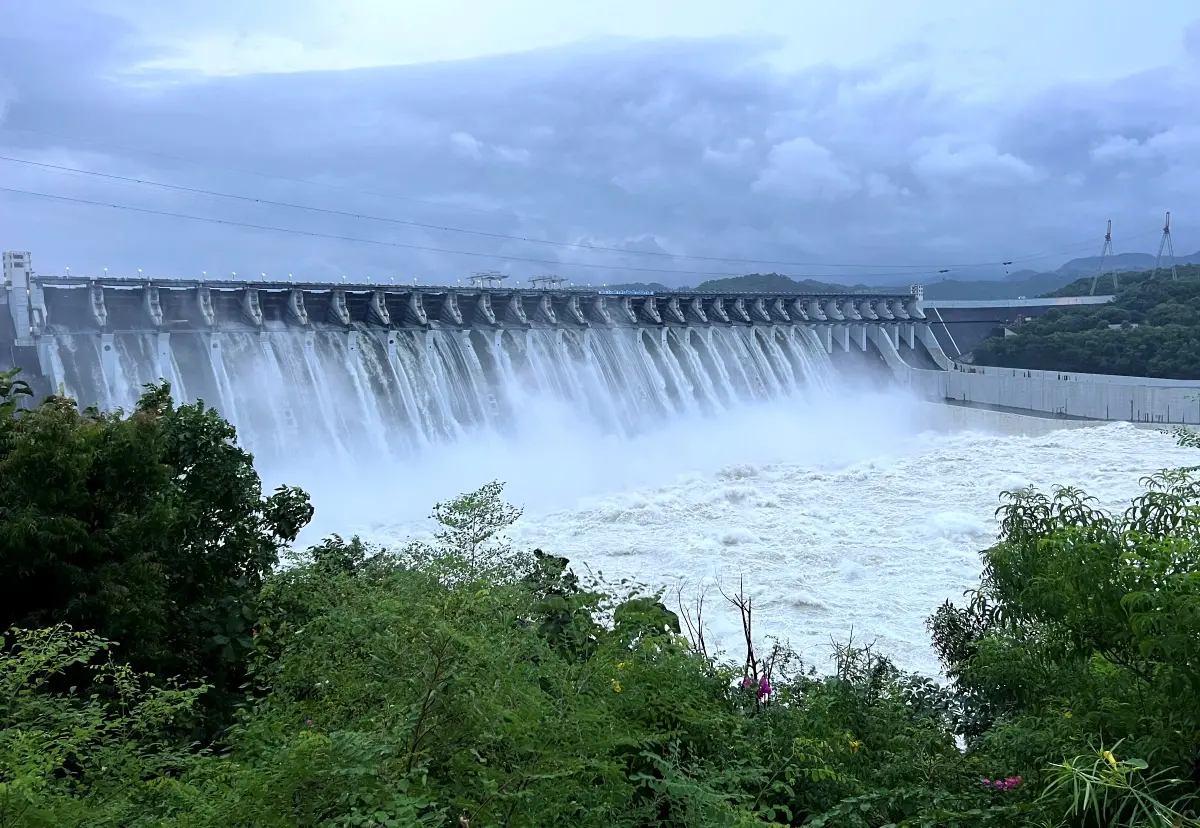
The Sardar Sarovar Dam, built on the Narmada River in Kevadia, Gujarat, is one of the world’s largest concrete gravity dams. It stands 138.68 metres tall. Although its foundation was laid by Jawaharlal Nehru in 1961, the dam was officially opened in 2017.
The project was designed to supply drinking water, irrigation, and hydroelectric power to Gujarat, Madhya Pradesh, Maharashtra, and Rajasthan. The dam has become a vital resource for the dry areas of Kutch and Saurashtra, helping to change farming in Western India. It also provides power to the Statue of Unity nearby, making the area important for both green energy and tourism.
7 facts about the Sardar Sarovar Dam
- It is the second-largest dam in the world in terms of the volume of concrete used for construction, surpassed only by the Grand Coulee Dam in the US.
- The dam is designed to withstand seismic shocks up to 6.5 on the Richter scale, utilising its massive weight and specific gravity design to remain stable.
- It features two powerhouses, the Riverbed Power House and the Canal Head Power House, with a combined installed capacity of 1,450 MW.
- As a "gravity dam", it relies entirely on its own weight (millions of tonnes of concrete) to resist the horizontal pressure of the water pushing against it.
- The main canal is approximately 458 kilometres long, making it the largest lined irrigation canal in the world.
- Large reservoirs like this can influence local humidity levels and transpiration rates in the surrounding flora, creating a localised cooling effect.
- The dam uses Francis Turbines, which are designed to operate at peak efficiency even with varying water pressure and flow rates.
What is the Importance of the Sardar Sarovar Dam?

The Sardar Sarovar Dam is a vital pillar of India's infrastructure. It provides essential water and power resources that sustain millions of people across four major states in Western India.
1. Water Security and Irrigation
- Agricultural Reach: It provides irrigation water to over 1.8 million hectares of land, primarily in the drought-prone areas of Gujarat and Rajasthan.
- Drinking Water: The dam supplies clean drinking water to over 9,000 villages and 135 urban centres, solving chronic water scarcity issues.
2. Clean Energy Production
- Hydroelectric Power: With an installed capacity of 1,450 MW, it generates billions of units of renewable energy annually, reducing reliance on fossil fuels.
- Power Sharing: The electricity generated is shared between Madhya Pradesh (57%), Maharashtra (27%), and Gujarat (16%).
3. Flood Control and Environment
- Disaster Mitigation: By regulating the flow of the Narmada River, the dam helps protect downstream areas from devastating seasonal floods.
- Groundwater Recharge: The extensive canal network helps raise the water table in surrounding regions through natural seepage and reduced tube-well extraction.
4. Economic and Tourism Growth
- Statue of Unity: The reservoir (Narmada Dam) provides the backdrop for the world's tallest statue, creating a global tourism circuit that supports thousands of local jobs.
- Inland Fisheries: The massive reservoir supports large-scale fishing activities, providing a livelihood for local tribal communities.
IN CASE YOU MISSED| List of Top 10 Largest Dams in the World
Top 10 Major Dams on the Narmada River
The Narmada River, known as the "Lifeline of Madhya Pradesh and Gujarat", is the site of the large Narmada Valley Development Project. This project has 30 major dams, but some are especially notable for their size and engineering.
Below is a tabulated list of the top 10 most significant dams built on or associated with the Narmada River basin.
| Rank | Dam Name | State | Height (m) | Installed Capacity (MW) | Key Feature |
| 1 | Sardar Sarovar | Gujarat | 138.68 | 1,450 | 2nd largest concrete dam in the world. |
| 2 | Indira Sagar | Madhya Pradesh | 92.00 | 1,000 | Largest reservoir in India by storage volume. |
| 3 | Omkareshwar | Madhya Pradesh | 33.00 | 520 | Located near the famous Jyotirlinga shrine. |
| 4 | Maheshwar | Madhya Pradesh | 35.00 | 400 | A major hydroelectric and irrigation project. |
| 5 | Bargi (Rani Avanti Bai) | Madhya Pradesh | 69.80 | 100 | The first major dam completed on the Narmada. |
| 6 | Tawa Dam | Madhya Pradesh | 57.91 | 13.5 | Built on the Tawa River, Narmada's biggest tributary. |
| 7 | Barna Dam | Madhya Pradesh | 47.70 | — | Key irrigation source for the Raisen district. |
| 8 | Man Dam | Madhya Pradesh | 31.00 | — | Part of the tribal area development in Dhar. |
| 9 | Jobat (Azad) Dam | Madhya Pradesh | 34.60 | — | Built on the Hathni River, a tributary of Narmada. |
| 10 | Sukta Dam | Madhya Pradesh | 30.00 | — | Crucial for irrigation in the Khandwa region. |
Quick Insights
- The Big Three: Sardar Sarovar, Indira Sagar, and Omkareshwar are the "powerhouses" of the basin, generating over 2,900 MW of electricity combined.
- Geology: Most of these dams are Gravity Dams, meaning they use their sheer weight of concrete and stone to hold back the force of the river.
- Multipurpose: While they are famous for power, their primary goal is providing drinking water and irrigation to over 18 million hectares of land across four states.
Conclusion
The Sardar Sarovar Dam highlights India’s commitment to engineering and managing resources wisely. Built on the Narmada River, the dam has turned dry regions into farmland and provides steady energy for the country. Although it took years of planning and debate to build, the dam’s positive impact on water supply and the economy is clear.
WHAT'S NEXT| Which is the Largest Dam in India?



Comments
All Comments (0)
Join the conversation