Which Cricket Rules Have Changed the Most Over the Years?
Cricket has changed a lot since the first written Laws of Cricket in 1744. Here are two major rules that went through several changes over the years.
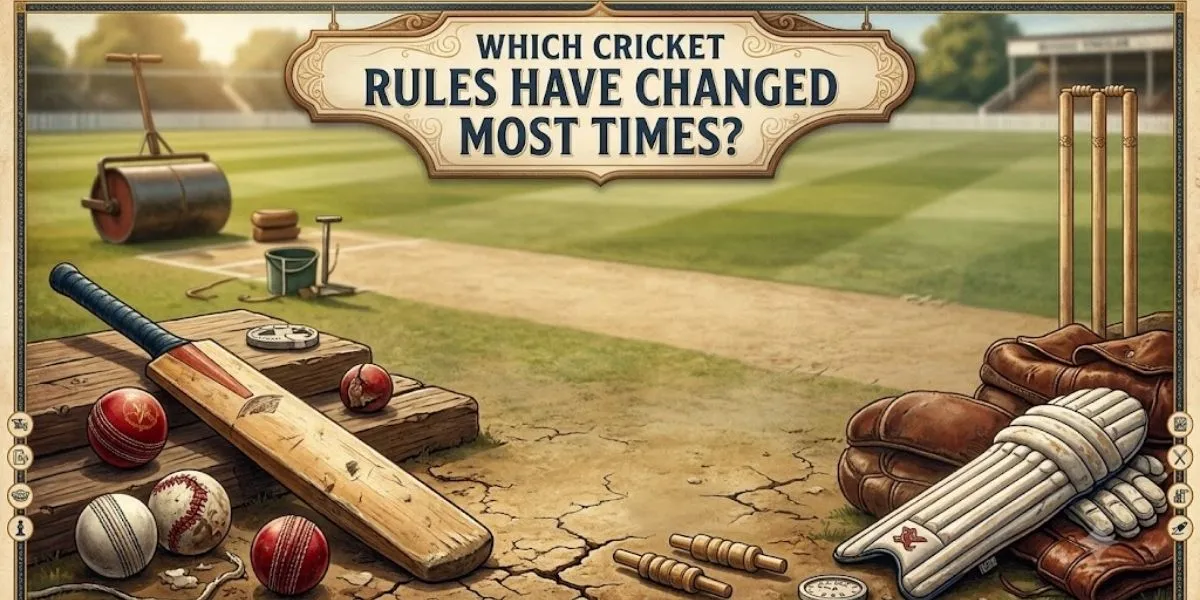
Cricket is one of the most complex games in the world and its rules have been discussed and changed many times over the years. The first known written code of the Laws of Cricket was made in 1744. It was a landmark moment for the sport and was established by the members of the London Cricket Club.
Since then cricket has gone through many changes in different aspects of the game.Introduction of different formats and types of cricket balls the game has changed a lot from how it was played in the early days. However some of the basic rules have still remained the same.
Who Manages the Laws of Cricket?
The Marylebone Cricket Club (MCC) has been associated with the Laws of Cricket since 1788. The club has played an important role in making and maintaining the laws that govern the game.
What is MCC?
The Marylebone Cricket Club is a cricket club based at Lord’s Cricket Ground in London. It has been responsible for the core Laws of Cricket for many years and has updated them as the game has evolved. The laws provide the basic framework for how cricket is played.
However, playing schedules, tournaments and rest of the decisions related to international cricket are taken by the International Cricket Council (ICC).
Which Cricket Rules That Have Changed the Most Over the Years?
Here are the complete details on two rules that have changed the most number of times since the inception.
Balls per over
The number of balls in an over has been a constant for more than four decades now. But in the early days cricket experimented a lot with this rule. Different countries used different numbers of balls in an over before six balls became the worldwide standard.
-
1744: At first there were four balls in an over.
-
1889: England changed to five balls per over.
-
1900: England further moved to six balls per over.
-
1924: Australia switched to eight balls per over.
-
1930s onwards: Countries like Australia and South Africa also used eight-ball overs for different periods.
-
1979-80: The six-ball over was finally standardised worldwide and it has remained the same since then.
Leg Before Wicket (LBW)
The Leg Before Wicket or LBW is one of the most complex rules in cricket. It has also remained a debatable topic among players and fans for a long time. The rule has gone through several changes since it was first introduced. With the arrival of the Decision Review System (DRS) things have become much clearer in many LBW decisions.
Some of the major changes to the LBW law over the years include:
-
1774: The LBW law was introduced. A batter could be given out if he deliberately used his leg to stop the ball.
-
1788: The deliberate action were removed later and the law was changed further.
-
1821: The wordings was changed once again with focus on how the ball was delivered.
-
1839: The law was revised with clearer wording around LBW dismissals.
-
1937: A major change allowed a batter to be given out even when the ball pitched outside the off stump in certain situations.
-
1972: The law was changed further to cover batters who offered no stroke to the ball.
-
2017 onwards: The modern LBW law continued alongside technologies such as DRS and ball tracking, making decision making more accurate.
Source: The Laws of Cricket, ESPNCricInfo
Do follow Jagran Josh for more such information and updates.

Varun Verma is an education and sports journalist with over three years of experience in journalism, with a strong focus on cricket . He has previously worked with SportsYaari and CricketTimes.com, where he developed a strong news sense and a knack for storytelling while covering breaking news and major sporting events. He holds a PG Diploma in English Journalism from the Indian Institute of Mass Communication (IIMC), New Delhi. Beyond sports, his interests include geopolitics, Indian polity and government policies. Inspired by the grit and passion of Ben Stokes, he strives to bring the same depth in his life.
For inquiries or professional insights, you can reach him directly at varun.verma@jagrannewmedia.com



![[Out] UGC NET June 2026 Result Live: यूजीसी नेट रिजल्ट ugcnet.nta.nic.in जारी, डायरेक्ट लिंक से करें चेक](https://img.jagranjosh.com/images/2026/August/2782026/UGC-NET-Result-2026-Marksheet-link-pdf.jpg)