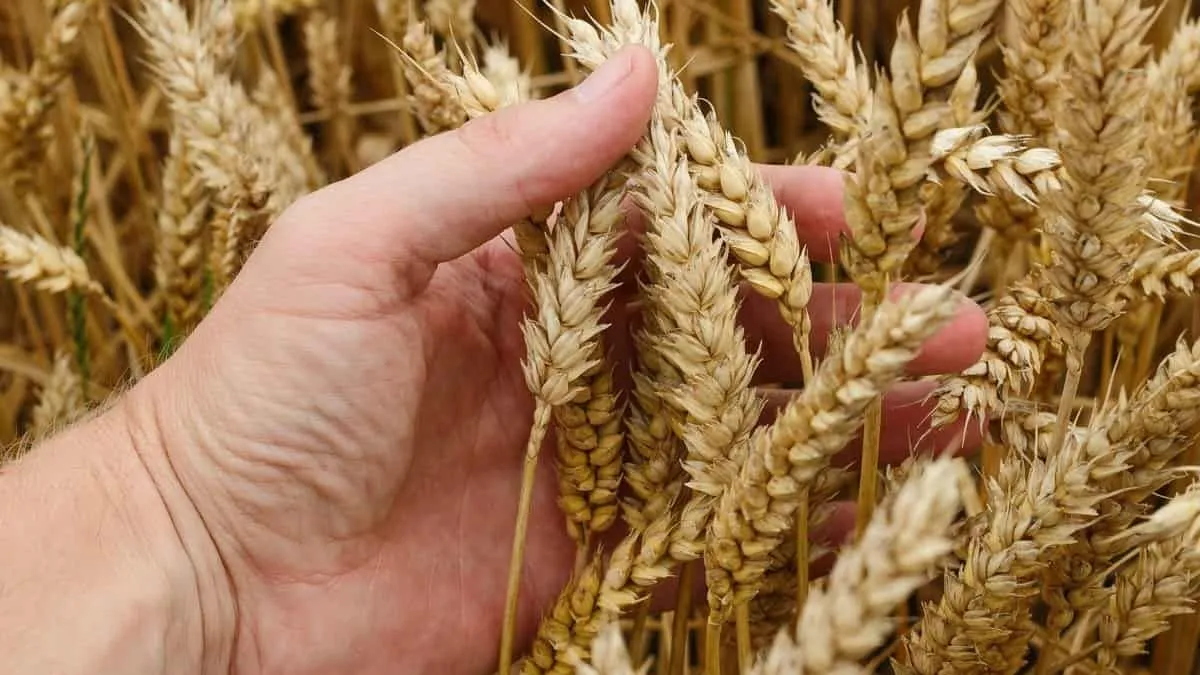
India is the second largest wheat producer in the world, with an estimated production of about 117.95 million tonnes in 2024-25, accounting for about 13 to 14 per cent of the global wheat output. The northwestern part of the Indo-Gangetic Plains produces most of the wheat in India. Archaeological research suggests that wheat was one of the staple crops of the Harappans in prehistoric times along with other items.
The Green Revolution of the 1960s and 1970s was a huge turning point. This movement introduced high-yielding varieties (HYV) seeds, increased irrigation, chemical fertilisers and pesticides and mechanised equipment, among others. This resulted in a significant increase in food grain production, especially wheat and rice. In July 1968, the Indian government issued a postage stamp in honour of the Wheat Revolution.
| Did you know? The word 'agriculture' comes from Latin. 'Agri' means 'field', and 'culture' means 'to cultivate'. Broadly, this includes agriculture, livestock-related activities, beekeeping (apiculture), fisheries, rearing of silkworms and preparing silk yarn, and fibre production, such as cotton and hemp. |
Which are the top 3 wheat-producing states in India?
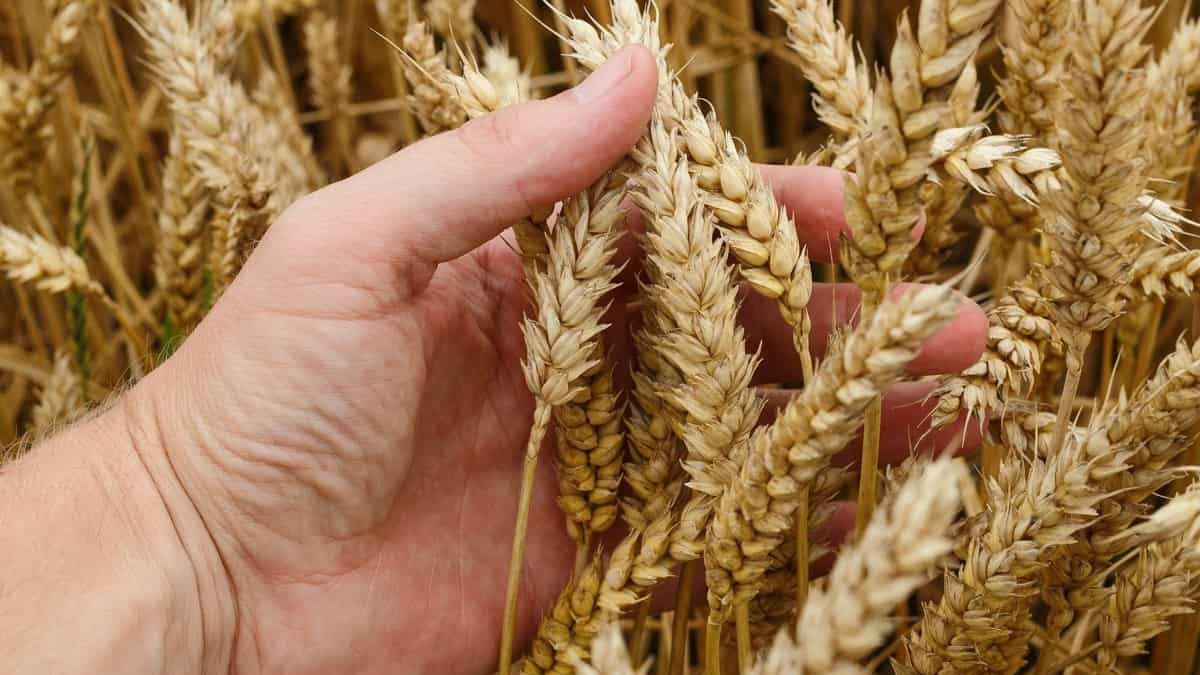
According to the data provided by the Economic Survey 2025-26, Uttar Pradesh, Madhya Pradesh, and Punjab are ranked among the top 3 wheat-producing states in India.
Uttar Pradesh ranks first in wheat production. Uttar Pradesh is the largest wheat producing state in India with an estimated production of 35.65 million tonnes in 2024-25, accounting for 30.23 per cent of wheat production.
Madhya Pradesh is the second-largest wheat-producing state in India, with estimated production of 24.51 million tonnes, accounting for 20.78 per cent of wheat production.
Punjab is the third-largest wheat-producing state in India, with estimated production of 17.99 million tonnes, accounting for 15.25 per cent of wheat production.
Major wheat-growing states in India also include Haryana, Rajasthan, Bihar and Gujarat.
India's major wheat export destinations included the UAE, Nepal, Iraq, Korea RP (South Korea), and Suriname.
Key Varieties of Wheat Production in India
In India, the main varieties of wheat grown in India are:
Common Bread Wheat: It accounts for 95 per cent India's wheat production. Common varieties include Sharbati, Lokwan, Sonalika, HD 2967, PBW 343, DBW 187, and WH 1105. Top 5 Common Bread Wheat producing states in India include Madhya Pradesh, Uttar Pradesh, Haryana, Punjab, and Rajasthan.
Durum Wheat: It is also known as 'macaroni' or 'pasta wheat'. It accounts for 4 per cent of total wheat production in India. Common varieties include Bhalia, Malavshakti (HI 1544), Bansi, and GW 496. Top 5 Durm Wheat producing states in India are Uttar Pradesh, Madhya Pradesh, Punjab, Haryana, and Rajasthan.
Emmer Wheat: It is also known as Samba or Khapli wheat. It accounts for about 1 per cent of thte total wheat production. It is used mostly for dalia. It is popular for low Glycaemic Index (GI) and high-fiber. The top 5 Emmer or Khapli wheat producing states are Maharashtra, Karnataka, Tamil Nadu, Andhra Pradesh, and Gujarat.
Key Facts about Wheat Cultivation in India
- Wheat is a rabi crop. Crops grown in the winter season (October to March) are called rabi crops. It requires cool temperatures range of 10 to 15 degrees during germination and 20 to 25 degrees Celcius during maturity.
- Known for wheat production, Punjab is called the 'Granary of India. Since the green revolution, wheat production in Punjab tripled.
- A report by the Department of Agriculture and Farmers Welfare showed that for every increase of one degree Celsius, wheat production drops by 4-5 million tonnes.
- Crops such as wheat are grown in the fine clayey soils. Clayey and loamy soils are considered gold standard for wheat production as they are good at retaining water. Other key soil types for wheat include alluvial, black (regur), red, yellow, and sandy loam.
- The entire northern plains has rich alluvial soil which is why wheat is grown in the northwestern plains of India.