Key Points
- 1856 MW Sawalkot project on Chenab River is J&K's largest hydropower initiative.
- Project aims to solve J&K's winter power deficit and achieve power-surplus status.
- Environmental clearance reaffirmed in Sept 2025 post Indus Water Treaty suspension.
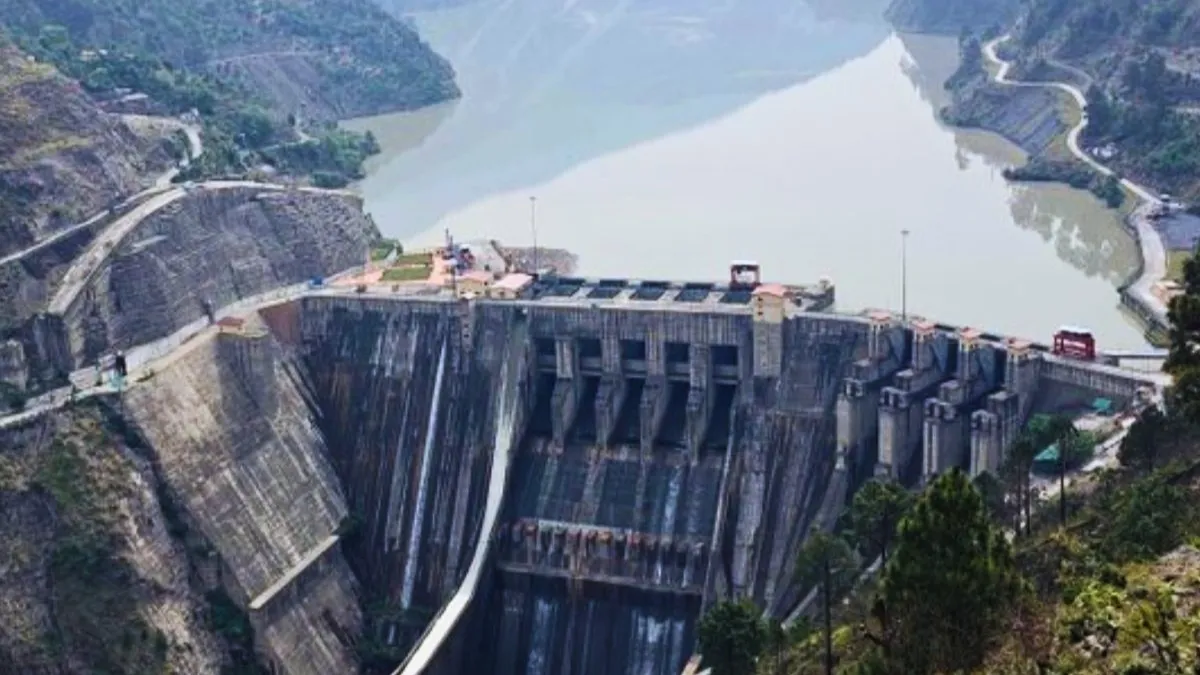
India started the work on the Sawalkot Hydroelectric Project on the River Chenab river in Jammu and Kashmir. This is the First Hydropower project after the suspension of the Indus Water Treaty in April, 2025 after the Pahalgam terror attack.
Sawalkote Hydroelectric Project:
-
The project is the largest hydropower project of Jammu & Kashmir and one of the biggest in Northern India. It will ensure a reliable power supply to Jammu & Kashmir during the peak demand months.
-
Its capacity is a 1856 MW Run-of-the-River(RoR) Hydropower Project on the Chenab River in the Ramban District of Jammu & Kashmir. (Note: run-of-the-river; uses the natural flow and elevation of the river to generate power)
-
It is a 192.5m high Roller Compacted Concrete (RCC) Gravity Dam and an underground power station with nine turbines will produce approximately 8,000 million units of electricity annually.
-
The first stage of the project was initiated in the 1980s. It has been modernized through multiple revisions to meet current ecological and technical standards.
-
The Project is implemented by National Hydroelectric Power Corporation(NHPC).
-
The Project got the environmental clearance and was reaffirmed by the Expert Appraisal Committee in September 2025.
Sawalkot Hydroelectric Project
| Feature | Specification |
| River & Basin | Chenab River |
| Location | Ramban and Udhampur districts, Jammu & Kashmir |
| Installed Capacity | 1,856 MW, Largest in J&K |
| Project Type | Run-of-the-River (RoR) with an underground powerhouse |
| Implementing Agency | National Hydroelectric Power Corporation (NHPC) |
| Dam Type & Height | Roller Compacted Concrete (RCC) Gravity Dam(192.5m) |
| Energy Output | 8,000 Million Units (MU) annually |
| Strategic Context | Key to utilizing India's share of "Western Rivers" under the Indus Waters Treaty (IWT) |
| Post-2025 Status | First major project cleared after India’s IWT suspension (April, 2025) |
| Objective | Solving J&K's winter power deficit and achieving power-surplus status |
Sawalkote project lies in India’s transition from "passive compliance" to "active utilization" of the Western Rivers under the Indus Waters Treaty, especially following the 2025 treaty suspension after the Pahalgam terror attack 2025. It provides geopolitical leverage through the ability to regulate river flow timing on a critical tributary and ensuring energy security in Jammu and Kashmir.
India has commenced work on the 1856 MW Sawalkot Hydroelectric Project on the Chenab River in Jammu & Kashmir. This significant Run-of-the-River project, implemented by NHPC, is the largest in J&K and crucial for ensuring reliable power supply, especially after the suspension of the Indus Water Treaty. It aims to address J&K's winter power deficit and utilize India's share of Western Rivers, producing 8,000 million units annually.
Also Read: Which Soil Is Known As Regur Soil?



-1770710996861.jpg)

Comments
All Comments (0)
Join the conversation