Show Key Points
Most dangerous supervolcanoes in the world: Deep below the Earth’s surface, there are some sleeping giants that are much stronger than ordinary volcanoes. These giants erupt rarely, but when it does happen, the result can literally affect the whole planet, including things like the extinction of certain species of fauna and flora, crop failures, falling temperatures, and darkness in the skies. These giants remain silent for years until it suddenly erupts in the strongest way possible.
The number of such giants all around the globe is counted in dozens, but only several of them are carefully monitored by specialists every single day. The reason is that some of them had already exploded once, causing destruction all around, and now are gathering energy again under the ground.
That's why scientists named these giants Supervalcanoes. In this article, you will learn about the top 7 most dangerous supervolcanoes of our planet and uncover which one is considered the most threatening today.
List of Top 7 Supervolcanoes in the World and their Location
Here is the list of the top 7 supervolcanoes in the world, along with their key features, eruption history, and global risk as follows:
| Rank | Supervolcano | Location | Last Major eruption | Risk Level |
| 1. | Yellowstone Caldera | USA | 640,000 years ago | High (closely monitored) |
| 2. | Toba Caldera | Indonesia | 74,000 years ago | Very High (past global impact) |
| 3. | Taupo Volcano | New Zealand | 26,500 years ago | High |
| 4. | Long Valley Caldera | USA (California) | 760,000 years ago | Moderate High |
| 5. | Campi Flegrei | Italy | 39,000 years ago | Very High (due to location) |
| 6. | Aira Caldera | Japan | 22,000 years ago | High |
| 7. | Valles Caldena | USA (New Mexico) | 1.25 million years ago | Moderate |
Also Read - List of Top 10 Youngest and Oldest Mountain Ranges in the World 2025
1. Yellowstone Caldera
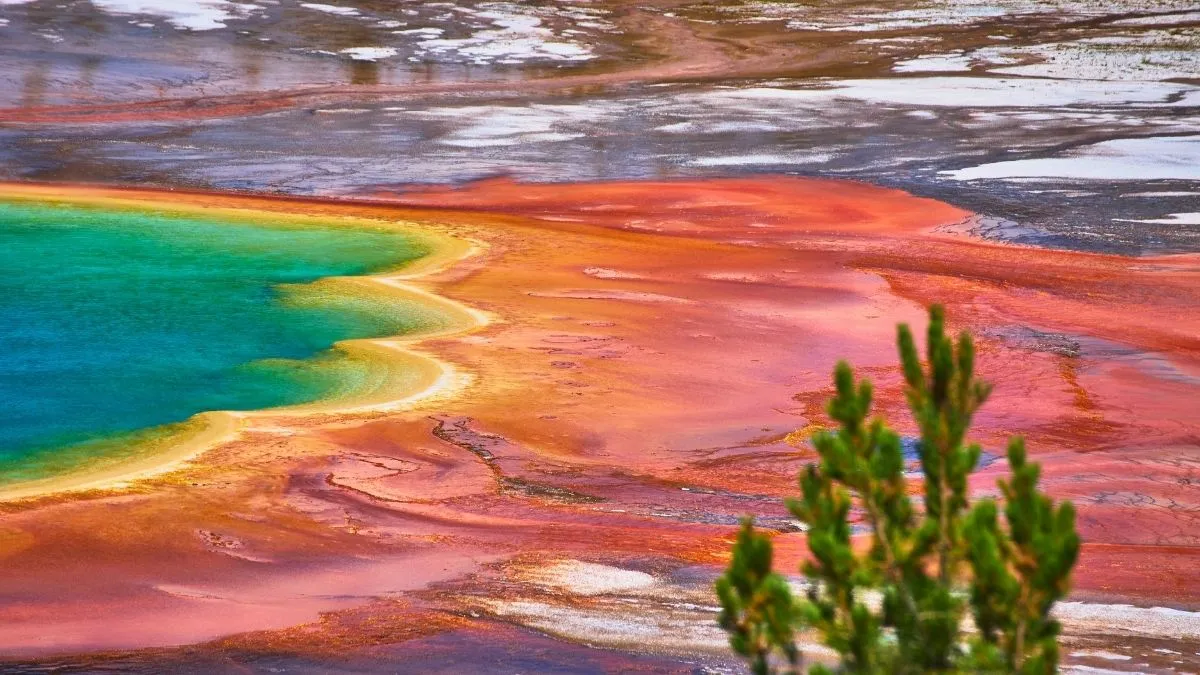
The Yellowstone Caldera is a world-renowned supervolcano. Located in the USA, it is famous for its geysers, hot springs, and geothermal activities. The last major eruption occurred some 640,000 years ago. However, scientists watch it very closely due to its enormous magma chamber.
Despite being quite active at present, volcanologists claim that it is unlikely to explode in the near future. Nevertheless, in the case of an eruption, it may affect the global climate and all living beings on Earth.
2. Toba Caldera
Toba is home to the biggest volcano that erupted within the past two million years. The location is in Indonesia, where today it is in the form of a lake. The eruption that occurred around 74,000 years ago might have triggered global cooling. However, at present, the volcano is inactive and still poses a threat. It is researched to determine previous climatic changes.
3. Taupo Volcano
The Taupo Volcano is situated in New Zealand and is among the world’s most active supervolcanoes. Its most recent major eruption took place around 26,500 years ago. At present, it forms part of Lake Taupo.
Despite its age, it has experienced some eruptions during relatively recent periods of time, hence its significance to science. It is continuously observed due to its ongoing activity. Any future eruption will affect the region, particularly New Zealand.
4. Long Valley Caldera
The Long Valley Caldera is found in California, USA. Its formation dates back to an enormous volcanic eruption that occurred roughly 760,000 years ago. It exhibits active features such as earthquake swarms and surface uplifts.
It is being monitored closely since such activity may signify that there is activity going on beneath the surface. Currently, the volcano is not erupting, but this does not mean that it is inactive.
5. Campi Flegrei
This volcano is located close to Naples, Italy. Therefore, it is quite dangerous because of the huge number of people living close to it. The last time Campi Flegrei erupted was approximately 39,000 years ago.
Currently, there are indicators such as gas emissions and land movements that have been witnessed. These signs make scientists very worried since small changes may have a huge impact on several million people.
6. Aira Caldera
Aira Caldera is found in Japan, with an active volcano known as Sakurajima. It was formed about 22,000 years ago due to a major eruption. The current status of the caldera sees frequent eruptions from Sakurajima, indicating that it is active.
It is found in an area near populated places, posing risks of destruction to nearby regions. This makes it necessary to study the caldera to understand its behavior.
7. Valles Caldera
The Valles Caldera is found in New Mexico, United States of America. This volcano was formed around 1.25 million years ago, following a major eruption. Currently, it is a big volcanic crater that contains forests and geothermal activities. It is one of the least active among those listed here, although it is still studied by geologists. It provides valuable information regarding the behavior of supervolcanoes.
Check Out - List of 7 Most Active Volcanoes in the World 2025: Ranked
The supervolcanoes can be considered one of the most powerful volcanoes in the world. Despite being extremely rare, these volcanic eruptions have an enormous impact on the planet, which might last for a long period of time. Each supervolcano has its own story and the risks that it poses. Constant research and monitoring help us learn more about their nature and prepare in case any eruption will occur in the near future. Luckily, none of these supervolcanoes is ready for action at the moment.


-1777116813191_t.webp)

