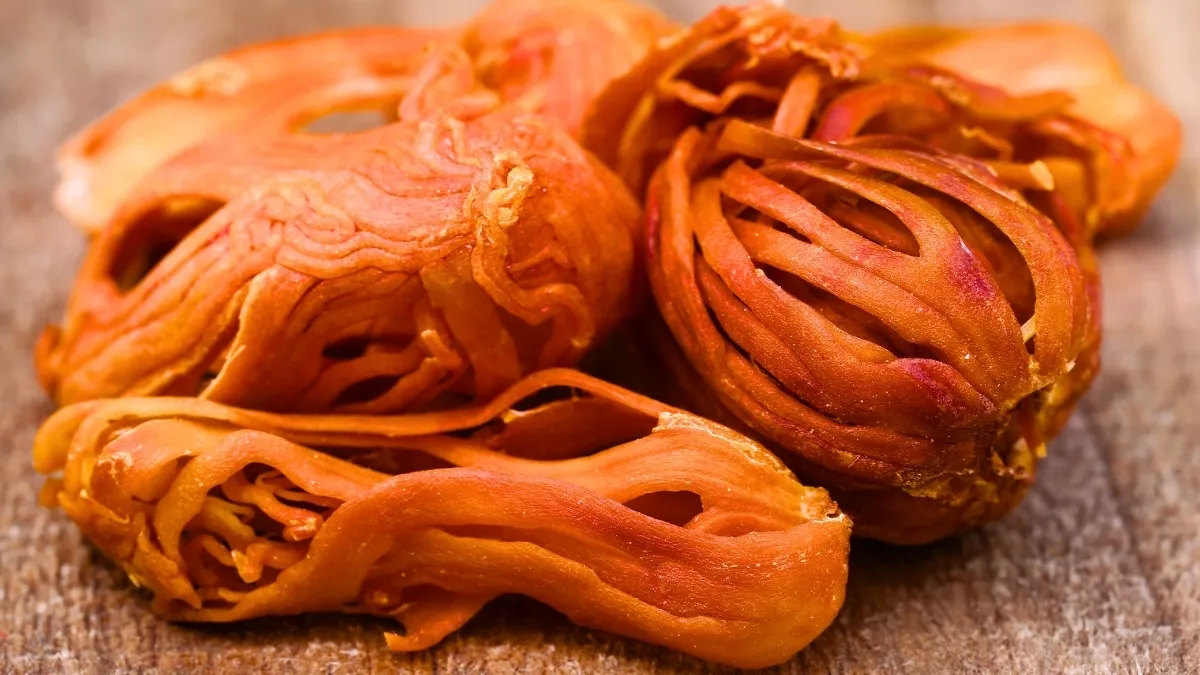
Mace is renowned for its volcanic soil and ancient "Spice Island" heritage, one nation alone cultivates nearly 80% of the world’s total harvest. The global spice trade relies heavily on a single tropical powerhouse for its supply of this delicate, lacy aril.
Which Country is the Largest Producer of Mace in the World?
Indonesia is the largest producer of mace in the world. Indonesia dominates the global mace market, accounting for approximately 75% to 80% of the world's total supply.
Indonesia is famous for Banda Mace, a highest quality mace which is produced in the Banda Islands in the Maluku province of Indonesia.
Historically known as the "Spice Islands"—where the nutmeg tree is indigenous. Indonesian mace tends to be orange-red when dried, while Grenadian mace is typically more yellowish-orange.
What Plant Does Mace Come From?
Mace is a unique spice because it is actually a "sister spice" to nutmeg where both spices come from the Nutmeg tree scientifically known as Myristica fragrans, a tropical evergreen.
A nutmeg tree produces a yellow, pear-shaped fruit when this fruit ripens, it splits open to reveal two distinct parts:
-
Nutmeg: The inner, hard, brown seed.
-
Mace: The bright red, lacy, web-like covering known as an aril that wraps around the nutmeg seed.
Largest Mace Producing Country in the World
Most of the tropical regions are famous for mace production but Indonesia’s dominance is due to its ideal volcanic soil and humid tropical climate, which are the native conditions for the nutmeg tree. The scale of production varies significantly.
| Rank | Country | Market Share (Approx.) | Key Characteristics |
| 1 | Indonesia | 75% - 80% | Produces "Banda Mace," (high quality) |
| 2 | Grenada | 20% | Known as the "Spice Isle", part of its national identity. |
| 3 | India | < 5% | Kerala, Karnataka, and Tamil Nadu. |
-1775980028976.jpg)
Largest Producing State in India
Kerala remains the undisputed leader in mace production within India, contributing nearly 70% of the national output. The state's unique agro-climatic conditions specifically the high humidity and consistent rainfall of the Western Ghats which provide the perfect environment for the Myristica fragrans (Nutmeg) tree to thrive.
The districts of Ernakulam, Idukki, and Thrissur of Kerala serve as the primary cultivation hubs. In Kerala, nutmeg and mace are often grown as intercrops in coconut and areca nut plantations, maximizing land utility and yield.
The mace produced here is highly prized for its vibrant color and high essential oil content, making it a favorite for both domestic culinary use and international exports.
| State | Contribution | Primary Regions |
| Kerala | Largest (70%) | Ernakulam, Idukki, aThrissur |
| Karnataka | Significant (25%) | Dakshina Kannada, Uttara and Kannada |
| Tamil Nadu | Minor (4%) | Nilgiris, Kanyakumari |
Interesting Facts About Mace Production in the World
Mace Known for Two Spices, One Fruit:
The nutmeg tree is the only tree in the world that produces two distinct spices: nutmeg and mace from the same fruit.
Mace as the Saffron of Spices:
Because mace is the thin outer layer of the seed, it is much scarcer than nutmeg. It takes a large volume of fruit to produce just a small amount of dried mace, making it more expensive.
Mace as The "Banda" Gold:
In the 17th century, Dutch traded island of Manhattan (New York) to British in exchange for the island of Run in Indonesia, to secure a monopoly on nutmeg and mace.
Uses of Mace in Drying:
To become the spice we use in kitchens, it is flattened and dried for 10 to 14 days, during which it turns its characteristic amber or tawny color. Fresh mace is used in crimson.
Health Benefits of Mace
Mace contains myristicin, a compound used in traditional medicine for digestion. However, in extremely high quantities, it can have psychoactive effects.
Indonesia is the global leader in mace production, supplying approximately 75-80% of the world's market. It details the botanical origin of the spice—the lacy "aril" surrounding the nutmeg seed of the Myristica fragrans tree. Grenada and India as secondary producers while providing historical context on the "Spice Islands" (Maluku).
Also Read: Which is the Largest Source of Electricity in India?


-1776281721693_t.webp)

