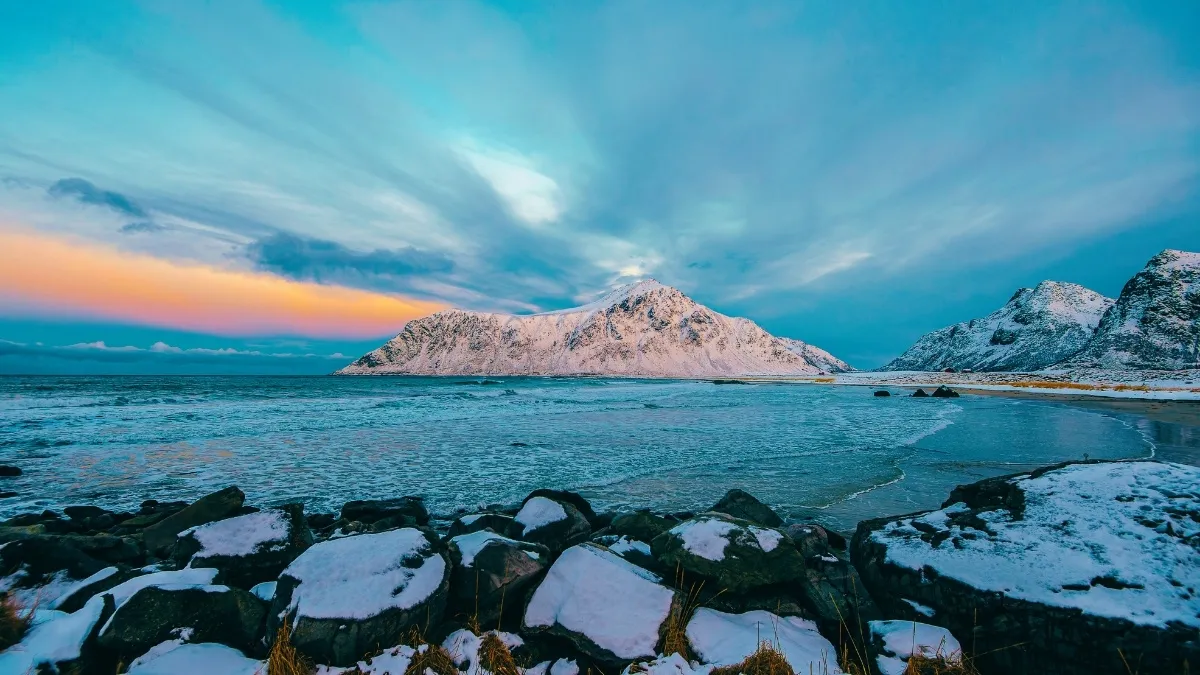
“Which country has no sunlight for months?” is about places where the sun stays below the horizon for weeks or even months in winter, a natural event called polar night.
This mainly happens very close to the North and South Poles, inside the Arctic and Antarctic Circles, where the tilt of Earth cuts off direct sunlight for long periods.
According to the World Meteorological Organization, regions near the poles are warming faster than the global average, which can affect how long and how dark these polar‑night periods feel over time.
Which Country has No Sunlight for Months?
Which country has no sunlight for months? Not a whole nation, but parts of several countries—especially those inside the Arctic and Antarctic Circles—go without direct sunlight for weeks or months each winter.
This includes places like Svalbard (Norway), northern Canada (Nunavut), Utqiaġvik in Alaska (USA), and northern regions of Russia, which all experience “polar night.”
Below is a simple table showing key regions where the sun does not rise for several weeks to months.
| Region / Country | Typical polar‑night period (approx.) | Duration of “no sunlight” |
| Svalbard, Norway | Late October to mid‑February | Around 2–4 months of no sun rise |
| Northern Canada (Nunavut) | Late November–January | Weeks of near‑continuous darkness or twilight |
| Utqiaġvik, Alaska (USA) | Late November–mid‑January | About 65 days of no sun rise |
| Northern Russia (Murmansk etc.) | Late November–late January | Several weeks of darkness or deep twilight |
| Parts of Finland and Sweden | December–January | Short‑term polar‑night or very long nights |
| Antarctica (scientific bases) | March–September (South Pole) | Up to 6 months of continuous darkness |
These regions lie inside the Arctic Circle (for the northern locations) or close to the Antarctic Circle, where Earth’s tilt means the Sun cannot rise above the horizon for a long stretch.
Because the poles point away from the Sun in winter, the same places that live through months of darkness also enjoy the “midnight sun” in summer, when the sun never sets.
People in these areas often describe the winter as a mix of deep blue twilight, starlight, and artificial light, rather than total black night.
In Svalbard, for example, the sun stays below the horizon from late October to mid‑February, and locals plan their lives around this long polar night, using indoor lighting and special routines to stay healthy and alert.
Why Does This Happen and How Long Does It Last?
Which country has no sunlight for months? The exact length of darkness depends on how close a place is to the North or South Pole.
At the poles themselves, polar night can last up to about 179 days (roughly six months), while areas just inside the Arctic Circle may lose the sun for only a day or a few days.
-
In Svalbard, Norway, the sun stays below the horizon for about 84 days, creating a long, cold polar‑night period.
-
In northern Canada and Alaska, Arctic communities often see weeks of twilight or near‑darkness, even if they don’t have full polar night.
During polar night, the sky is rarely pitch‑black because of moonlight, starlight, and artificial lights in towns, which scientists call “astronomical twilight.”
In Antarctica, research stations like those at the South Pole run mainly on electric lights and strict schedules for months, as the sun never appears above the horizon.
How Do People Live Without Sunlight?
Which country has no sunlight for months? Even in these extreme regions, people live normal‑looking lives by adapting their routines, homes, and health habits.
Residents in places like Norway, northern Canada, Alaska, and Russia use strong indoor lighting, regular exercise, and social activities to stay mentally and physically healthy.
Common ways people cope:
-
Using bright indoor lamps and “daylight” bulbs to reduce tiredness and mood changes.
-
Staying active with indoor sports, community events, and hobbies to fight the effect of long‑dark winters on mental health.
-
Taking vitamin D supplements or eating vitamin‑D‑rich foods, because lack of sunlight reduces the body’s natural vitamin‑D production.
In places like Longyearbyen in Svalbard, people even celebrate the “first sunrise” after months of darkness with small festivals, showing how meaningful the return of the sun is.
These adaptations help people in polar‑night regions live safely and happily, even when the sun has disappeared for weeks or months.
Conclusion
“Which country has no sunlight for months?” is best answered by looking at polar regions inside the Arctic and Antarctic Circles, such as Svalbard (Norway), northern Canada, Alaska, and parts of Russia.
These areas lose the sun for weeks or even months because of Earth’s tilt and orbit, but people adapt with special lighting, routines, and community support to handle long, dark winters.