Show Key Points
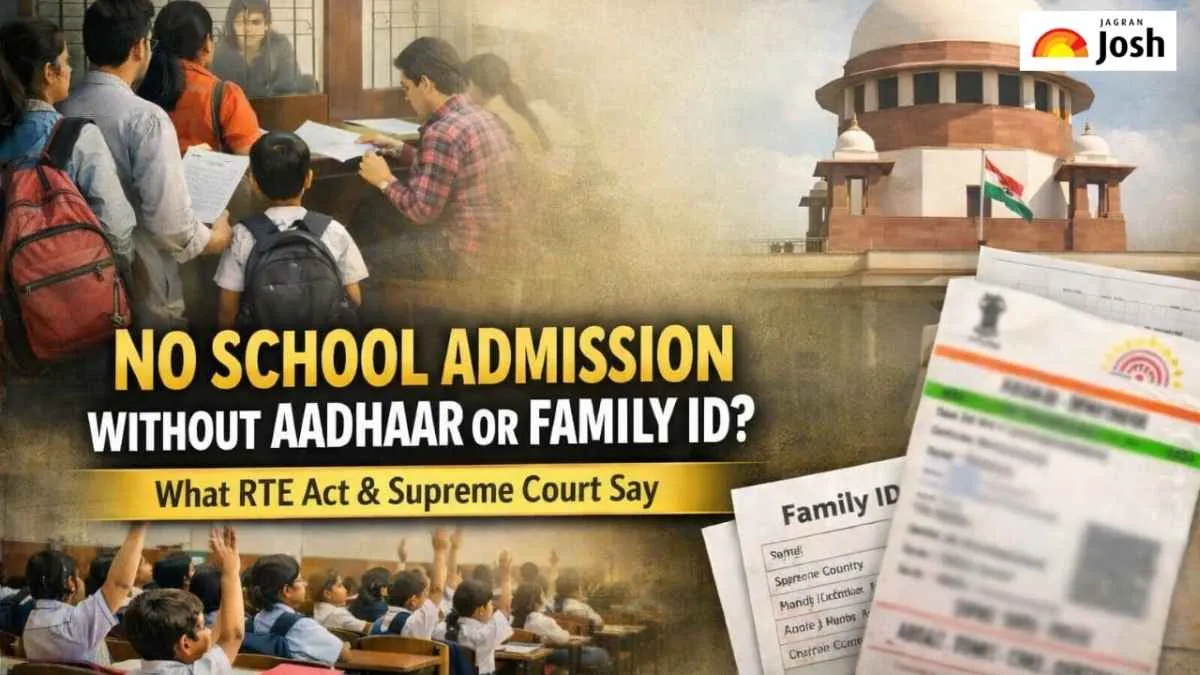
In a recent development that has sparked widespread debate across the educational sector, several reports have highlighted instances where schools are denying admission to children due to the absence of Aadhaar cards or Family Identity Proofs (PPP or Parivar Pehchan Patra). This move has raised significant legal questions regarding the conflict between administrative mandates and the fundamental right to education.
While the state governments often emphasise these documents for tracking scholarship benefits and maintaining digital databases, the legal framework offers a different perspective.
The Right To Education (RTE) Act and Legal Protections
Under the Right of Children to Free and Compulsory Education (RTE) Act, 2009, education is a fundamental right for every child aged 6 to 14.
- Section 15 of the RTE Act explicitly states that a child shall be admitted to a school even if the admission is sought after the extended period.
- More importantly, the act and subsequent government circulars have often clarified that no child should be denied admission for lack of age proof or identity documents.
The primary objective of the RTE Act is to ensure universal access to schooling. Legal experts argue that making Aadhaar a mandatory prerequisite for admission into a classroom violates the spirit of this act. In many rural areas, obtaining or updating an Aadhaar card can be a tedious process, and it is a barrier to entry risks pushing vulnerable children out of the formal education system.
The Supreme Court’s Stance
The Supreme Court of India, in its landmark Puttaswamy judgement and subsequent hearings on the Aadhaar scheme, has been clear: Aadhaar is not mandatory for school admissions. The apex court emphasised that, as education is a fundamental right, administrative requirements like biometrics cannot supersede a child’s right to be in school. The court ruled that schools cannot make Aadhaar a condition precedent for enrollment.
Furthermore, the Unique Identification Authority of India, UIDAI, has previously issued circulars stating that schools cannot deny admission to students who do not possess an subsequently help them facilitate the Aadhaar registration process. Despite these legal safeguards, many schools continue to insist on Family IDs and Aadhaar for the linking of data with government portals. Parents are advised to cite the Supreme Court ruling and the RTE guidelines if faced with such hurdles.
While these documents help avail the government subsidies and mid-day meal benefits, they cannot legally be used as a reason to turn a child away from the school gates.
Also read, OFSS Bihar Board Inter Admission 2026: Online Application for Class 11 Starts April 8 at ofssbihar.net



Comments
All Comments (0)
Join the conversation