Did you know that every living thing on Earth, from the tiniest bacteria to the massive blue whale, follows the same fundamental rules of life? This incredible study of living organisms is called biology. It explores how plants grow, how animals survive, and how our own bodies function every single day. Biology helps us understand the complex web of life that connects us all. But have you ever wondered how this massive field of science actually began? Long ago, one brilliant thinker decided to stop guessing and start observing. He spent years carefully studying the natural world, dissecting creatures, and categorising plants. His work was so revolutionary that it laid the foundation for everything we know about life today. Even after thousands of years, his methods remain the gold standard for scientists. Do you know who is known as the father of biology? In this article, we will take a look at the life, the discoveries, and the lasting legacy of this ancient genius who changed science forever.
Who Is Known As The Father Of Biology?
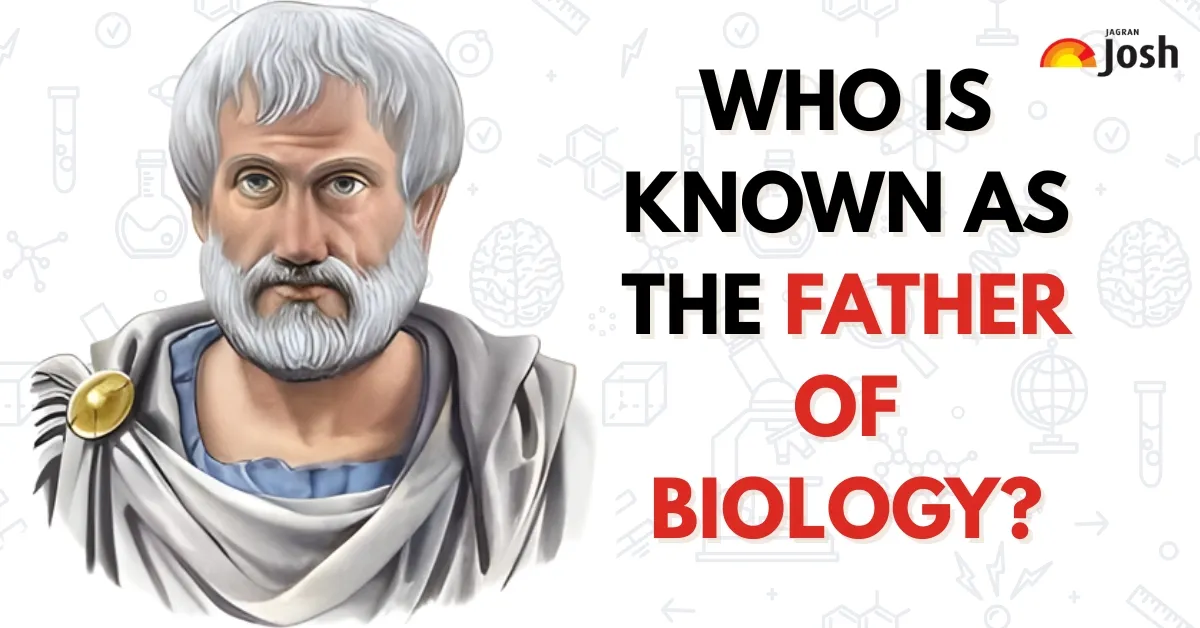
The title "Father of Biology" belongs to the ancient Greek philosopher Aristotle. While many people know him as a thinker, he was the first person to treat the study of life as a formal science.
Who Was Aristotle?
Aristotle was born in 384 BC in Stagira, a small town in northern Greece. His father was a physician to the king, which likely sparked Aristotle's early interest in the workings of the body. He later moved to Athens to study under Plato, but his heart always belonged to the natural world.
| Particulars | Details |
| Date of Birth | 384 BC; Stagira, Chalcidice, Greece |
| Died | 322 BC; Euboea, Greece |
| Education | Platonic Academy |
| Spouse | Pythias |
| Notable Work | Corpus Aristotelicum |
| Nationality | Greek |
| Region | Western Philosophy |
| Era | Ancient Greek Philosophy |
| School | Peripatetic School, Aristotelianism, Classical Republicanism |
| Notable Students | Alexander the Great, Theophrastus, Aristoxenus |
| Main Interests | Biology, Zoology, Physics, Logic, Ethics, Politics, Metaphysics, Psychology, Poetry, Music, Rhetoric, Economics, Geology, Meteorology |
Key Contributions
- Systematic Classification: He was the first to categorise animals into groups based on physical characteristics, such as "blooded" (vertebrates) and "bloodless" (invertebrates).
- Observational Research: He conducted detailed studies of over 500 species, including marine life such as octopuses, and the development of chick embryos.
- Foundational Works: His writings, such as Historia Animalium (History of Animals), served as the primary authority on biological science for centuries.
- Scientific Method: He pioneered the practice of gathering data from direct observation and dissection, laying the groundwork for the modern scientific method.
Why Aristotle is Known as the Father of Biology?
Aristotle didn't just wonder about life; he looked at it closely. He is credited with "inventing" biology because:
- Observation: He spent years on the island of Lesbos observing marine life.
- Classification: He was the first to group animals by similar features (e.g., those with blood vs. those without).
- Dissection: He studied the internal organs of over 500 species to see how they functioned.
The Meaning of Biology
The word "Biology" comes from two Greek words: "Bios" (meaning "life") and "Logia" (meaning "study of"). Although the specific word was coined much later, Aristotle's work provided the actual roadmap for the study.
Other Key Contributions
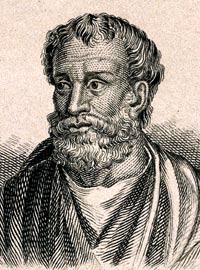
Aristotle was a true polymath. Beyond biology, he made massive impacts in other areas:
- Zoology: His book, History of Animals, was the first significant work on animal behaviour.
- Logic: He invented the "Syllogism," a way of reaching a logical conclusion.
- Physics and Ethics: He wrote foundational texts on how the physical world works and how humans should live virtuously.
Conclusion

Even though Aristotle lived over 2,000 years ago, his influence is still felt in every science classroom today. He taught us that to understand the world, we must first look at it with curiosity and precision. By asking "why" and "how" things live, he moved humanity away from myths and toward factual evidence. He proved that even the smallest insect is worth studying. Today, every modern biologist uses the foundation of observation and classification that he built. Aristotle didn't just research life; he taught the world how to appreciate its beauty and complexity.





Comments
All Comments (0)
Join the conversation