Which Two Oceans Are Connected by the Panama Canal?
Which two oceans are connected by the Panama Canal? Learn how the canal links the Atlantic and Pacific Oceans, its history, locks, length, and importance in world trade.
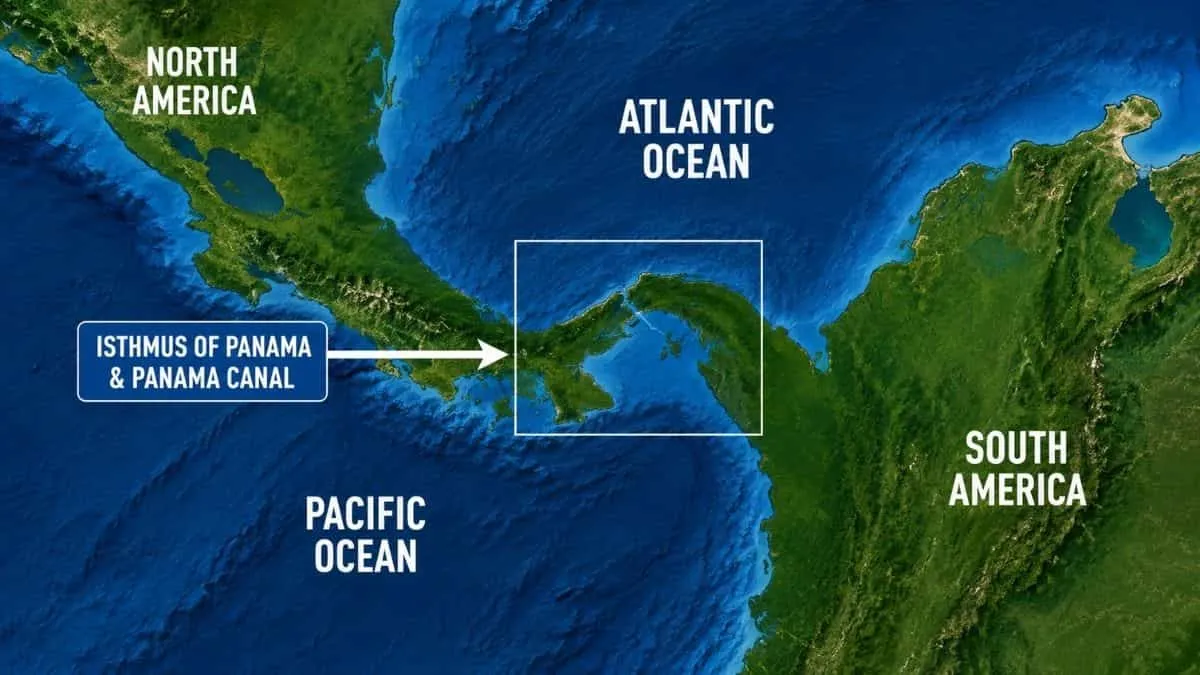
The Panama Canal is one of the best-known canals in the world. It is located in Panama, a country in Central America.
The canal is important because it provides a shorter sea route between the Atlantic Ocean and the Pacific Ocean.
But how does a ship move from one ocean to the other through the canal? Why was the canal built? And how long is it?
Let us understand the Panama Canal in simple words.
Which Two Oceans Does the Panama Canal Connect?
The Panama Canal connects the Atlantic Ocean and the Pacific Ocean.
It runs across the Isthmus of Panama. This is a narrow strip of land that connects North America and South America.
The Panama Canal Authority says the canal is about 80 kilometres long.
| Panama Canal | Details |
| Country | Panama |
| Location | Central America |
| Connects | Atlantic Ocean and Pacific Ocean |
| Length | About 80 kilometres |
| Officially opened | 15 August 1914 |
| Main lake | Gatun Lake |
Why Was the Panama Canal Built?
Before the canal was built, ships travelling between the Atlantic and Pacific had to take a much longer route around the southern part of South America.
This added a lot of distance to a journey.
The Panama Canal provided a shorter route across Panama. Ships could enter the canal from one side, cross the country and leave from the other side.
The U.S. Government's GovInfo records also explain that the canal shortened the route between the two oceans.
How Does a Ship Cross the Panama Canal?
The Panama Canal is not a straight waterway at sea level. It uses a system called locks.
A lock is a large chamber with gates. Water is allowed into or out of the chamber to raise or lower a ship.
When a ship enters the canal, the locks raise it from sea level to the level of Gatun Lake. The lake is about 26 metres above sea level.
The ship then travels through the canal before being lowered again towards the other ocean.
You can think of the locks as a lift for ships. Instead of lifting a car or a person, they raise and lower very large ships using water.
Which Locks Are Used by Ships?
The original Panama Canal has three main sets of locks.
They are:
-
Gatun Locks on the Atlantic side
-
Pedro Miguel Locks in the middle
-
Miraflores Locks on the Pacific side
The Panama Canal Authority lists Gatun on the Atlantic side and Pedro Miguel and Miraflores on the Pacific side.
The canal has also been expanded. The newer Neopanamax locks allow larger ships to use the waterway.
When Was the Panama Canal Opened?
The Panama Canal officially opened to traffic on 15 August 1914. The opening was an important event in the history of international shipping.
According to U.S. Government records, ships previously had to travel around South America to move between the Atlantic and Pacific. The new canal gave them a much shorter route.
What Is the Isthmus of Panama?
The word isthmus may sound difficult, but its meaning is simple. An isthmus is a narrow piece of land that joins two larger land areas.
The Isthmus of Panama connects North America and South America.
The Panama Canal was built across this narrow part of land. The canal is therefore located between two large bodies of water, the Atlantic and Pacific Oceans.
Does the Canal Really Connect Two Oceans?
Yes. Ships can enter the Panama Canal from the Atlantic side and travel through the waterway before reaching the Pacific side. They can also travel in the opposite direction.
The canal is therefore a water route between the two oceans.
One small point is worth understanding here. The canal does not simply act like a river where water flows directly from one ocean to the other. Ships are moved through different sections of the canal using locks and waterways.
How Long Is the Panama Canal?
The Panama Canal is about 80 kilometres long, or around 50 miles.
Although this may not sound very long, its location is important. It crosses one of the narrow parts of the American continent.
The canal's location means ships do not have to travel around the southern end of South America when they need to move between the Atlantic and Pacific.
Why Is the Panama Canal Important for Trade?
The canal is used by ships carrying goods between different parts of the world.
The Panama Canal Authority says the waterway saves time, distance and transportation costs for ships travelling between the Atlantic and Pacific. It serves many international shipping routes and connects ports in different countries.
For example, a ship carrying goods does not have to make the much longer journey around South America when it can use the Panama Canal.
This is one reason why the canal has an important place in world trade.
Panama Canal: Important Facts
| Facts | Detail |
| Where is the Panama Canal? | Panama, Central America |
| Which oceans does it connect? | Atlantic Ocean and Pacific Ocean |
| How long is it? | About 80 km |
| When did it officially open? | 15 August 1914 |
| What lake do ships reach? | Gatun Lake |
| How high is Gatun Lake above sea level? | About 26 metres |
| How are ships raised and lowered? | By locks |
| Why was it built? | To provide a shorter route between the two oceans |
So, the Panama Canal connects the Atlantic Ocean and the Pacific Ocean.
It is about 80 kilometres long and crosses the Isthmus of Panama. Its lock system raises and lowers ships so they can travel between the two oceans.
The canal officially opened on 15 August 1914 and remains an important route for ships carrying goods around the world.

Prabhat Mishra is a Subject Matter Expert and digital journalist with an extensive background in the competitive exam landscape and over 4 years of experience in education, national and international news, and current affairs. Over his tenure with top knowledge platforms like Mentorship India, IAS BABA, IAS SARTHI, and now Jagran Josh, he has a deep understanding of government exams like UPSC and State PCS, including UP and Bihar, as he has already qualified for the UPPCS 2022 Mains and Bihar 68th Mains. With his core expertise in history, polity, geography & current affairs, he specialises in creating well-researched, aspirant-centric content and simplifying complex topics for competitive examinations.





![[Out] UGC NET June 2026 Result Live: यूजीसी नेट रिजल्ट ugcnet.nta.nic.in जारी, डायरेक्ट लिंक से करें चेक](https://img.jagranjosh.com/images/2026/August/2782026/UGC-NET-Result-2026-Marksheet-link-pdf.jpg)