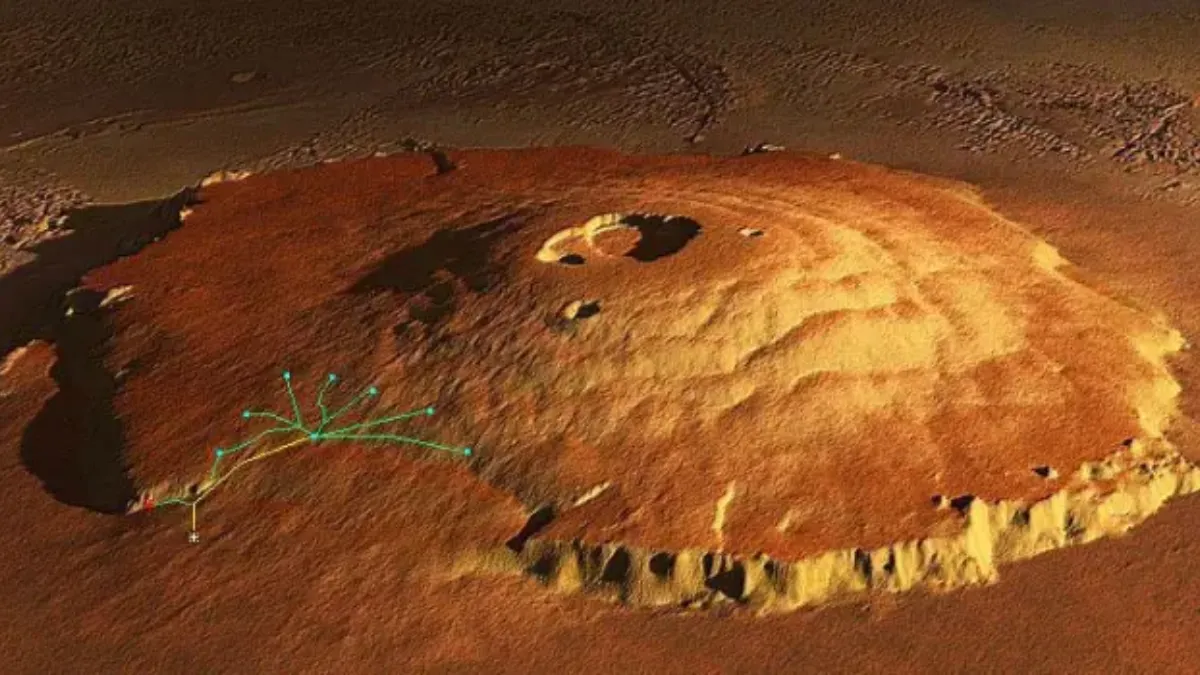
Mountains pose humanity's greatest physical challenges on Earth. Mount Everest in the Himalayas stands at 8,848 meters (29,032 feet) above sea level. Climbing it requires weeks of getting used to the altitude, oxygen support, and expert guidance from Sherpas.
However, this impressive peak looks small compared to the Solar System's true giant. Olympus Mons is an extinct shield volcano on Mars that rises 21.9 kilometers (13.6 miles or 71,980 feet) from base to summit. This makes it nearly 2.5 to 3 times the height of Everest.
It spans an incredible 600 kilometers (373 miles) in diameter which is wider than the state of Arizona. First captured in images by NASA's Mariner 9 probe in 1971, Olympus Mons sets a new standard in planetary geology. It towered over Mars' Tharsis volcanic region.
Latest data from the European Space Agency's Mars Express in 2023 suggests that Olympus Mons first erupted as an oceanic island 3.5 billion years ago. It features sheer cliffs that rise 6-8 kilometers, formed by massive landslides.
This makes it not only the tallest mountain but also a glimpse into Mars' watery history.
Size Comparison: Olympus vs. Earth Peaks
| Mountain | Height (km) | Base Diameter (km) | Location |
| Olympus Mons | 21.9-26 | 600 | Mars |
| Everest | 8.8 | 30 | Himalayas, Earth |
| Mauna Kea | 10.2 | 120 | Hawaii, Earth |
| Rheasilvia | ~22 | 500 | Vesta (Asteroid) |
Data Source: NASA
Discovery and Exploration Timeline of the Tallest Mountain in the Solar System
The story of Olympus Mons has unfolded in different timelines:
-
1877: Giovanni Schiaparelli sees "Nix Olympica" (Snows of Olympus) through a telescope from Earth.
-
1971: Mariner 9 reveals its true scale during a global dust storm. It impressed NASA scientists.
-
1976: Viking 1 Orbiter captures detailed images of its caldera. That is 85 kilometers wide and 3 kilometers deep, featuring 6 nested craters.
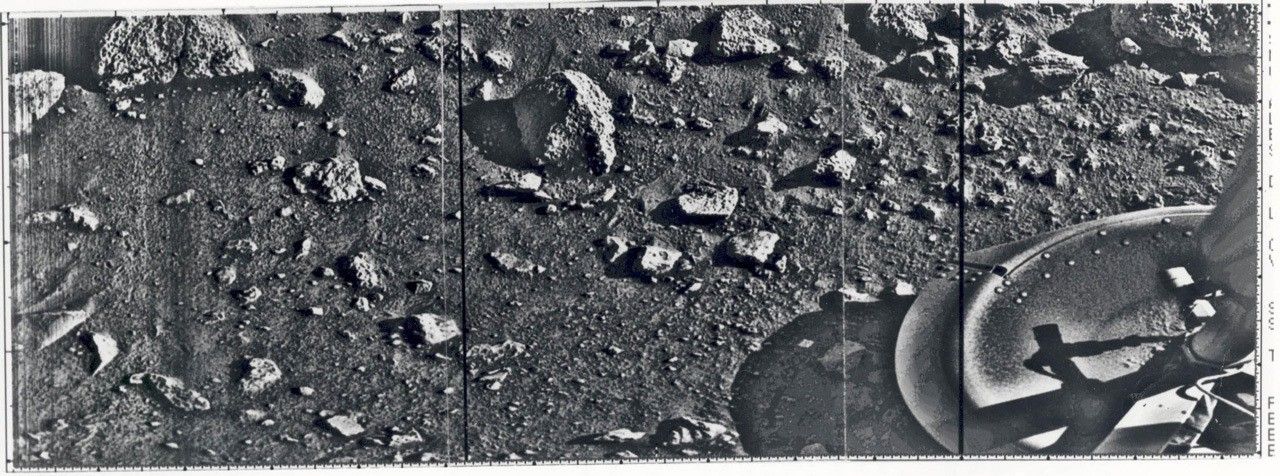
Source: NASA
-
1990s-2000s: Mars Global Surveyor and Mars Odyssey radar-map lava flows that extend hundreds of kilometers.
-
2010s: Mars Reconnaissance Orbiter (HiRISE) discovers an aureole, it was an apron of landslide debris.
-
2023: The European Space Agency confirms the formation of cliffs that mark the edge of an ancient ocean.
There have been no surface missions to Olympus Mons yet. Perseverance and China's Zhurong rover are operating over 4,000 kilometers away.
Why Not Taller?
-
Martian Constraints Gravity: 38% of Earth's. This allows for steeper structures without collapsing.
-
No Erosion: The thin atmosphere (0.6% of Earth’s) limits wind and water wear.
-
Extinct: Mars has been dormant since the Hesperian era. Future quakes could reactivate.
Check Out: List of Top 10 Famous International Organizations in the World




-1768326560605.jpg)
Comments
All Comments (0)
Join the conversation