Which Forest Is Known As The Wild Heart Of Europe?
Do you know which forest is called the "Wild Heart of Europe"? This untouched wilderness survived the Cold War and is home to rare lynx. Let’s discover the rich history, hidden glacial lakes, and unique wildlife of this mystical, borderless forest landscape.

Show Key Points
Forests blanket nearly a third of our planet. They shape-shift from steaming tropical rainforests to frozen taiga and dry, sun-baked deciduous woodlands. A few of these places are legendary. The Amazon, for instance, gets all the press as the "Lungs of the Earth", while Germany's Black Forest is famous for its brooding, dense canopy. But there's one woodland that flies a bit lower on the radar. Do you know which one is called the “Wild Heart of Europe"? Let's learn its history, meet the creatures that live there, and unpack exactly what makes this place so special.
Which Forest Is Known As The Wild Heart Of Europe?
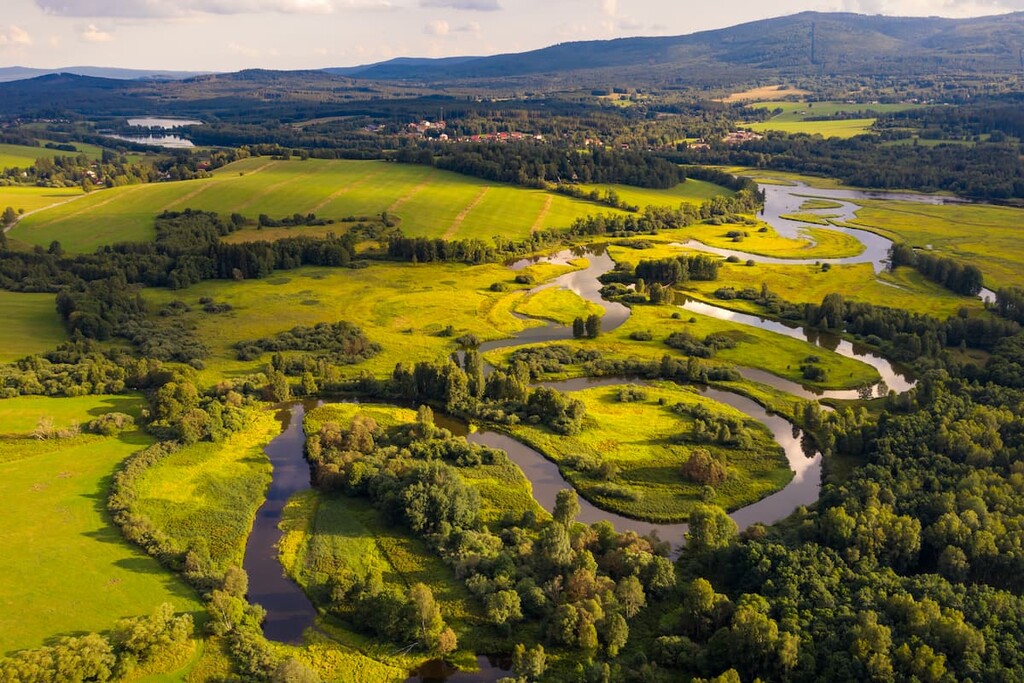
Sumava National Park
Right along the border between the Czech Republic and Germany, the Bohemian Forest and the Bavarian Forest blend together into one vast wilderness that people call the “Wild Heart of Europe". And honestly, the name isn't exaggerated.
In a part of the world packed with cities, highways, and centuries of development, this place feels almost untouched. It's the largest continuous stretch of strictly protected forest left in Central Europe, something that's become incredibly rare.

Bavarian Forest National Park
What makes the region so important is that nature is largely left alone here. Forests grow, decay, and recover on their own, without heavy human control. That has created a rich ecosystem filled with old-growth woods, misty peat bogs, and glacial lakes carved out thousands of years ago.
The area also acts like a natural shield against climate change while giving scientists a chance to watch how forests heal and evolve when people step back and let the wild take over.
5 Facts About Europe's Wild Heart
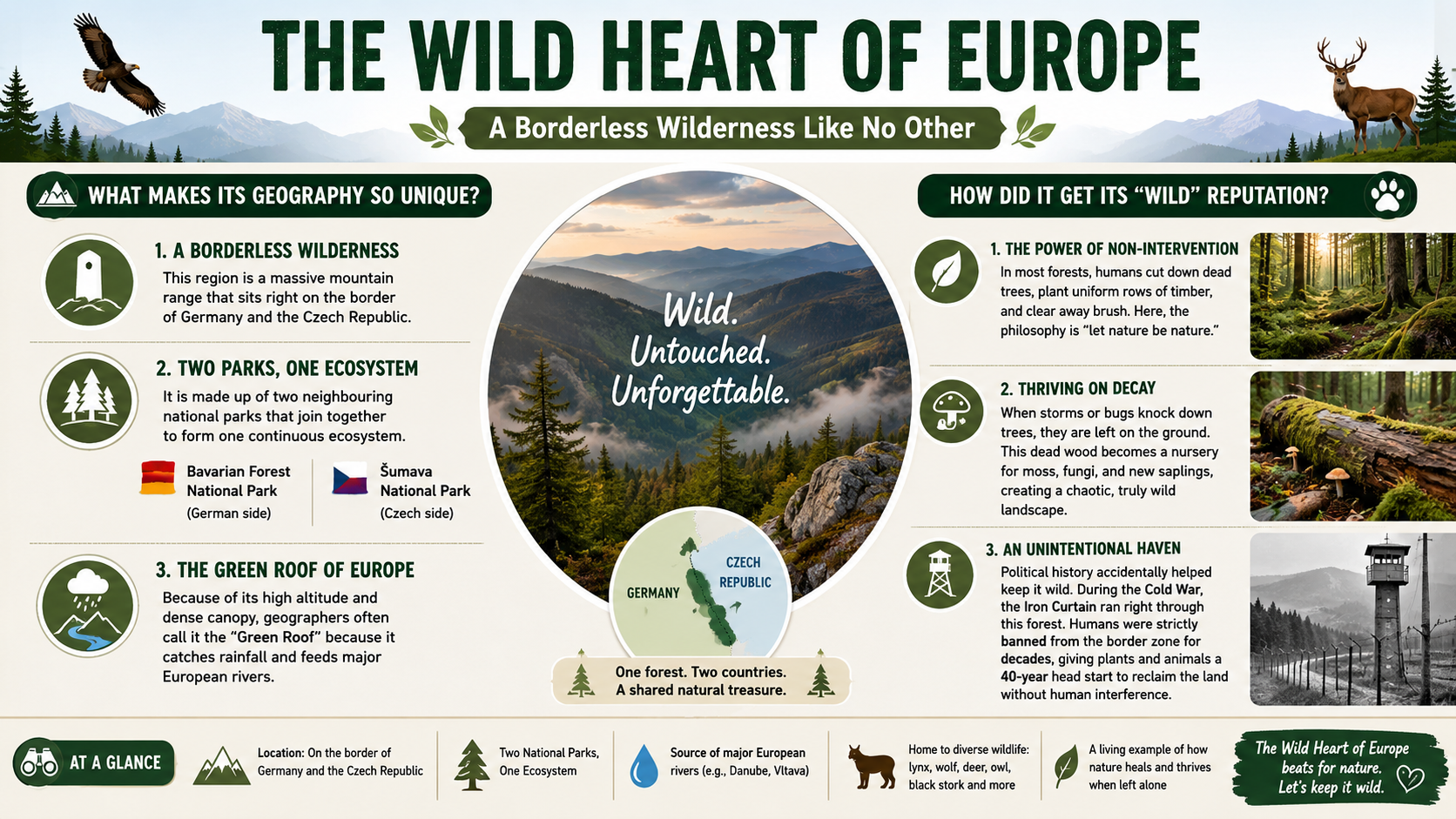
- During the Cold War, the heavily guarded border zone kept humans out for decades, inadvertently allowing nature to reclaim the land and thrive completely undisturbed.
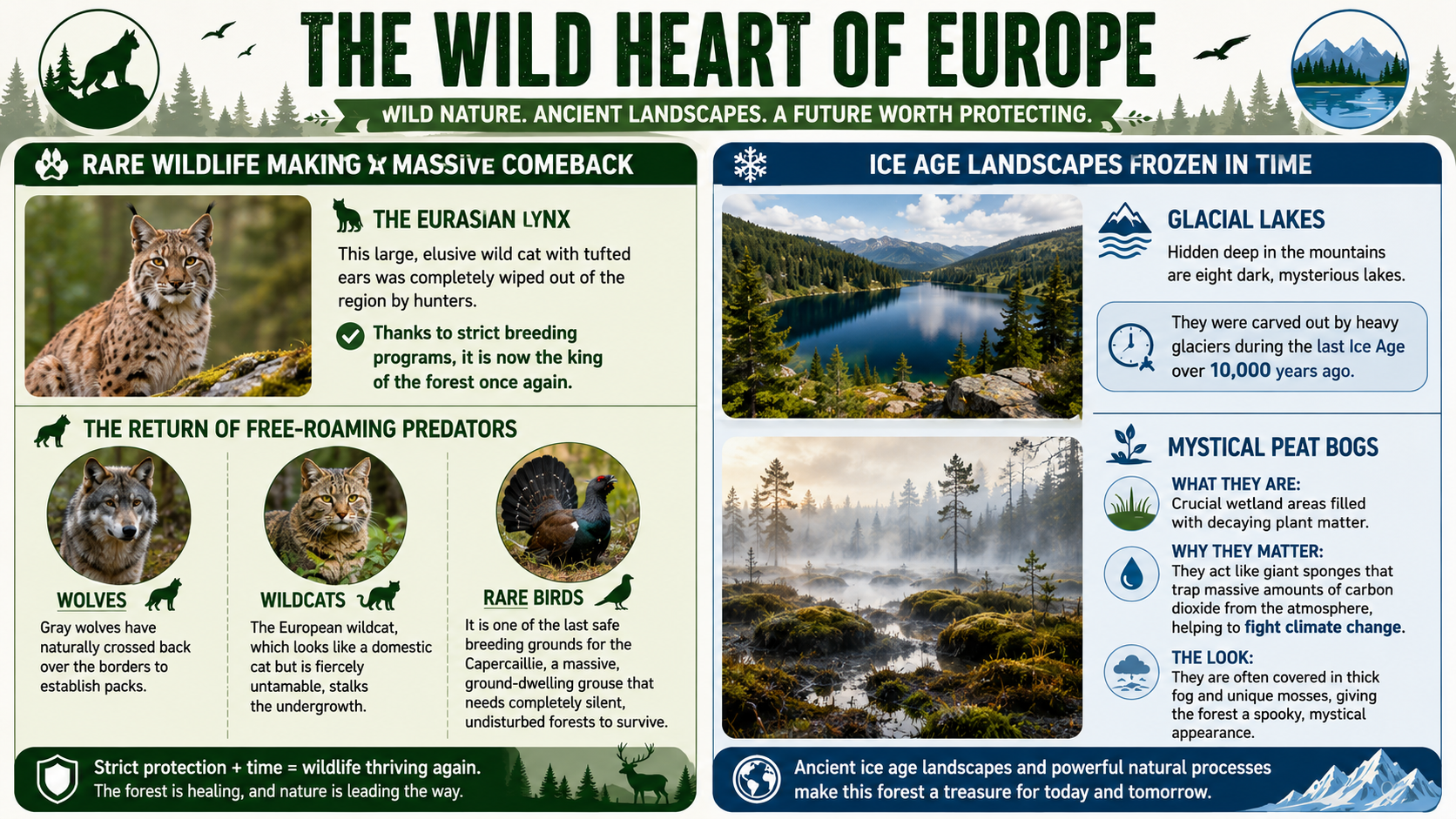
- It is the staging ground for one of Europe's most successful wildlife reintroduction programs, bringing the endangered Eurasian lynx back from the brink of local extinction.
- The region hides eight glacial lakes, such as Black Lake and Rachelsee, formed over 10,000 years ago during the last Ice Age.
- National park philosophy here dictates leaving trees killed by bark beetles to rot naturally, proving that dead wood actually accelerates the growth of a stronger, wilder new forest.
- It forms the very first cross-border national park cooperation in Europe, proving that ecosystems don't recognise political borders.
Why is this forest called the Wild Heart of Europe?
The name "Wild Heart of Europe" isn't just a poetic marketing slogan. It describes a massive, unbroken ecosystem that functions as the natural life-support system for the entire continent.
What Secrets Are Hidden Inside This Ancient Ecosystem?
Going inside the Bohemian and Bavarian forests is like stepping back thousands of years in time. Because the area has been fiercely protected, it holds natural wonders that have vanished from the rest of industrialised Europe.

Kriti Barua is a skilled content writer with 4+ years of experience in creating clear, engaging, and informative content. She began her writing journey as a Creative Writer Intern at Wordloom Ventures. She holds a BA degree from Delhi University and has completed a one-year diploma in TV Production and Journalism, which adds depth to her research and reporting style.
Kriti has worked across brand writing, marketing content, and digital media, building strong expertise in articles that connect with readers and perform well online. At Jagran New Media, she writes for the GK section, covering national news, international stories, and query-based articles that answer what people actively search for. Her work focuses on easy language, reliable information, strong keywords, and reader-friendly storytelling, making her content both helpful and search-friendly.


