Why Are Calf Muscles Called The Second Heart Of The Body?
Do you know which body part is called the "second heart"? This critical area holds up to 70% of your blood when standing and fights gravity daily to maintain proper circulation. Let’s uncover how this vital muscle works.

Our body is genuinely incredible, filled with parts that work tirelessly around the clock without us even noticing. Take the brain, for instance. It is the master control centre, sending fast signals every millisecond so you can think, move, and feel. Then we have the busy kidneys, filtering waste and cleaning your blood 24/7.
And of course, there is the mighty heart in your chest, beating around 100,000 times a day to pump fresh oxygen to every single cell. Every organ has its unique job to do. But did you know there is one specific body part that scientists and doctors actually call our "Second Heart"?
We'll take a look at the secret behind this incredible muscular powerhouse hidden in plain sight, how it keeps us healthy, and what happens when it gets weak.
Which Body Part Is Known as The Second Heart?
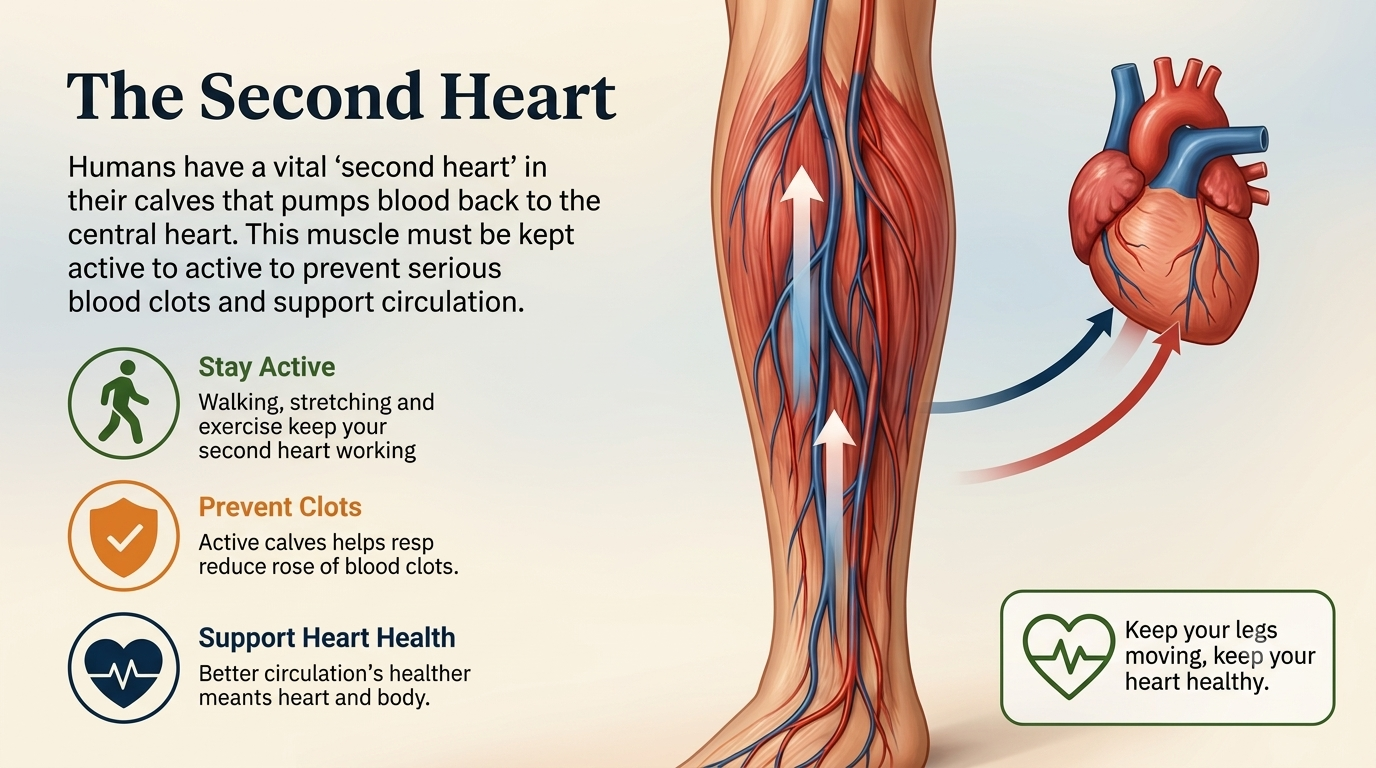
The body part known as the second heart is not another organ inside your chest. It is actually your calf muscles, located at the back of your lower legs! While it sounds strange to call a leg muscle a heart, medically, it makes total sense.
Your main heart is excellent at pumping blood all the way down to your toes. However, getting that blood back up from the floor to your chest is a massive challenge. Why? Because the blood has to fight directly against gravity. This is where your calves step in to save the day. The calf muscles contain a deep network of veins.
Every single time you walk, run, or simply flex your ankles, these muscles contract and squeeze those veins. This squeezing action works exactly like a mechanical pump, shooting the deoxygenated blood upward.
According to medical data from the National Institutes of Health (NIH), about 70% of a human's total blood volume resides below the level of the heart when standing upright. The main heart simply does not have enough suction power to pull all that fluid back up by itself.
The calf muscle pump generates high pressures, sometimes reaching up to 200 mm Hg during hard contraction to force blood through one-way valves toward the upper body. Without this extra pump, blood would pool in your feet, causing massive health problems.
Why Are the Calves the "Second Heart"?
The relationship between your heart and your calves is a true story of teamwork. When blood travels through your arteries, it gets a powerful push from your cardiac muscle. But by the time it reaches the tiny capillaries in your feet, that pressure drops drastically.
The veins that carry blood back up have thin walls and rely on surrounding skeletal muscles to squish them. Inside these leg veins, there are tiny, one-way flaps called venous valves.
Think of them like little trapdoors. When your calf muscles contract, they squeeze the vein and push the blood up through the trapdoor.
When the muscle relaxes, the trapdoor snaps shut so the blood cannot flow backwards down into your ankles. Because this system rhythmically pumps blood back into circulation, it mimics the exact job of the heart in your chest.
What Happens if the "Second Heart" is Weak?
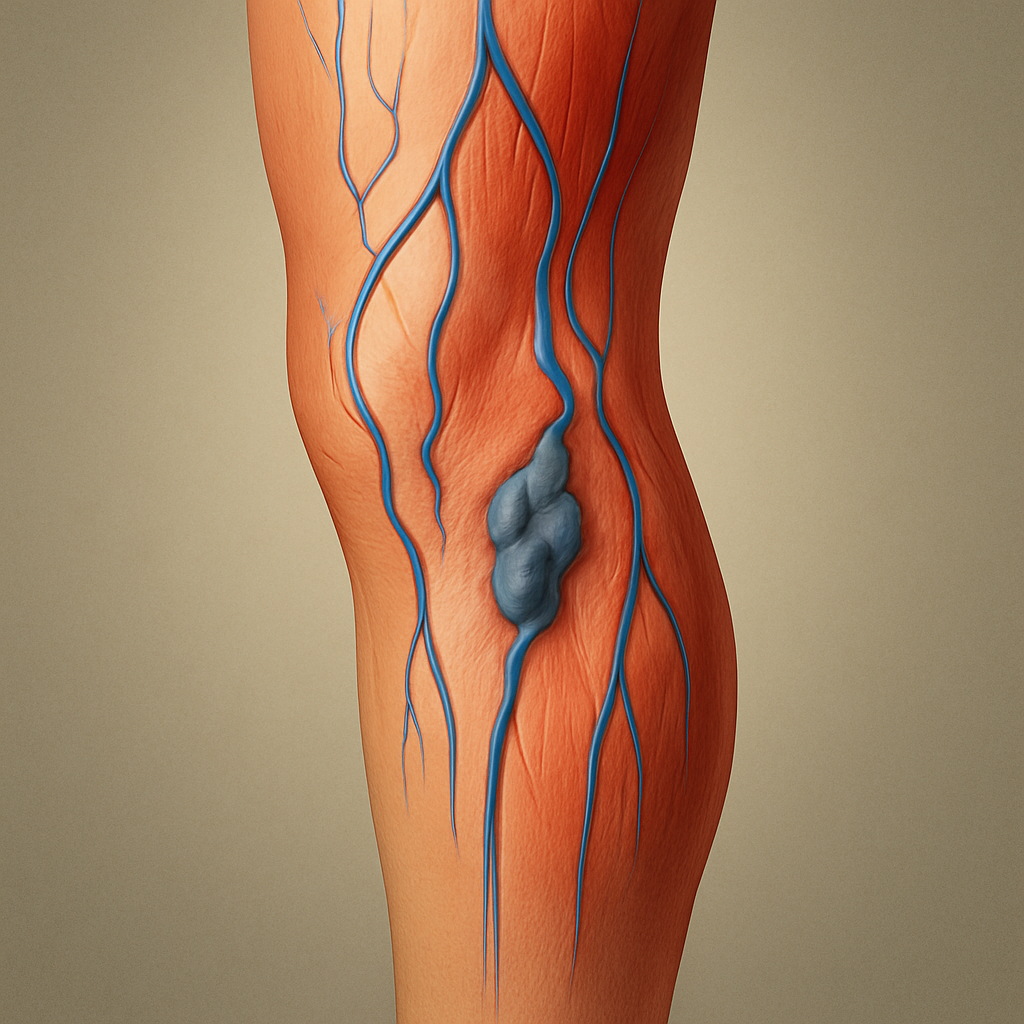
When you sit or stand still for long hours without moving, your second heart goes completely quiet. Inactivity causes the calf pump to fail, leading to poor circulation. This can cause several noticeable and sometimes dangerous health issues:
- Edema (Swelling): Fluid pools in your lower limbs, making your ankles look puffy.
- Varicose Veins: If the tiny trapdoor valves get weak, blood leaks backwards and stretches the veins out, making them look blue and twisted.
- Deep Vein Thrombosis (DVT): This is the most dangerous risk. When blood stays still for too long, it can form dangerous clots.
A major population study tracked 1,532 patients over a median follow-up of 11.7 years to study this exact issue. Published data showed that individuals with reduced calf muscle pump function had a significantly higher risk of developing venous thromboembolism (VTE) and blood clots.
In fact, those with severe bilateral pump weakness had an adjusted hazard ratio of 1.71 for deep vein thrombosis compared to people with normal calf function.
How to Keep Your "Second Heart" Strong
The great news is that keeping your second heart healthy is incredibly simple and does not require expensive gym memberships. You just need to keep your legs moving!
- Take regular walking breaks: If you have a desk job, stand up every 60 minutes and walk around for 5 minutes to activate the muscle pump.
- Do standing calf raises: Lift yourself up onto your tiptoes and slowly lower back down. Repeating this 15 to 20 times a few times a day strengthens the soleus and gastrocnemius muscles.
- Stay hydrated: Drinking enough water keeps your blood thin and makes it much easier for your calves to pump it upward.
Conclusion
Your calf muscles are far more than just supports for walking and running. They serve as your body's essential peripheral engine, working as a true second heart to maintain healthy blood circulation against gravity. By taking simple steps to keep your calves active every day, you directly reduce the workload on your main heart and protect yourself from blood clots. So, next time you find yourself sitting on the couch for hours, remember to stand up, flex your feet, and give your second heart the workout it deserves.

Kriti Barua is a skilled digital journalist and communications professional with 4+ years of experience, currently writing for the General Knowledge section at Jagran New Media. She has established herself as a subject matter expert in History, Geography, Trending National and International News, Sports, Science, and Defence, producing clear, reliable, and search-optimised content that connects with readers worldwide.
Kriti holds a BA degree from Delhi University and a one-year diploma in TV Production and Journalism, an academic background that adds research depth and strong storytelling instincts to her writing. Her experience spans brand writing, content marketing, and digital media, giving her a sharp understanding of what makes content both helpful to readers and visible in search.
At Jagran New Media, she applies this expertise to national and international news coverage, query-based articles, and in-depth pieces across her specialist subject areas. Her content is defined by easy language, factual accuracy, strong keyword strategy, and reader-friendly storytelling.


