India achieved the milestone of 50 per cent of its cumulative electric power installed capacity from non-fossil fuel sources in June 2025, five years ahead of the 2030 target set under its Nationally Determined Contribution (NDC) to the Paris Agreement. India is marching towards achieving 500 GW of installed non-fossil fuel electricity capacity by 2030. As of 31 March 2026, India’s total installed non-fossil fuel capacity stood at 283.46 GW, of which solar energy has emerged as a significant component of this growth.
The solar sector has expanded at an unprecedented pace over the past decade, increasing 53.28 times since 2014. India saw solar energy installed capacity increasing from 2.82 GW in March 2014 to 150.26 GW in March 2026, i.e., an increase of 147.44 GW. The 150.26 GW includes 110.43 GW of utility scale, 25.73 GW of rooftop and 14.10 GW of KUSUM & off-grid projects. The Distributed Renewable Energy (DRE) from rooftop solar panels emerged as a major contributor. India's solar module manufacturing capacity has also increased from 2.3 GW in 2014 to about 172 GW, as of 31 March 2026.
According to the IRENA Renewable Energy Statistics 2026, India now ranks 3rd globally in renewable energy installed capacity. India now ranks behind only China and the United States in total renewable capacity. As of 2026, India is the third largest solar energy producer in the world.
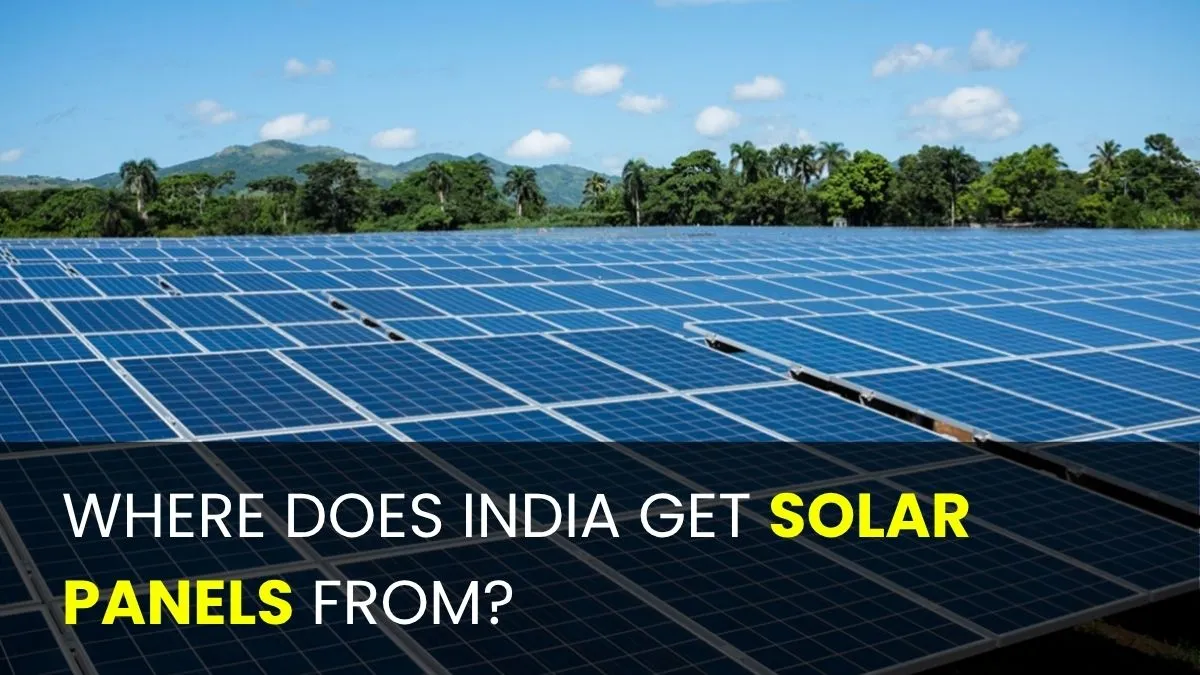
Where does India get solar panels from?
While India has significantly boosted self-reliance with domestic solar module manufacturing capacity, jumping from 2.3 GW in 2014 to about 172 GW in 2026. India remains heavily reliant on importing polysilicon, ingots, and wafers for solar panels from China. India still depends on China for over 50 per cent of its solar PV cells and solar modules. However, owing to rapid capacity expansion in the country, India is increasingly sourcing its solar modules and solar PV cells domestically. Let's look at the breakdown of how India gets its solar panels from.
Polysilicon, ingots, and wafers are primarily imported from China. Though, India's domestic production capacity is around 2 GW for ingots and wafers.
Solar PV cells are also imported from China and other Southeast Asian nations. The government is pushing domestic manufacturing through the Approved List of Models and Manufacturers (ALMM) framework.
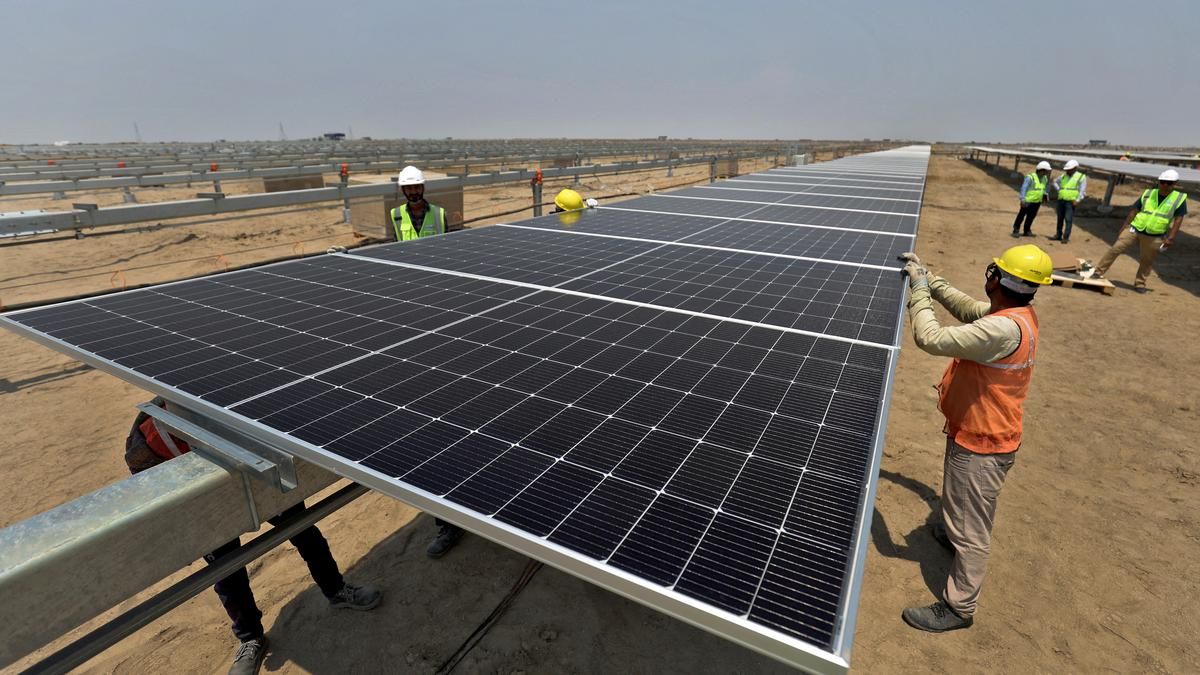
Solar PV modules are largely assembled in India using imported cells and wafers. With a robust domestic capacity of about 172 GW of solar modules capacity, major solar panel manufacturers in india include Waaree Energies, Tata Power Solar, and Indosol Solar.
How is India boosting domestic solar panel manufacturing and reducing its dependence on China?
Currently, China controls about 75 per cent or more of global manufacturing capacity in solar PV supply chain. Dominating the global solar photovoltaic (PV) supply chain, China produces approximately 91 per cent of the world's polysilicon, over 97 per cent of ingots and wafers, and 80 to 92 per cent of global solar cell and 83 to 86 per cent of module production capacity.
To reduce reliance on China, India's Renewable Energy Ministry in March 2026 proposed a mandate to use only locally made solar ingots and wafers from June 2028. Meanwhile, from 1 June 2026, all the government-backed or private companies solar projects are mandated to use domestically manufactures solar cells.
With this, India aims to use domestically made components across the entire solar panel manufacturing chain. This applies to government-backed and utility-scale projects, industrial and commercial projects, as well as schemes like PM Surya Ghar Muft Bijli Yojana.
India is undergoing a solar manufacturing renaissance, rapidly transitioning from import dependence to bolstering domestic PV supply chain. This expansion has been driven by supportive government policies such as production-linked incentives (PLIs) to incentivise local solar manufacturing, high import tariffs on finished solar panels, and approved list of models and manufacturers (ALMM) creating a robust domestic demand for solar installations.
India is rapidly expanding its solar manufacturing capacity. With initiatives like 'Make in India' and the Approved List of Models and Manufacturers (ALMM), India's domestic solar panel manufacturing is picking pace.
Some of the key implementations by the Ministry of New & Renewable Energy (MNRE) in FY 2025-26 include the reduction in the GST rate on renewable energy devices & parts for their manufacture from 12% to 5% (September 2025), thus reducing the landed cost of solar equipment for domestic buyers: project developers, DISCOMs, rooftop solar installers, and captive users.
The Renewable Ministry (MNRE) also issued the modified "Solar Systems, Devices, and Components Goods Order, 2025" on 27 January 2025, which incorporates the latest versions of Indian standards for solar PV modules, storage batteries, and SPV inverters. The order also provides standards for the determination of efficiency of SPV modules.
Conclusion
India is the founding memeber of the International Solar Alliance (ISA). India hosts some of the world's largest solar parks, including the Bhadla Solar Park in Rajasthan which is India's largest and the world's 11th largest as of 2026, with a capacity of 2,245 MW. India has also established nearly 70 solar parks, including the Gujarat Hybrid Renewable Energy Park being built near Khavda in the Rann of Kutch will generate 30 GW.
Also read: Which country ranks first in solar energy production?



-of-West-Bengal-1775897003288_t.webp)

Comments
All Comments (0)
Join the conversation