Show Key Points
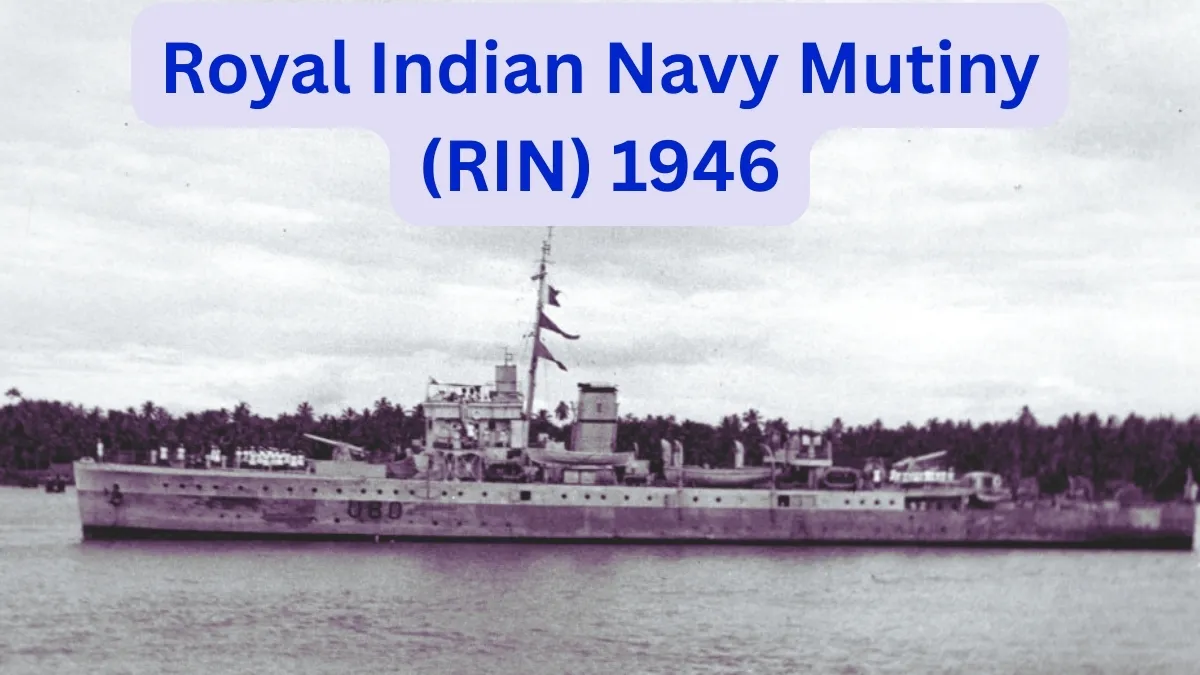
The RIN Mutiny began on February 18, 1946 in Bombay (now Mumbai) and quickly spread across British India. It was started as a protest against poor living conditions and racial discrimination evolved into a political demand for independence within a few days, over 20,000 sailors on 78 ships and numerous shore establishments were involved.
The Royal Indian Navy (RIN) Mutiny 1946 also known as the Naval Uprising/Revolt was a short-lived but explosive revolt that demonstrated a shift in the loyalty of the Indian armed force though mutiny ended soon under pressure from political leaders but it signaled to British that they could no longer rely on Indian military to maintain their grip on the subcontinent.
The Royal Indian Navy Mutiny: Six Days of Defiance
On February 18, sailors on HMIS Talwar declared a hunger strike. By the next day, the news spread like wildfire and sailors took over naval trucks and drove through Bombay waving the flags of the Congress, Muslim League, and the Communist Party, and hoisted these flags on the masts of the ships. The rebellion reached:
-
February 18, 1946: Ratings at HMIS Talwar in Bombay stop eating and refuse to obey orders.
-
Karachi: Where the HMIS Hindustan engaged in a fierce gun battle with British forces.
-
Calcutta and Madras: Supporting strikes and demonstrations broke out.
-
-
February 19: The strike spreads to the Castle and Fort Barracks on shore and 22 ships in the harbor. Sailors haul down the Union Jack and hoist the flags of the Congress and the Muslim League.
-
February 20-21: The rebellion goes inter-service. The Royal Indian Air Force and some police units in Bombay and Poona express sympathy. In Karachi, the HMIS Hindustan battles British artillery in a deadly exchange.
-
February 22: A "Hartal" (mass strike) begins in Bombay. The city becomes a war zone with barricades in the streets. The British military opened fire on civilians and killed over 200 people.
-
Public Support: In Bombay, the working class joined the sailors. The city came to a standstill as mill workers went on strike, leading to violent clashes with the British police that resulted in hundreds of civilian deaths
What was the cause of the naval mutiny of 1946?
The RIN Mutiny wasn't just a sudden outburst; it was the result of years of friction after World War II thousands of Indian sailors who had fought for the British Empire in the Atlantic and Pacific were being sent home and they faced
-
The INA Trials: The British were putting officers of Subhash Chandra Bose’s Indian National Army on trial at the Red Fort. This backfired spectacularly, turning the "traitors" in British eyes into national heroes.
-
A Shift in Loyalty: For the first time, Indian soldiers and sailors began to ask themselves: “Why are we fighting for the Crown against our own people?”
-
Racial Discrimination: Indian sailors were paid significantly less than their British counterparts and faced constant verbal abuse from superior officers.
-
Poor Living Conditions: Complaints about unpalatable food and cramped quarters were routinely ignored during World War II.
-
The B.C. Dutt Incident: Rating Balai.Chand Dutt was arrested for scrawling "Quit India" on the walls of HMIS Talwar and his arrest became the final straw for his peers.
-
Political Climate: The bravery of Subhash Chandra Bose’s INA had inspired a sense of "India First" among the armed forces.
-
Pay Disparity: There was a massive gap between the salaries and allowances of Indian sailors versus British sailors of the same rank.
-
Political Influence: The sailors of the British Indian Navy were secretly reading nationalist literature and listening to prohibited radio broadcasts.
Key Leaders of RIN:
The mutiny was unique because it was largely leaderless and grassroots but a few names stood out such as
-
M.S. Khan and Madan Singh: They were elected President and Vice-President of the Naval Central Strike Committee (NCSC). They were the ones who formulated the list of demands and negotiated with political parties.
-
B.C. Dutt: The "original" rebel whose arrest for graffiti triggered the initial protest.
-
The Political Skeptics: Sardar Vallabhbhai Patel and M.A. Jinnah played the roles of closers.They weren't leaders of the mutiny but they were the ones who eventually convinced the sailors to stand down to ensure a "peaceful" transition of power.
Why did the Mutiny "Fail"?
Even though the mutineers surrendered, they "won" the bigger battle. The British Prime Minister, Clement Attlee, realized that the Indian Navy and Air Force were no longer loyal to the British. The British could not stay in India by force. The Cabinet Mission was announced just days after the mutiny began however mutiny failed to achieve an immediate military victory for several reasons:
-
Lack of Political Backing: Both the Indian National Congress and the Muslim League refused to support an armed rebellion. They were already in the middle of negotiations for independence and didn't want a "mutinous" military to inherit.
-
Isolated: While the public supported them, the sailors were physically confined to their ships or barracks. Once the British cut off food and water supplies and surrounded them with superior heavy artillery, the sailors' position became untenable.
-
The Promise of No Victimization: The sailors surrendered on the written assurance from Sardar Patel that they would not be punished but the British broke this promise, and hundreds were later dismissed or imprisoned.
The Aftermath: A Turning Point for Independence
The British realized the gravity of the situation immediately. If the Navy—and potentially the Army could no longer be trusted to follow British orders, the Empire was unsustainable. The Cabinet Mission: Shortly after the mutiny, the British government dispatched the Cabinet Mission to India to discuss the transfer of power. Prime Minister Clement Attlee later admitted that the "erosion of loyalty" in the armed forces was a major factor in the decision to leave India by 1947.
Also Read: What Is Treaty of Purandar ?



.jpg)

Comments
All Comments (0)
Join the conversation