Sadbhavana Diwas: How Rajiv Gandhi Became the Prime Minister of India and Shaped Nation's Growth
Sadbhavana Diwas on August 20 marks Rajiv Gandhi’s birth anniversary, celebrating his vision of unity, education reforms, youth empowerment, democratic strengthening, and foundational contributions to India’s digital and technological growth.
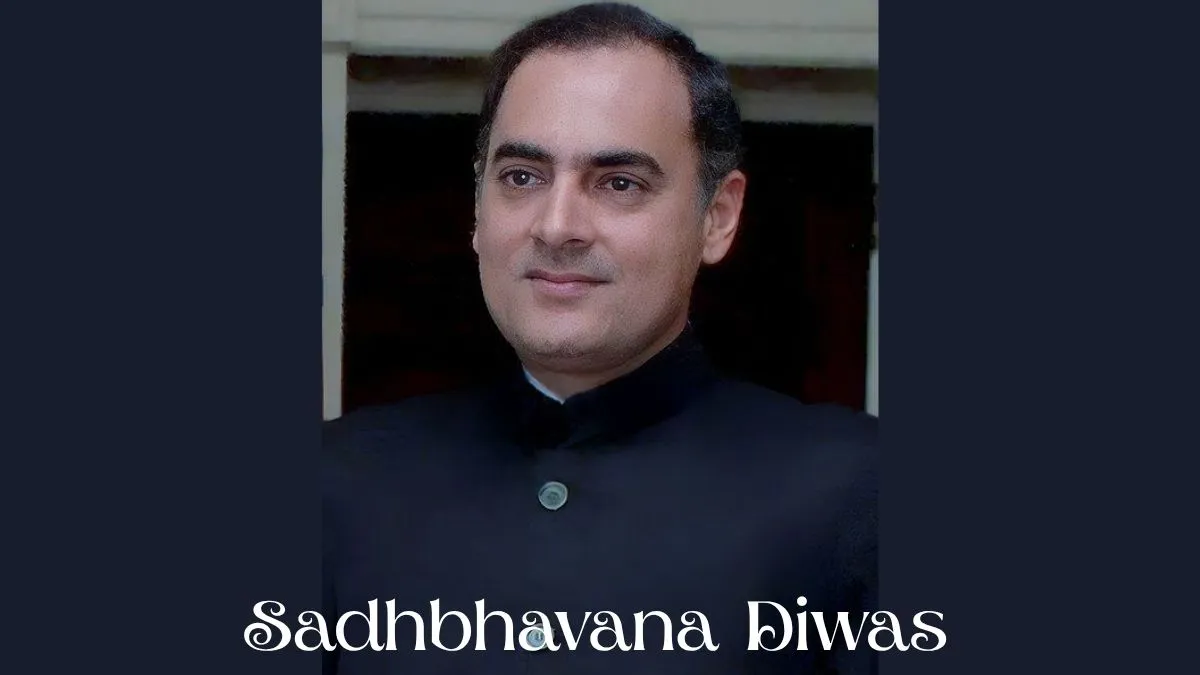
Sadbhavana Diwas is observed every year on August 20 to honor the birth anniversary of Rajiv Gandhi. The day seeks to encourage peace, community spirit and unity among the people of the country. The day urges people to respect all religions and live together in harmony. In addition to the symbolic significance, Sadbhavana Diwas also highlights Rajiv Gandhi’s contribution in developing modern India. The achievements of Rajiv Gandhi in the field of science and technology has made the way for India’s advancement in digital and communication technology. The science and technology of the present Indian nation owes a lot to him.
When and Why Rajiv Gandhi Became Prime Minister of India?
How does a man go from flying a plane to running a country? It is almost unbelievable. Rajiv Gandhi became the 6th Prime Minister of India on 31 October 1984 aged 40 years the youngest ever. Politics was not his field but he was thrust into the role amid a national crisis after the tragic assassination of his mother.
Prior to that Rajiv was a simple man, a commercial pilot and distant from the political scene. He had drifted back into the limelight in a slow way after the death of his brother Sanjay Gandhi in 1980. Again tragedy struck and Rajiv was brought in to get India back on the tracks, and soon elections were called and the real test was about to begin. It was here that Rajiv managed to pull off one of the most successful and decisive victories in Indian history with 541 seats, 414 of which were won by his party.
Rajiv Gandhi’s Contribution to Science and Technology as Prime Minister of India
| Sector | Initiative / Policy | Key Actions | Major Impact |
| IT & Computing | Computer Policy (1984) | Reduced import duties on hardware; encouraged computerisation in government and business. | Made technology accessible and affordable; laid the foundation for India's digital transformation. |
| Software Industry | Software Policy (1986) | Recognised software as a distinct industry; incentivised development and export. | Sparked India's global IT outsourcing boom and export growth. |
| Telecommunications | Establishment of C-DOT, MTNL, & VSNL | Created C-DOT to build indigenous telecom tech; expanded national service providers. | Modernised national infrastructure and scaled up communication networks nationwide. |
| Supercomputing | C-DAC Formation (1988) | Set up C-DAC following international supercomputer import restrictions. | Built PARAM 8000 (India's first indigenous supercomputer) and fostered tech self-reliance. |
| Rural Connectivity | PCO Network | Expanded Yellow Public Call Offices (PCOs) into rural and semi-urban regions. | Democratised telephone access across village and town communities. |
| Public Welfare Tech | National Technology Missions | Applied S&T solutions to drinking water, literacy, immunisation, and agriculture. | Addressed core civic challenges through targeted technical application. |
Beyond Technology: Broader Policy Impact
Not just in technology, Rajiv Gandhi’s heyday saw major changes in education, governance and democracy. Rajiv’s government brought in National Policy on Education in 1986 to modernise education and widen its reach. The voting age was reduced from 21 to 18 through the 61st Constitutional Amendment Act, who not only gave the voice to the youth.
The government’s initiation of strict anti-defection laws through the 52nd Amendment Act was also designed to dampen political defections, resulting in higher discipline in the parliamentary debate and a stable democracy at the national level.
Why Sadbhavana Diwas Matters Today
Sadbhavana Diwas is not just a tribute but a reminder of inclusive growth and unity. Rajiv Gandhi’s vision of a technologically advanced India continues to shape the nation’s digital journey today. His legacy reflects a blend of youth-driven leadership, technological foresight, and commitment to national harmony, values that remain relevant in contemporary India.

Aishwarya Samant is a journalist with over 4 years of experience navigating the fast-paced corporate media landscape. She specializes in decoding business news, world economy, personal finance, and stock market trends, often adding a subtle touch of political perspective to keep things interesting.
Having worked with reputed organizations like ZEE, TV9, News24, and NewsX, she is no stranger to the newsroom hustle and the demands of real-time storytelling. Her writing style is fast-paced, engaging, and crafted to connect seamlessly with diverse audiences across platforms. She approaches every story from the reader’s point of view, breaking down complex topics into clear, relatable narratives backed by solid facts and credible sources. While she’s confident in expressing strong viewpoints, she ensures balance with insights. Sharp, fact-driven content that informs, engages, and keeps readers coming back for more.


![[OUT] BPSC TRE 4 Notification 2026 LIVE: 32,388 पदों पर शिक्षक भर्ती का नोटिफिकेशन जारी, यहां देखें पूरी डिटेल](https://img.jagranjosh.com/images/2026/August/1882026/bpsc-tre-4.jpg)