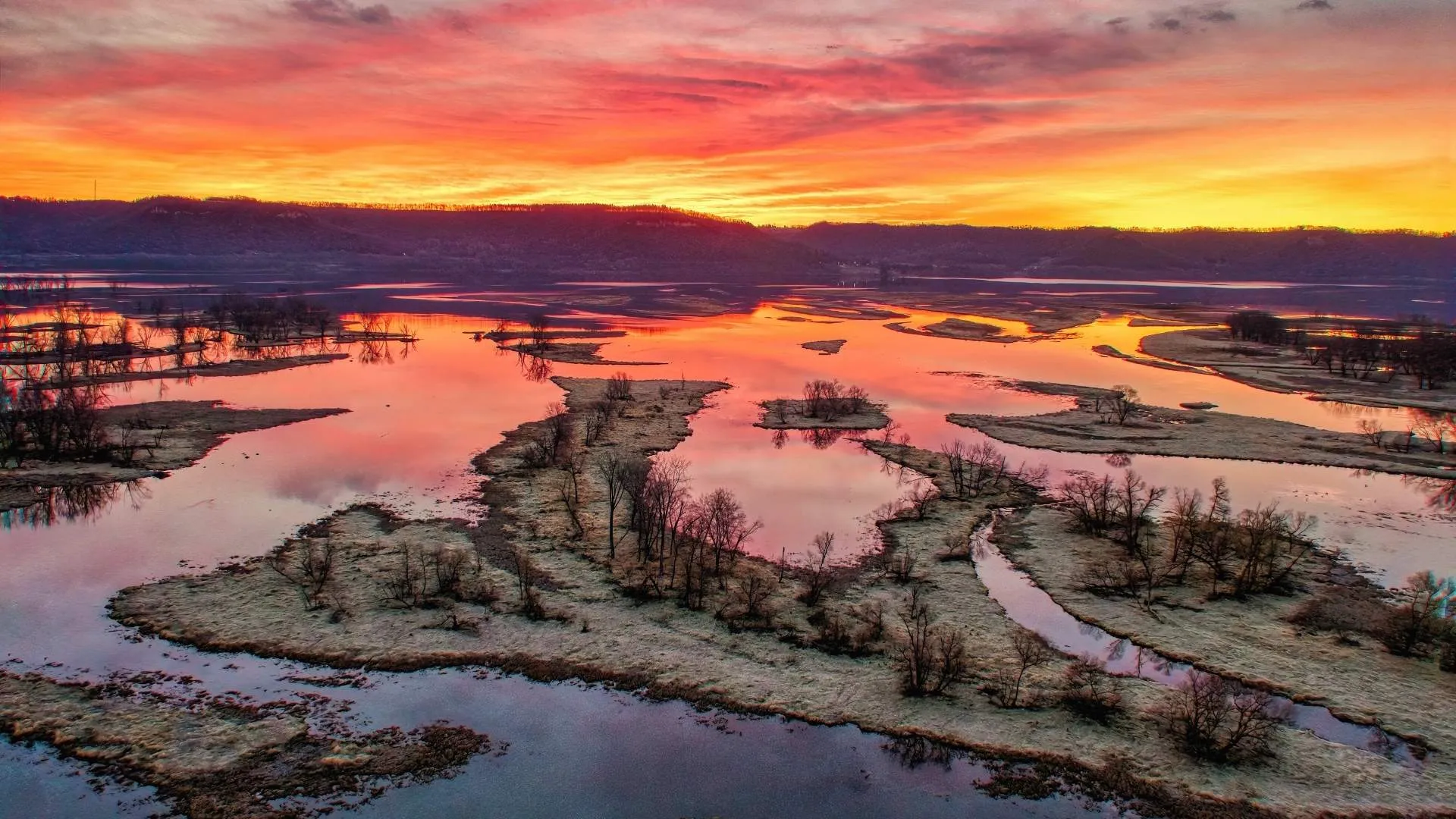
The river called the "Father of Waters" is the Mississippi River. The native Indians gave it that name because of its nourishing effect; it is an Ojibwe word "Misi-ziibi," which means "Big River."
Father of Waters nickname was given to Mississippi River because it was seen as a father figure or a provider for the Native Americans, providing them with freshwater and fishes.
This river influences millions of people every day in terms of commerce, agriculture, and transportation. As reported by the U.S. Geological Survey, the Mississippi River runs 2,340 miles from Lake Itasca, Minnesota, to the Gulf of Mexico.
Learn about the “Father of Waters” River, its history, meaning of the name, and why it is one of the most important rivers in the world.
Which River is Known as the "Fathers of Waters?
The Mississippi River is known to be called "Father of Waters," which is an Indian term derived from the Ojibwa language and translates to "Big River" or "Father of Waters."
According to the Great River Road Museum, the Native Americans had been living near the river for more than three thousand years.
They used the river for hunting, fishing, and farming purposes. However, when the Europeans came during the sixteenth century, they made changes to the region; yet, the river retained its name.
The Father of Waters or Mississippi is also known as the “Old Man River” because of its geological age of 2 million years.
Why Mississippi Earns "Father of Waters" Title
For the Native Americans, the river was seen as a “father” that provided means to survive because of its fishes and fertility, while enabling easy travel along it.
Nowadays, the river is the lifeline of the $400 billion shipping industry and of crops grown to feed millions of people. The nutrient-rich silt discharged by the river forms fertile deltas.
Mississippi River Path and Size
Father of Waters or the Mississippi river stretches 2,340 miles. It starts at Lake Itasca, Minnesota, and flows south to the Gulf of Mexico near New Orleans. It is also one of the 7 major rivers of the U.S.
This river has an area of drainage of 41% of the United States of America, which spans 1.2 million square miles in 31 states and two Canadian provinces, and is the third largest in the world, next to the Amazon and Congo.
-
Length: 2,340 miles (USGS data)
-
Drainage: 1.245 million square miles.
-
States impacted: 31 U.S.
Major tributaries like the Missouri and Ohio boost its power, making it a trade highway.
History and Explorers of Father of Waters
The Mississippi River was first discovered by Hernando de Soto in 1541 and baptized "River of the Holy Spirit."
It was explored in 1673 by Jacques Marquette and Louis Jolliet, who mapped the waterway from the Great Lakes to the Gulf of Mexico.
Rene-Robert La Salle declared French ownership of the area in 1682 and called it "La Louisiane."
This exploration allowed Europeans to settle in the area and promoted growth in the United States.
Check: Which U.S. River is Known as the “Daughter of the Stars”?
Conclusion
The Mississippi River, dubbed "Father of Waters," flows 2,340 miles as North America's backbone, named by Native Americans for its life-giving force. From ancient hunters to modern trade, it shapes U.S. history and economy. Next time you hear its story, picture this mighty river nurturing a continent.


-1776764724617_t.webp)

