Navratri Colours 2026: 9 Day-Wise Colours, Dates and Significance
Navratri Colours 2026: Check all 9 day-wise colours, dates, names of Maa Durga, significance of each colour, & traditional outfit ideas.
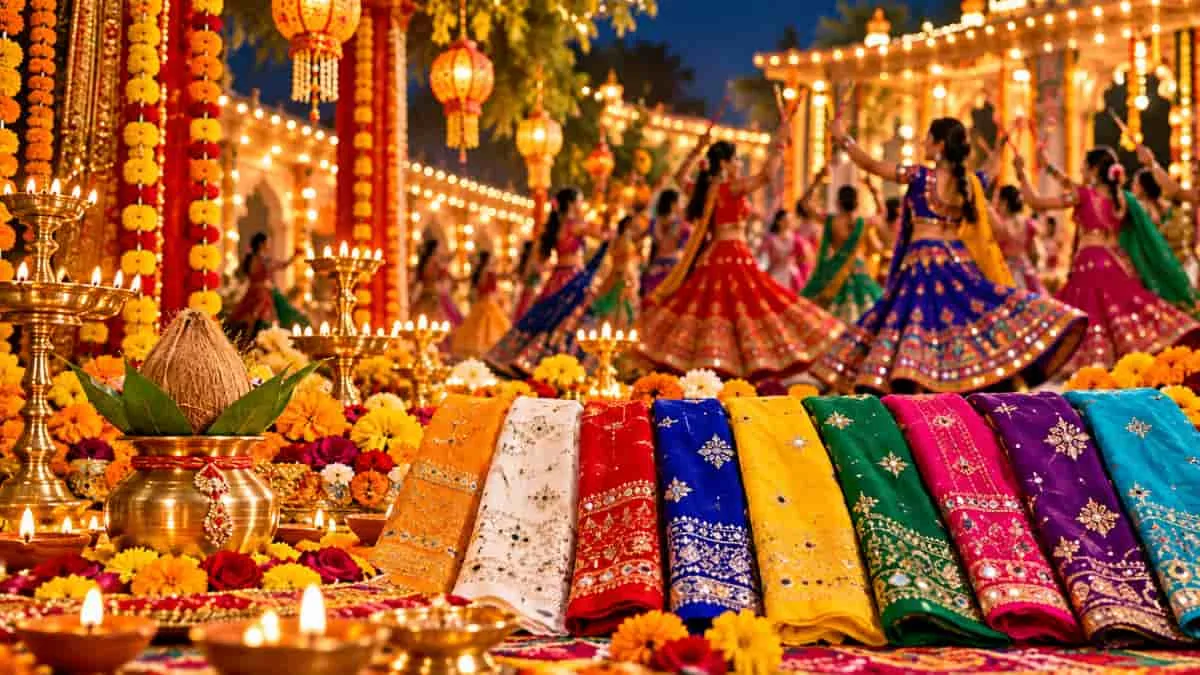
Navratri Colours 2026: Sharadiya Navratri 2026 will start from Sunday, October 11 and will continue till Monday, October 19. The nine-day festival is dedicated to the nine forms of Maa Durga, each dedicated to a specific colour for each day. The different colours are the strength, peace, happiness, prosperity and devotion of the first, ninth, tenth, eleventh and twelfth day of the week respectively.
On the day-to-day of the Navratri, many people observe the colour of that day and do puja, go to the temple, and take part in the Garba and Dandiya events. Check out the complete list of the nine Navratri colours for 2026, their dates, the name of the goddesses worshipped, their meaning and outfit suggestions.
Navratri Colours 2026: Complete Day-Wise List
Here is the list of all nine Navratri colours for 2026, with the date and the form of Maa Durga worshipped on each day.
| Navratri Day | Date | Goddess Worshipped | Colour |
| October 11 | Maa Shailputri | ||
| October 12 | Maa Brahmacharini | White | |
| Day 3 – Tritiya | October 13 | Maa Chandraghanta | Red |
| Day 4 – Chaturthi | October 14 | Maa Kushmanda | Royal Blue |
| Day 5 – Panchami | October 15 | Maa Skandamata | Yellow |
| Day 6 – Shashthi | October 16 | Maa Katyayani | Green |
| Day 7 – Saptami | October 17 | Maa Kalaratri | Grey |
| Day 8 – Ashtami | October 18 | Maa Mahagauri | Purple |
| Day 9 – Navami | October 19 | Maa Siddhidatri | Peacock Green |
Note: The nine-colour sequence follows the popular day-wise Navratri colour tradition for 2026. Colour lists may differ across regional customs and publications.
Significance of the Nine Navratri Colours in 2026
Each colour has a special meaning and is associated with the qualities devotees celebrate during Navratri. Here is what each shade represents.
Day 1: Orange – October 11, 2026
Goddess: Maa Shailputri
Orange is the colour of energy, enthusiasm, warmth and positivity. It's a new beginning and a bold step to move forward.
The first day of Navratri is dedicated to Maa Shailputri, the first form of Maa Durga. She is the daughter of the mountains and is a symbol of strength and stability. Devotees pay homage to her and ask blessings for a peaceful and successful start of the festival.
What to wear: Pick an orange coloured saree with a saffron-coloured kurta, a traditional lehenga or an orange Anarkali suit. Gold jewellery and a red dupatta can add the festive touch to the outfit.
Day 2: White – October 12, 2026
Goddess: Maa Brahmacharini
The white is a symbol of peace, purity, simplicity and devotion. It is often associated with a calm mind and a clear purpose.
On the second day of the festival, devotees celebrate Maa Brahmacharini, who is symbolized as a person dedicated, patient and self-controlled. Her journey is a reminder to everyone to be determined and persistent in achieving their objectives.
What to wear: A white saree, an ivory suit or a white lehenga with silver embroidery is a good choice. The traditional style can be complemented with the use of pearl earrings, white bangles or delicate jewellery.
Day 3: Red – October 13, 2026
Goddess: Maa Chandraghanta
The colour red represents courage, strength, love and energy. It is also known to be related to the auspicious events in the Indian tradition.
It's the third day for Maa Chandraghanta, who has a crescent moon on her forehead that looks like a bell. She embodies courage and strength to combat the negative forces. Her devotees pray for her blessing of courage, protection and peace.
What to wear: A red Banarasi saree, a red bandhani lehenga or a traditional red salwar suit can be worn for the day's celebrations. Gold earrings and bangles are appropriate.
Day 4: Royal Blue – October 14, 2026
Goddess: Maa Kushmanda
Royal blue is the color of confidence, calmness, depth and strength. It's colourful and appealing, as well, making it a popular choice for holiday wear.
On the 4th day of Navratri people worship Maa Kushmanda. She is believed to have created the world with her smile in Hindu mythology. She is the symbol of creative energy, light and abundance.
For puja and evening Garba, one can wear a royal blue silk saree, embroidered blue lehenga or a blue Anarkali suit. Silver jewellery or a contrasting golden dupatta can be used to enhance the look of the outfit.
Day 5: Yellow – October 15, 2026
Goddess: Maa Skandamata
Yellow stands for happiness, hope, warmth and optimism. It is often linked with sunshine, knowledge and positive energy.
The fifth day is dedicated to Maa Skandamata, the mother of Lord Skanda, also known as Kartikeya. She represents motherhood, affection and protection. Devotees worship her for family happiness, peace and well-being.
What to wear: A mustard-yellow saree, a lemon-yellow kurta set or a yellow cotton suit is ideal for daytime celebrations. Floral prints, light embroidery and simple gold jewellery can complete the look.
Day 6: Green – October 16, 2026
Goddess: Maa Katyayani
Green represents growth, harmony, renewal and prosperity. It is associated with nature and the beginning of new possibilities.
On the sixth day, devotees worship Maa Katyayani, a powerful form of Maa Durga. She represents courage and the strength to overcome difficulties. In Hindu traditions, devotees also pray to her for blessings related to marriage and family life.
What to wear: A bottle-green saree, a parrot-green lehenga or an emerald-green suit is a festive option. Traditional earrings, green bangles and gold embroidery can add colour to the outfit.
Day 7: Grey – October 17, 2026
Goddess: Maa Kalaratri
Grey represents balance, steadiness and composure. It is a neutral shade that can be styled in many ways for traditional celebrations.
The seventh day is dedicated to Maa Kalaratri, one of the fiercest forms of Maa Durga. She is associated with the destruction of evil and the removal of fear. Despite her fearsome appearance, devotees worship her for protection and the courage to face difficult situations.
What to wear: A silver-grey saree with a zari border, a grey lehenga with colourful embroidery or a grey suit with a bright dupatta can create a festive appearance. Silver jewellery works particularly well with this shade.
Day 8: Purple – October 18, 2026
Goddess: Maa Mahagauri
Purple is associated with dignity, elegance, spiritual depth and richness. It is a popular choice for special celebrations because of its distinctive appearance.
The eighth day, known as Durga Ashtami, is dedicated to Maa Mahagauri. She represents purity, serenity and compassion. Many families perform special puja on this day, and some observe Kanya Pujan as part of their Navratri traditions.
What to wear: A purple silk saree, a violet Anarkali suit or a purple lehenga with golden embroidery is suitable for Ashtami celebrations. A matching dupatta and traditional jewellery can complete the look.
Day 9: Peacock Green – October 19, 2026
Goddess: Maa Siddhidatri
Peacock green represents harmony, freshness, fulfilment and grace. Its combination of blue and green tones gives it a distinctive festive appearance.
The ninth day, known as Maha Navami, is dedicated to Maa Siddhidatri, the ninth form of Maa Durga. She is associated with spiritual wisdom and the granting of siddhis, or spiritual accomplishments. Devotees seek her blessings for knowledge, success and fulfilment.
Many families also perform Kanya Pujan on Ashtami or Navami, depending on their traditions.
What to wear: A peacock-green silk saree, a teal lehenga or a traditional suit in a similar shade is a beautiful choice. Gold jewellery and a matching or contrasting dupatta can make the outfit suitable for Navami puja and celebrations.
Navratri Outfit Ideas for All Nine Days
You do not need to buy nine new outfits to celebrate Navratri. You can use clothes already in your wardrobe and add accessories in the colour of the day.
| Day | Colour | Outfit Ideas |
| Day 1 | Orange | Saffron saree, orange kurta or marigold lehenga |
| Day 2 | White | White cotton saree, ivory suit or embroidered white lehenga |
| Day 3 | Red | Red Banarasi saree, bandhani lehenga or red suit |
| Day 4 | Royal Blue | Royal blue saree, blue Anarkali or embroidered lehenga |
| Day 5 | Yellow | Mustard saree, yellow kurta or floral yellow suit |
| Day 6 | Green | Bottle-green saree, emerald suit or parrot-green lehenga |
| Day 7 | Grey | Silver-grey saree, grey suit or embroidered grey lehenga |
| Day 8 | Purple | Purple silk saree, violet suit or purple lehenga |
| Day 9 | Peacock Green | Teal saree, peacock-green lehenga or traditional suit |
Quick tip: If you do not have an outfit in the exact shade, choose a dupatta, scarf, blouse, jewellery piece or other accessory in the colour of the day. The idea is to enjoy the celebration while following the tradition in a way that suits you.
Conclusion
Navratri is a celebration of devotion, strength and the victory of good over evil. The nine colours add a festive touch to the nine days, with each shade carrying its own meaning and connection to the worship of Maa Durga.
From orange on Day 1 to peacock green on Day 9, the 2026 colour list can help you plan your outfits and join the celebrations. Whether you are attending temple puja, performing aarti at home or enjoying Garba and Dandiya, celebrate Navratri with faith, happiness and devotion.

Prabhat Mishra is a Subject Matter Expert and digital journalist with an extensive background in the competitive exam landscape and over 4 years of experience in education, national and international news, and current affairs. Over his tenure with top knowledge platforms like Mentorship India, IAS BABA, IAS SARTHI, and now Jagran Josh, he has a deep understanding of government exams like UPSC and State PCS, including UP and Bihar, as he has already qualified for the UPPCS 2022 Mains and Bihar 68th Mains. With his core expertise in history, polity, geography & current affairs, he specialises in creating well-researched, aspirant-centric content and simplifying complex topics for competitive examinations.


![[LIVE] GDS 1st Merit List 2026: इंडिया पोस्ट जीडीएस पहली मेरिट लिस्ट Link जल्द, रिजल्ट PDF में ऐसे चेक करें अपना नाम](https://img.jagranjosh.com/images/2026/October/11102026/GDS-Merit-List-2026.jpg)