
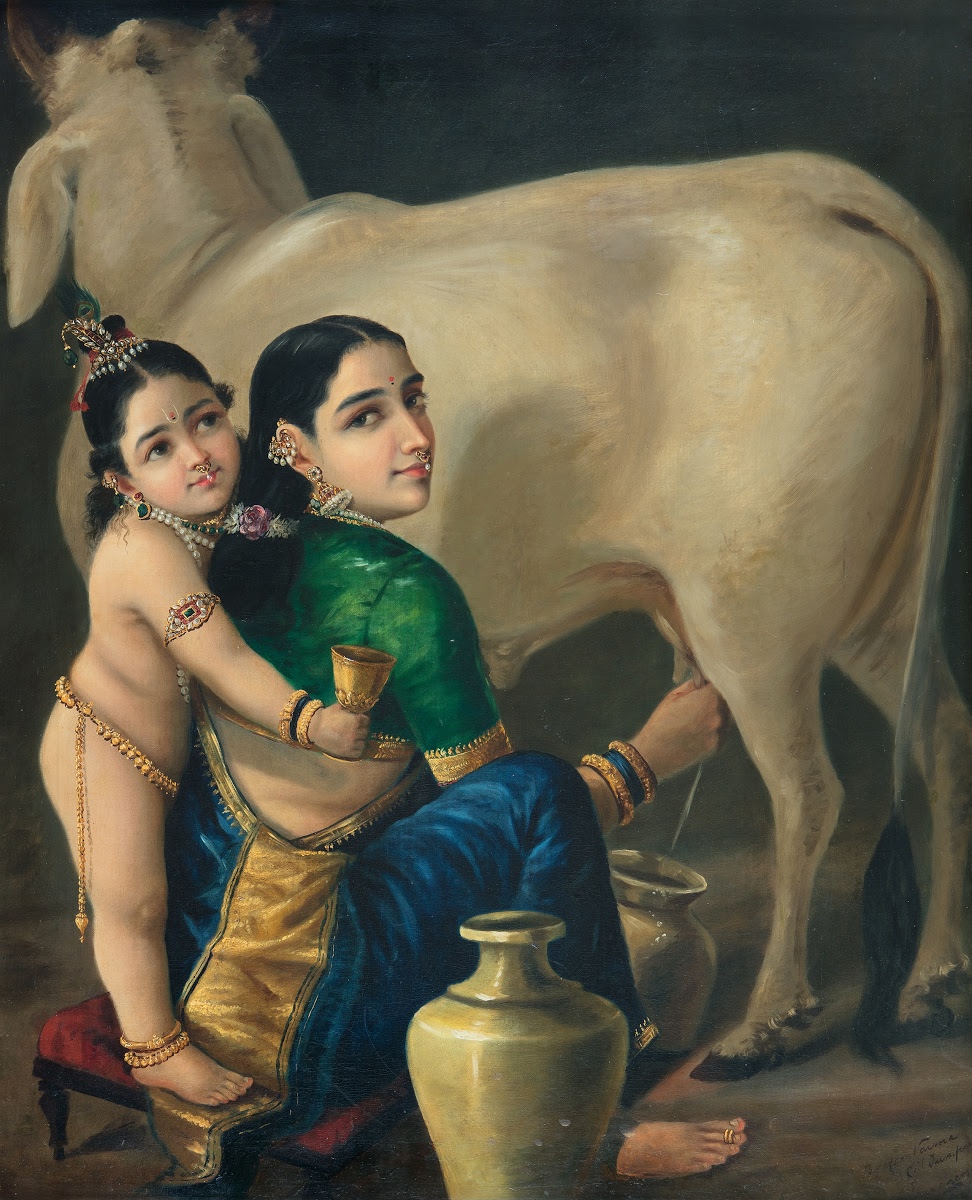
Most Expensive Painting in India: Recently, on 1 April 2026, a masterpiece by the famous 19th-century artist Raja Ravi Varma, "Yashoda and Krishna", broke the historic record and sold at a Saffronart auction in Mumbai at 167.2 crore, equal to 17.9 million dollars, becoming the highest priced painting bought in India by an Indian artist, becomes the Most Expensive Painting in India.
STORY | Raja Ravi Varma's 'Yashoda and Krishna' sells at record-breaking Rs 167.20 crore
— Press Trust of India (@PTI_News) April 2, 2026
Eminent Indian painter Raja Ravi Varma's oil painting "Yashoda and Krishna" was sold at a record Rs 167.20 crore (USD 17,978,495) at Saffronart's Spring Live Auction in Mumbai on Wednesday,… pic.twitter.com/829FEUtMfA
Which is the Most Expensive Painting in India in 2026?
Source: google art
The most expensive painting in India ever sold by an Indian artist is titled "Yashoda and Krishna" and was sold at a Saffronart auction for a staggering ₹167.2 crore (approximately $17.9 million). It was purchased by the well-known businessman and billionaire Cyrus Poonawalla. The sale is such a landmark as it demonstrates how the value of the Indian heritage and classical art has increased in the international arena.
Also Read: Top 10 Most Expensive Painting in the World, Check List
Quick Facts about the Most Expensive Painting in India
| Feature | Details |
| Painting Name | Yashoda and Krishna |
| Artist | Raja Ravi Varma |
| Sold Price | ₹167.2 Crore |
| Date of Sale | April 1, 2026 |
| Buyer | Cyrus Poonawalla |
| Art Style | Naturalism / Oil on Canvas |
| What this painting shows | A beautiful scene of Mother Yashoda with the child Krishna and a cow. |
Who was Raja Ravi Varma?
Source: wikimedia
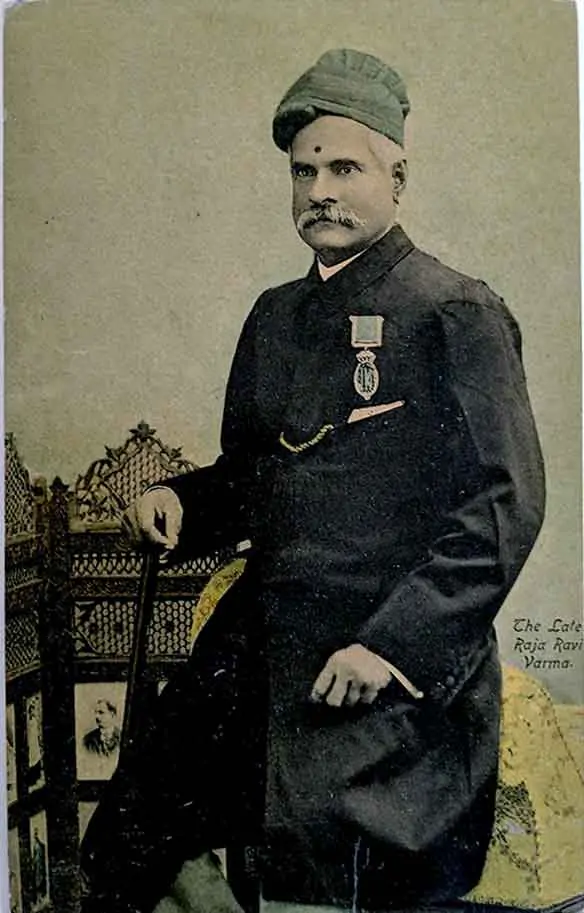
Raja Ravi Varma was a progressive painter and a Travancore prince (present-day Kerala). A pioneer Indian painter and artist, he was able to gain recognition for being able to give European academic realism an Indian sensibility and subject. He is generally credited with creating the visual image of Indian gods, goddesses and mythological beings with the use of his detailed and human-like depictions.
Also Read: Top 10 Costliest Paintings in the World
Who is known as the Father of Modern Indian Art?
Raja Ravi Varma is often known as the "Father of Modern Indian Art." The following are just some of the reasons why his work is so invaluable:
1. Bringing Gods to the People: He became the first painter to depict Hindu deities in human-like features and emotions so that they could be related to everyone.
2. The Printing Press: This was a lithographic press that he established because ordinary people needed to have cheap prints of his works in their homes.
3. National Treasure: He is among the nine artists whose works are announced as a National Art Treasure. These paintings are not allowed to be removed out of India by law.
Top 5 Most Expensive Indian Paintings (Updated 2026)
If you are preparing for a GK quiz, here is the list of the highest-priced Indian artworks sold to date:
| Rank | Painting Name | Artist | Sold Price | Year |
| 1 | Yashoda and Krishna | Raja Ravi Varma | ₹167.2 Cr | 2026 |
| 2 | Gram Yatra | M.F. Husain | ₹118.0 Cr | 2025 |
| 3 | Oil on Canvas | V.S. Gaitonde | ₹67.8 Cr | 2025 |
| 4 | The Story Teller | Amrita Sher-Gil | ₹61.8 Cr | 2023 |
| 5 | Gestation | S.H. Raza | ₹51.7 Cr | 2023 |
Important Facts to Remember
-
Non-Exportable Status: All the paintings by Raja Ravi Varma are "non-exportable." This implies that the painting should remain within India even when it is purchased by a foreign individual.
-
The Subject: The painting Yashoda and Krishna shows the attachment of the child God Krishna with his foster mother Yashoda.
-
Previous Record: Before 2026, the record was held by M.F. Husain for his work Gram Yatra.
The ₹167.2 crore price tag for "Yashoda and Krishna" is not just a question of money but a matter of pride that India has with its cultural heritage. To students and art enthusiasts, Raja Ravi Varma will always be a representation of how beautiful world-class art can be used to narrate the traditional Indian stories.


Comments
All Comments (0)
Join the conversation