List Of 5 Major River-Linking Projects Under NPP
India’s National Perspective Plan (NPP) aims to tackle water inequality by connecting major river basins. Through massive grids like the Ken-Betwa and southern link networks, the initiative focuses on drought relief, expanding irrigation, and providing drinking water across regions.
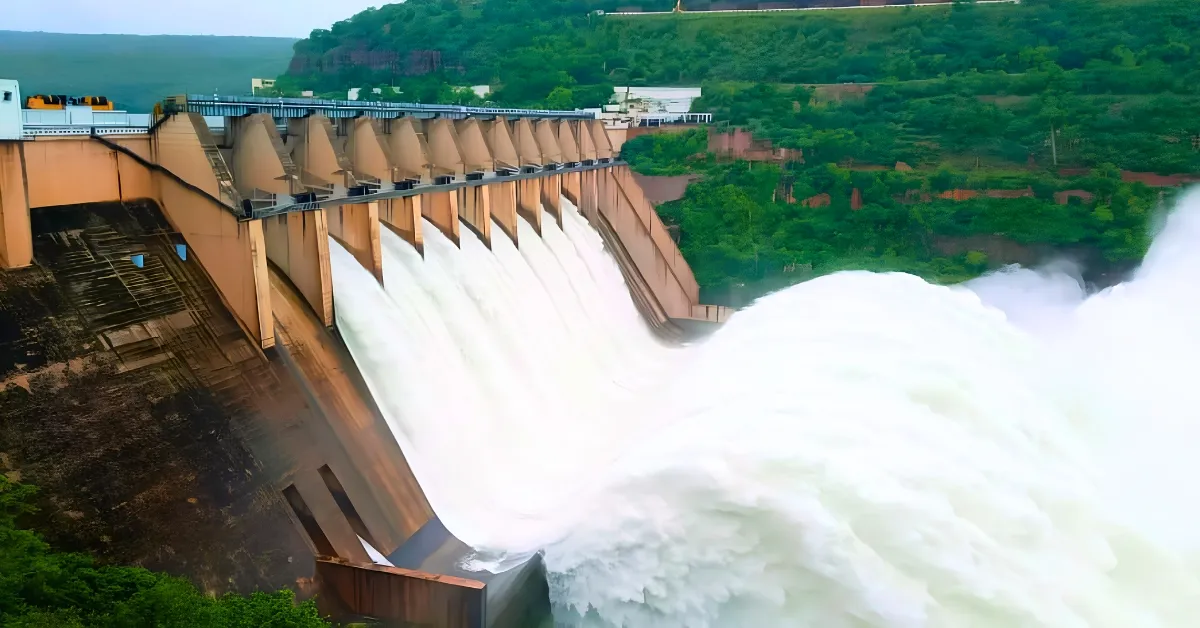
Did you ever think about the reason behind the interconnection of two or more rivers? The answer to this question lies in the solution to a big geographic problem – water inequality. According to PIB, there are currently 5 river-linking projects in India under the National Perspective Plan (NPP) and the National Water Development Agency (NWDA).
It is very rare for rainfall and water distribution to be uniform. While one area is suffering from floods, the other area in the same country may be suffering from drought. Therefore, the government constructs dams by connecting two rivers that can support each other and benefit the people as well.
The construction of these dams and reservoirs helps to make a "water grid" that allows the transfer of surplus water from the “surplus” river basin to the “deficit” river basin. In this article, let us find out the top 5 river-linking projects.
List of 5 Major River Linking Projects in India Under NPP
Here’s the list of the 5 major water-linking projects in India under NPP:
| Project Name | Started In | Total Budget | Completion Year | Key Benefits | Key Cons |
| Ken–Betwa Link Project (KBLP) | 2021 (Cabinet Approved) | ~₹44,605 Crore | 2030 | Supplies drinking water to 62 lakh people. Irrigates 10.62 lakh hectares of dry land. | Submerges 6,000 hectares of Panna Tiger Reserve. Displaces over 7,000 tribal families. |
| Modified Parbati–Kalisindh–Chambal (PKC) Link | 2024 (MoU signed) | ~₹90,000 Crore | 2051 (Long-term grid; Phase 1 finishes 2028) | Delivers water to 17 dry districts in Rajasthan. Solves industrial and drinking water scarcity. | Triggers interstate water conflicts between MP and Rajasthan. Alters the natural flow of the Chambal basin. |
| Godavari (Inchampalli) – Krishna (Nagarjunasagar) | 2024 (DPR circulated) | Part of the overall ~₹85,000+ Cr Southern Link grid | Under Planning (DPR finalised in 2024) | Diverts massive surplus water from Godavari. Stabilises irrigation in Telangana & Andhra. | Requires immense electrical power to lift water. Displaces riverbank villages due to new barrages. |
| Krishna (Nagarjunasagar) – Pennar (Somasila) | 2024 (DPR completed) | Part of the overall Southern Link grid | Under Planning (DPR finalised in 2024) | Supplies water to the drought-hit Rayalaseema region. Boosts groundwater tables along the canal. | Heavily dependent on upstream surplus water availability. Involves massive land acquisition for the canal network. |
| 5. Pennar (Somasila) – Cauvery (Grand Anicut) | 2024 (DPR completed) | Part of the overall Southern Link grid | Under Planning (DPR finalised in 2024) | Direct relief to water-scarce parts of Tamil Nadu. Controls regular agricultural crop failures. | Causes political friction over southern river shares. Disturbs delta ecology near the Grand Anicut area. |
Why is the Government emphasising the River Linking Projects?
- Many areas in India suffer from severe droughts and are devoid of any clean drinking water sources. River linking ensures a continuous source of water supply for these arid cities. For instance, the Ken-Betwa River Project in India will ensure drinking water for around 62 lakh people.
- The farmers in arid regions fail to cultivate their lands due to inconsistent rains. River connection provides irrigation canals that make arid lands fruitful. For example, the Godavari-Krishna link helped irrigate over 2.5 lakh acres of paddy fields.
- The rainfall results in the overflowing of rivers, which destroys houses and properties. The government can store such floodwater in the reservoirs created through dams and canals. For example, the Burhi Gandak project in Bihar was designed to prevent these annual floods.
- Water flowing from dams and canals could also be used to produce energy. The government uses the flow of water to rotate the turbine that produces energy. For instance, the Damanganga-Pinjal project will help in supplying water to Mumbai and producing electricity.
Conclusion
In conclusion, despite the strong resistance to such ventures by numerous scientists and environmentalists, the complete diversion of river water leads to the extinction of natural aquatic wildlife and impacts the breeding patterns of fish species.
Such an exercise also entails felling enormous amounts of forest cover, including some sections of the Panna Tiger Reserve. The construction of such large reservoirs displaces thousands of people from their native lands.

Kriti Barua is a skilled digital journalist and communications professional with 4+ years of experience, currently writing for the General Knowledge section at Jagran New Media. She has established herself as a subject matter expert in History, Geography, Trending National and International News, Sports, Science, and Defence, producing clear, reliable, and search-optimised content that connects with readers worldwide.
Kriti holds a BA degree from Delhi University and a one-year diploma in TV Production and Journalism, an academic background that adds research depth and strong storytelling instincts to her writing. Her experience spans brand writing, content marketing, and digital media, giving her a sharp understanding of what makes content both helpful to readers and visible in search.
At Jagran New Media, she applies this expertise to national and international news coverage, query-based articles, and in-depth pieces across her specialist subject areas. Her content is defined by easy language, factual accuracy, strong keyword strategy, and reader-friendly storytelling.