Key Points
- UP Board, originally 'United Provinces,' established in 1921 by the British.
- It standardized secondary education and exams in North India.
- CBSE originated in 1929 during British rule, reorganized post-independence.
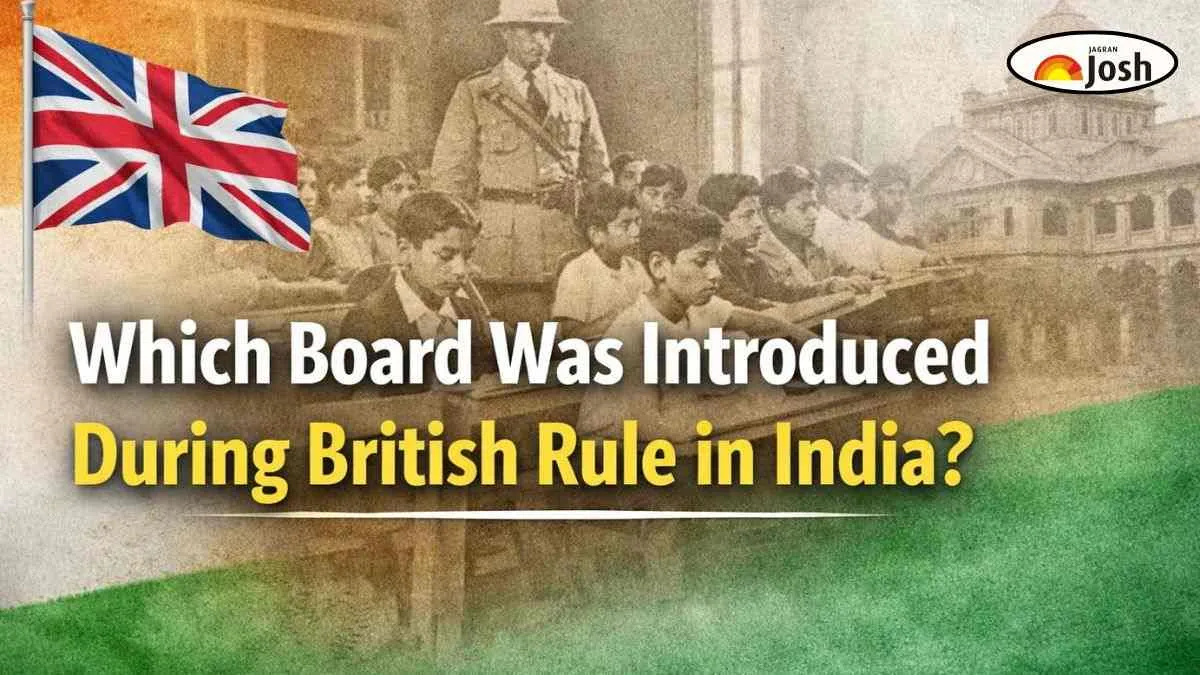
India’s present-day school education system is deeply influenced by reforms introduced during British rule. One of the most commonly asked questions in school examinations, competitive exams, and general knowledge sections is: “Which board was introduced during British rule in India?”
To standardise school education, examinations, and certification across provinces, the British administration established formal education boards during the early 20th century. Among these, one board stands out as the earliest school education board introduced during British rule.
This article explains which board was introduced during British rule, its historical background, significance, and evolution with reference to official government records.
Education System in India During British Rule
Before British intervention, education in India followed traditional systems such as Gurukuls and Madrasas, which lacked uniformity. The British introduced a structured education framework that included:
-
Fixed curriculum
-
Written examinations
-
Grade-wise education
-
Government-controlled boards
Major reforms like Macaulay’s Minute (1835) and Wood’s Despatch (1854) paved the way for modern school education and examination boards in India.
Which Board was Introduced During British Rule?
The Uttar Pradesh Board (UP Board) is the school education board that was introduced during British rule in India.
Key Details:
-
Year of establishment: 1921
-
Original name: Board of High School and Intermediate Education, United Provinces
-
Introduced under: British Government
-
Headquarters: Allahabad (now Prayagraj)
At the time of its formation, Uttar Pradesh was known as the United Provinces of Agra and Oudh. The board was created to regulate and conduct high school and intermediate examinations in the region. This makes UP Board the oldest state education board in India, established before independence.
Why Was the UP Board Established?
The British government introduced the UP Board to:
-
Standardise secondary and senior secondary education
-
Conduct uniform public examinations
-
Improve administrative control over education
-
Prepare students for higher education and government services
It played a crucial role in shaping structured school education in North India.
Comparison with Other Boards Introduced Later
CBSE (Central Board of Secondary Education)
-
Origin year: 1929 (British era)
-
Type: National-level board
-
Primary role: Education for centrally administered schools
-
Reorganised after Independence under the Government of India
ICSE
-
Established: 1958
-
Post-Independence board
-
Not introduced during British rule
Exam-Oriented Clarity:
Correct Answer Based on Question Type:
-
Question: Which board was introduced during British rule?
✅ UP Board -
Question: Which national-level board originated during British rule?
✅ CBSE
Most school GK and competitive exam questions expect UP Board as the correct answer.
Why This Question Is Important for Competitive Exams
This topic is frequently asked in:
-
SSC, UPSC, State PSC
-
CTET, TET
-
School history and civics exams
-
General Awareness sections
Knowing the correct historical context helps avoid confusion between state and central boards.
To conclude, the Uttar Pradesh Board of High School and Intermediate Education (UP Board) is the education board that was introduced during British rule in India. Established in 1921, it laid the foundation for standardised school examinations and remains one of the most significant education boards in the country today.
Also Check:




Comments
All Comments (0)
Join the conversation