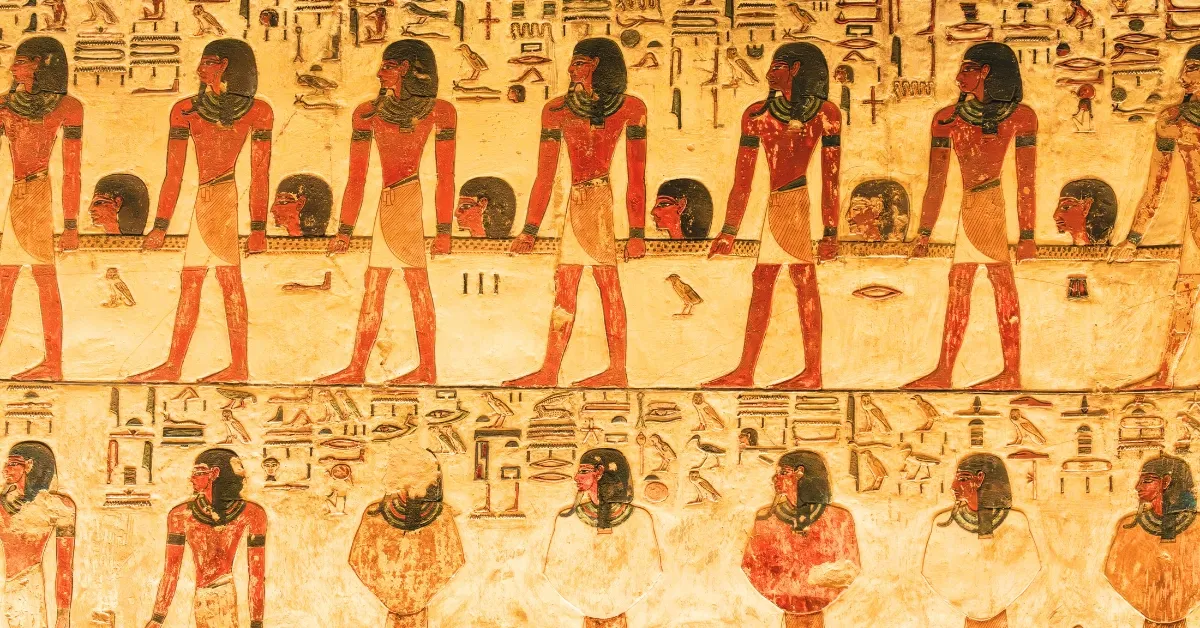
Key Points
- The Indus Valley Civilization thrived from 3300 BCE to 1300 BCE in India and Pakistan.
- It was larger than ancient Egypt and Mesopotamia, known for urban planning.
- Decline likely due to climate change, river drying, and trade collapse.
Did you know that some of the world's greatest cities disappeared without a trace? Long before modern technology, ancient India had a large and highly developed society.
It was one of the three oldest civilisations in history, along with Egypt and Mesopotamia. While others are known for their pyramids, this one was actually the largest in land area and population.
But here is the mystery: Which one was it? Here are two clues: First, they were the first to use planned grid cities and underground drainage.
Second, they lived along a river that eventually dried up or changed course. In this article, we’ll explore this "lost" empire and why it suddenly vanished.
ALSO READ| Indus Valley Civilisation: Discovery, Timeline, Key Sites & Reasons of Decline
Which is the Largest ‘Lost Civilisation’ in History?

Source: Getty Images
The largest lost civilisation in history is the Indus Valley Civilisation, also called the Harappan Civilisation. It thrived from about 3300 BCE to 1300 BCE and spanned a vast area in what is now India and Pakistan.
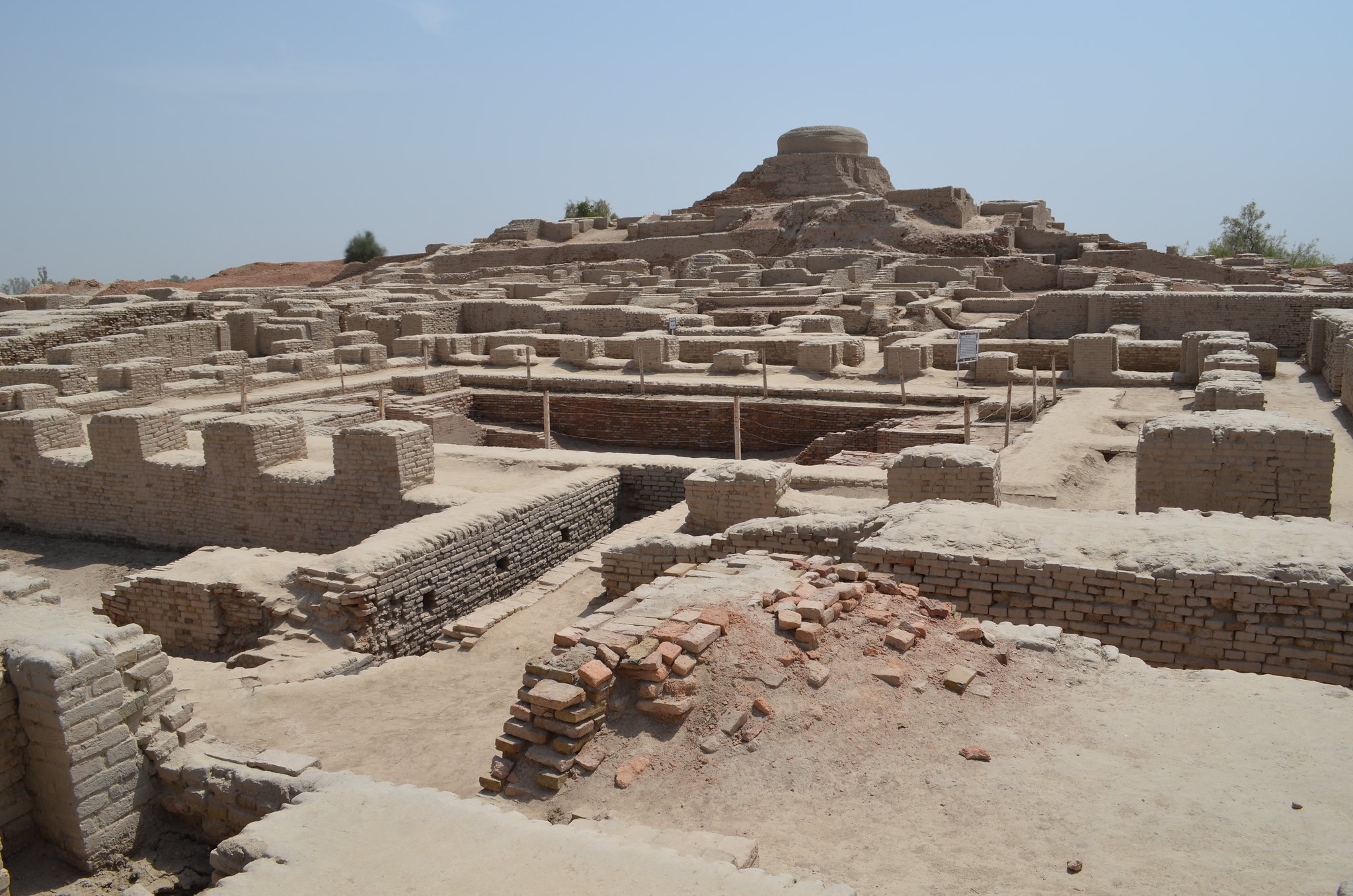
It was much larger than ancient Egypt or Mesopotamia. Its most famous cities, Harappa and Mohenjo-daro, were examples of great engineering.
This society was famous for its impressive urban planning. It included the world’s first sanitation systems and houses made of baked brick.
Unlike other empires, they did not construct large tombs or palaces for kings. Instead, they prioritised utility, trade, and equality.
IN CASE YOU'RE INTERESTED| Indus River System: Origin, tributaries, and know about its civilisations
10+ Lesser-Known Facts about the Indus Valley
- They were the first to use a uniform ratio (4:2:1) for brick sizes across every city in their territory.
- Evidence at Kalibangan suggests they recognised earthquake risks and were among the first to build structures to withstand them.
- Archaeologists found evidence in Mehrgarh of the first "drills" used to treat tooth decay, dating back 9,000 years.
- Their weight system followed a sophisticated sequence, using both binary (1,2,4,8,16) and decimal (0.05,0.1,0.2,0.5) increments.
- Lothal featured the world’s earliest known artificial dock, designed to survive changing tides for maritime trade.
- Excavations have found almost no specialised military weaponry (like shields or armour), suggesting a remarkably peaceful society.
- Most houses had "trash chutes" that connected to a centralised street-level bin for collection.
- The pool at Mohenjo-daro was made watertight using a thick layer of bitumen (natural tar), an early feat of chemical engineering.
- They perfected the "lost-wax casting" technique to create intricate bronze statues like the famous "Dancing Girl".
- Recent isotopic studies of snail shells suggest the civilisation declined due to a 200-year-long drought caused by a shift in the monsoon.
- The earliest functional buttons, made from seashell, were found here and used for decoration rather than fastening.
Why Did the Indus Valley Civilisation Disappear Suddenly?
Source: World History Encyclopedia
Scientists and historians have debated this mystery for decades. Although it seems they vanished suddenly, it was probably due to a mix of several environmental disasters over a few centuries. Here are the reasons why this great civilisation collapsed.
1. The Shifting Monsoons (Climate Change)
The most widely accepted scientific theory is a major shift in weather patterns.
- The Drought: Around 1800 BCE, the monsoon rains that fed their crops began to move eastward.
- Isotope Evidence: Scientists studying ancient snail shells and stalagmites in caves have found evidence of a 200-year-long drought.
- The Result: Without steady rain, the Harappans could no longer grow enough food (like wheat and barley) to support their massive city populations.
2. The Drying of the Saraswati River
The Indus people didn't just rely on the Indus River; many lived along the Ghaggar-Hakra River (often identified as the lost Saraswati).
- Tectonic Shifts: Earthquakes likely shifted the Earth's crust, causing rivers to change their course.
- Loss of Water: When the river dried up or moved away, entire cities were left in the middle of a desert. People had no choice but to abandon their homes and migrate toward the Ganges Valley in the east.
3. Catastrophic Flooding
Source: Good Bharat
While some areas dried up, others faced the opposite problem.
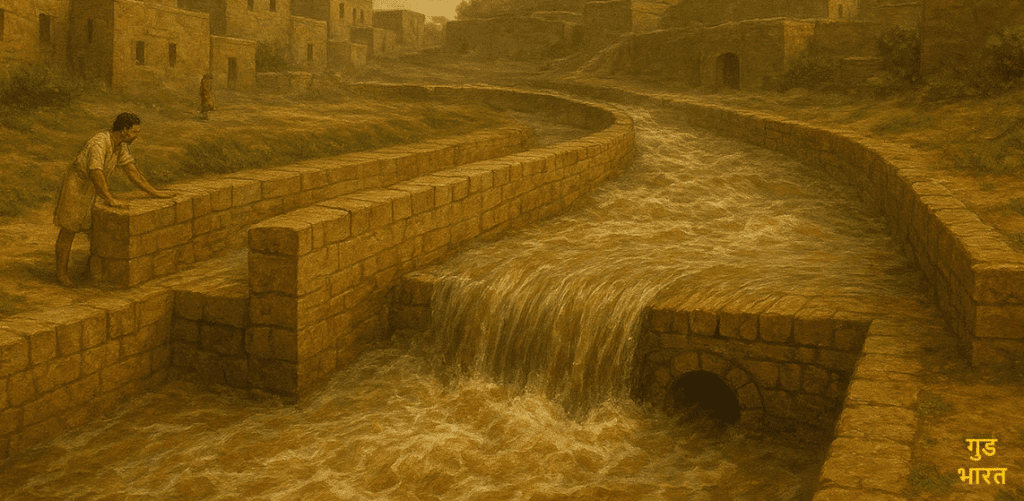
- River Changes: The Indus River is known for being unstable. Evidence shows that massive "super-floods" likely destroyed the layers of the city.
- Stagnant Water: Constant flooding created marshes, which led to the next big problem: disease.
4. Spread of Infectious Diseases
As the climate changed and water systems broke down, the health of the citizens declined.
- Skeletal Evidence: Archaeologists examining bones from Mohenjo-daro found high rates of malaria and leprosy.
- The Breakdown: With the famous drainage systems no longer being maintained, dirty water pooled in the streets, making it easy for trade-route diseases to wipe out large numbers of people.
5. The Collapse of Foreign Trade
The Harappans were a "business-first" society.
- Mesopotamian Connection: Their economy relied heavily on trading gold, beads, and lapis lazuli with Mesopotamia (modern-day Iraq).
- Economic Domino Effect: When Mesopotamia faced its own political troubles and stopped buying goods, the Indus economy crashed. Without wealth and trade, the complex city systems fell apart.
Which Civilisation Completely Disappeared?

Source: National Geographic
The Maya Civilisation is one of the most well-known to "disappear" from its height. While Maya descendants still live today, their impressive limestone cities and complex calendar systems were left behind in the jungle around 900 CE.
Scientists think that a mix of severe deforestation, long-lasting drought, and internal conflict led to the collapse of their social structure. This left their tall pyramids covered in vines for centuries.
What Is The Largest Civilisation In History?
In terms of land area and population density, the Indus Valley Civilisation holds the top position. At its peak, it spanned more than 1 million square kilometres, covering parts of present-day India, Pakistan, and Afghanistan.
This area was much larger than the combined territories of ancient Egypt and Mesopotamia. It had an estimated five million people living in more than 1,000 well-organised, gridded settlements.





Comments
All Comments (0)
Join the conversation