Show Key Points
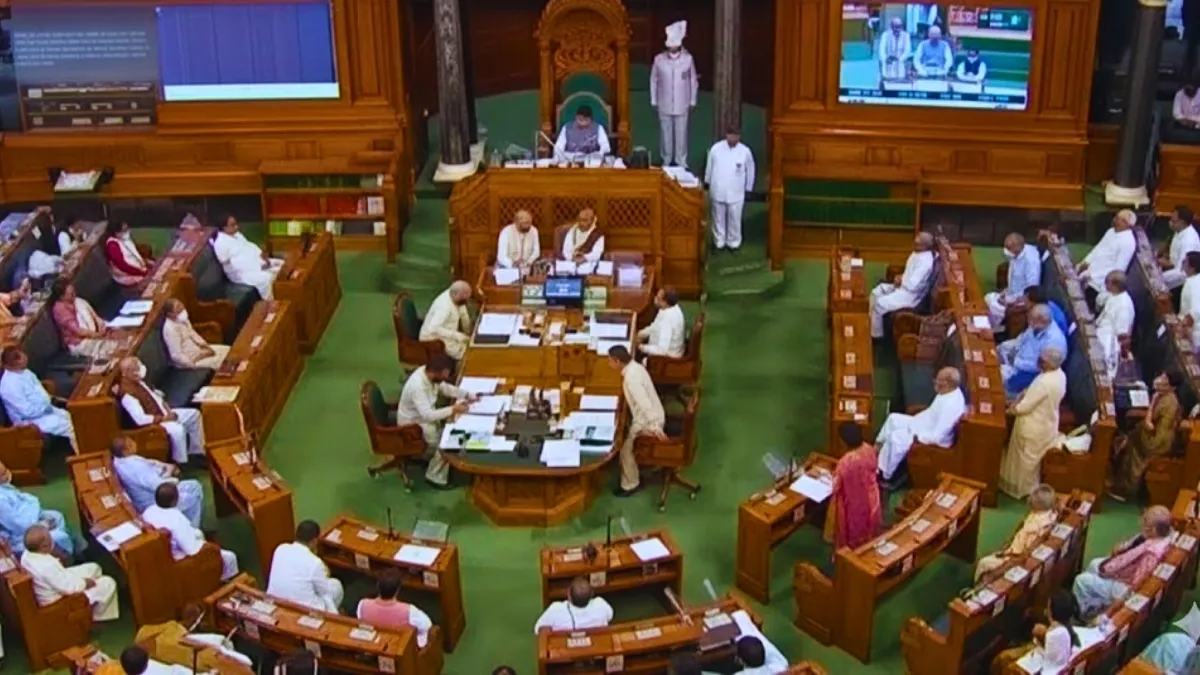
Question Hour: The Question Hour is the first hour of every parliamentary sitting. During this hour Members of Parliament (MPs) ask questions to Ministers regarding the administration and activities of their respective ministries and hold them accountable for the functioning of their ministries. The questions that MPs ask are designed to elicit information and trigger suitable action by ministries.
What is Question Hour?
The Question Hour is the first hour of every parliamentary sitting of both the Rajya Sabha (Counsil of States) and Lok Sabha(House of the people) during this window, Members of Parliament (MPs) pose questions to Ministers regarding the administration and activities of their respective ministries.The Question Hour ensures that the government is held accountable every single day the Parliament is in session. This tradition of Question Hour, rooted in British parliamentary practice, serves as a daily "performance review" of the ruling government.
An hour of every sitting of the House available for asking and answering of questions is popularly known as Question Hour. Until the 232nd Session, the first hour of the House was available for asking and answering of questions. From the 233rd Session onwards, the Question Hour has been shifted which now commences from 12.00 noon to 1.00 p.m.
What kind of questions are asked?
Parliamentary rules provide guidelines on the kind of questions that can be asked by MPs. Questions have to be limited to 150 words. They have to be precise and not too general. The question should also be related to an area of responsibility of the Government of India. Questions should not seek information about matters that are secret or are under adjudication before courts.
The presiding officers of the two Houses who finally decide whether a question raised by an MP will be admitted for answering by the government. The questions are divided into three distinct categories:
1. Starred Questions:
-
Nature:These are questions for which an MP desires an oral answer on the floor of the House.
-
Identification: They are distinguished by an asterisk (*) mark.
-
The Follow-up: The most significant feature of Starred Questions is that supplementary questions can be asked. If a Minister’s initial answer is vague, MPs can probe further in real-time.
2. Unstarred Questions:
-
Nature: These require a written reply.
-
The Limit: No oral discussion takes place. The Minister "lays" the written answer on the table of the House.
-
Constraint: Since the answer is written, no supplementary questions can be asked. This is typically used for gathering heavy data or statistics.
3. Short Notice Questions:
-
Nature: These relate to a matter of urgent public importance.
-
The Rule: While standard questions require a 15-day notice, these can be asked with a notice of less than 10 days, provided the Chairperson/Speaker and the Minister agree to it. They are answered orally.
4. Supplementary Questions :
- A Question asked by any member when called by the Chairman for the purpose of further elucidating any matter of fact regarding which an answer has been given during the question hour.
How is Question Hour regulated?
Parliament has comprehensive rules for dealing with every aspect of Question Hour. And the presiding officers of the two houses are the final authority with respect to the conduct of Question Hour. For example, usually Question Hour is the first hour of a parliamentary sitting. In 2014, Rajya Sabha Chairman Hamid Ansari shifted Question Hour in the House from 11 am to 12 noon to prevent the disruption of Question Hour.
Also Read: What Is Right To Recall? Meaning, Significance And Impact On Democracy


-1771229275521_t.webp)


Comments
All Comments (0)
Join the conversation