
Do you know Saturn has 145 confirmed moons? Among them, Epimetheus stands out as one of the smallest and most fascinating. This icy moon shares nearly the same orbit as Janus, performing a rare gravitational “dance” where the two moons periodically swap positions without ever colliding, which is a perfect example of celestial harmony.
Recently, Epimetheus has been making headlines following a NASA study on Titan that challenges the idea of a global subsurface ocean, highlighting the incredible diversity of Saturn’s moons. Let us read in the blog below to discover what makes Epimetheus unique, how it differs from Janus, and why scientists are captivated by this tiny moon.
What is Saturn’s Moon Epimetheus?
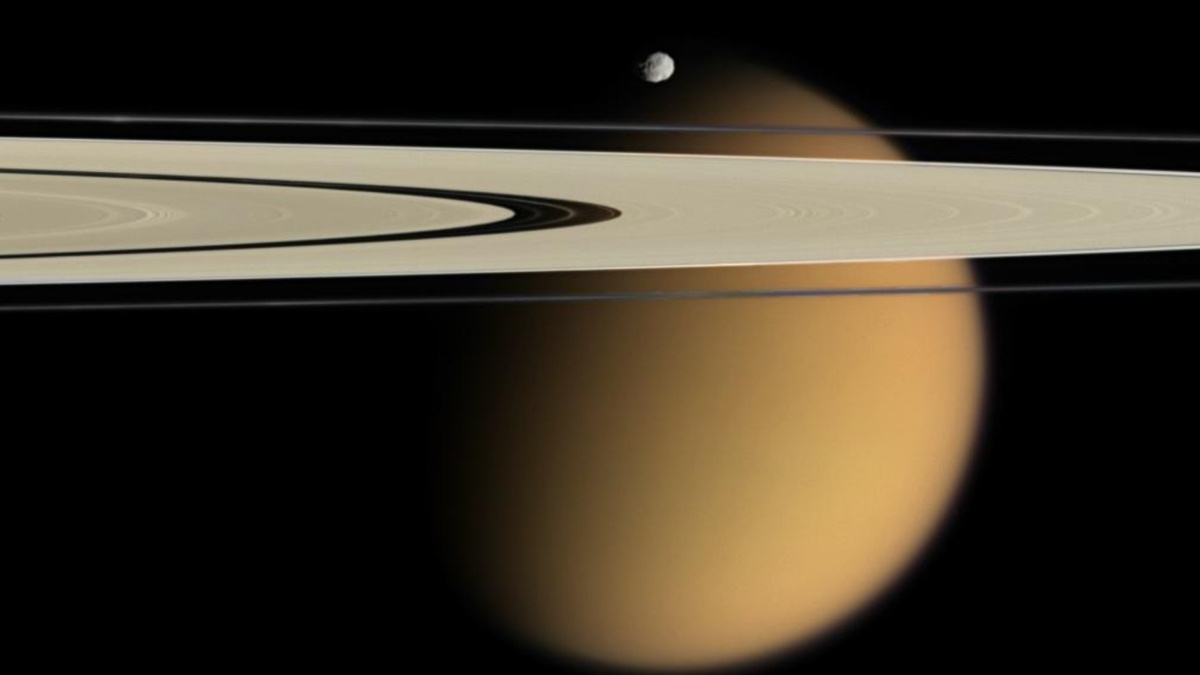
(Credits: Business Insider)
Epimetheus is a small, irregularly shaped icy moon of Saturn. It was discovered in 1966 by French astronomer Audouin Dollfus. Later, Voyager 1 in 1980, confirmed its identity.
It is famous for sharing its orbit with Janus in a rare gravitational “cosmic dance,” where the two moons periodically swap positions. About 116 km wide, Epimetheus is uneven in shape due to low gravity and is made mainly of water ice mixed with rock. This gives it a bright surface. It orbits Saturn at roughly 151,000 km and completes a lap every 16.7 hours.
| Feature | Epimetheus |
| Diameter | ~116 km |
| Composition | Ice + rock |
| Orbital partner | Janus |
| Discoverer | Audouin Dollfus |
Source: NASA Moons (Epimetheus)
Why is Epimetheus Important to Scientists?
Epimetheus helps scientists study gravitational interactions, orbital mechanics, and moon formation. Its unique relationship with Janus provides valuable insight into how celestial bodies can share space without colliding.
Does Saturn’s Moon Epimetheus Have an Ocean or Atmosphere?
No, Epimetheus does not have a subsurface ocean or an atmosphere. Its small mass prevents it from retaining heat or sustaining geological activity.
5 Key Facts About Saturn’s Moon Epimetheus
There are certain facts about Epimetheus you must know:
1. Epimetheus Shares an Orbit With Janus
Epimetheus and Janus are locked in a co-orbital (horseshoe) orbit, separated by only about 50 kilometres. Every four years, the two moons swap orbital positions without colliding.
2. Epimetheus Is Small and Irregular in Shape
The moon measures roughly 113 kilometres across and has an uneven, sponge-like appearance rather than a smooth spherical form.
3. It Is Made Mostly of Water Ice
Epimetheus is composed primarily of water ice, which gives it a bright surface that reflects sunlight efficiently.
4. The Moon Has a Porous Interior
Scientists believe Epimetheus has a rubble-pile structure, which means it is loosely packed with empty spaces rather than being solid throughout.
5. Epimetheus Cannot Support Life
Due to its small size, Epimetheus lacks an atmosphere, internal heat, or liquid water. This makes it inhospitable for life.
What Makes Janus and Epimetheus Unique?
(Credits: The Planetary Society)
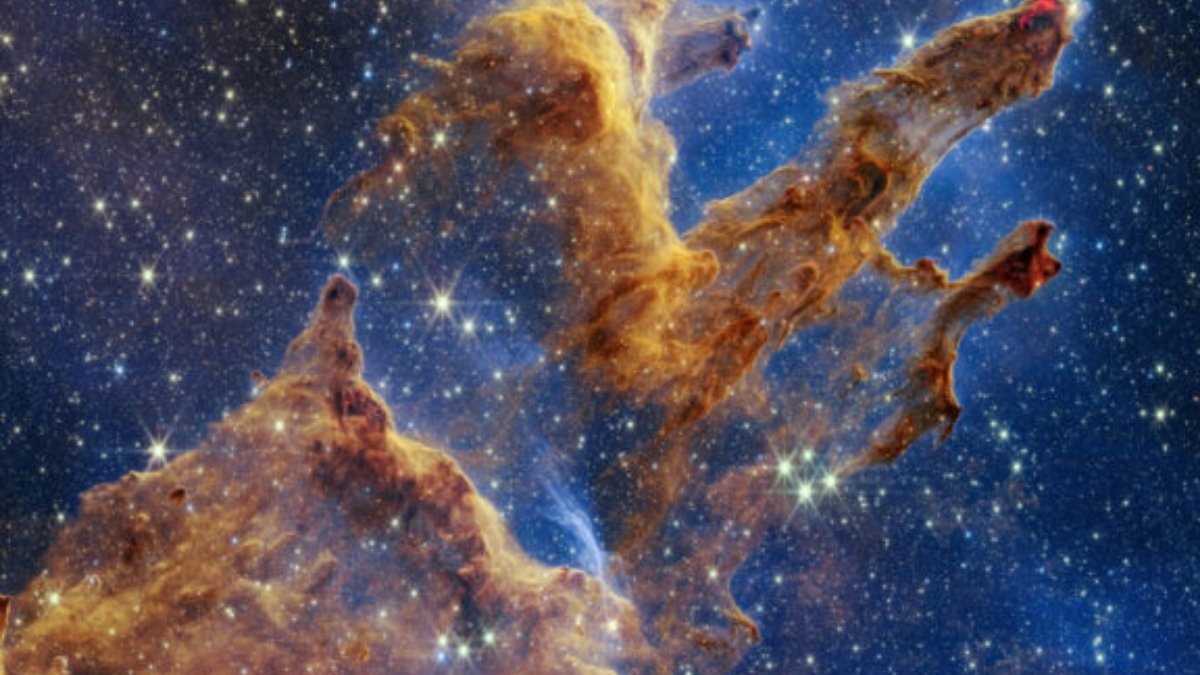
You might be surprised to know that Janus and Epimetheus are co-orbital moons. This also means that they orbit Saturn at almost the same distance. However, Janus is slightly larger and more massive than Epimetheus. Due to this, when the moons approach each other every few years, gravity causes them to swap orbital positions.
-
The inner moon gains energy and moves outward
-
The outer moon loses energy and moves inward
This orbital exchange happens roughly every four years and repeats in a predictable pattern. The behaviour is known as a horseshoe orbit and is one of the clearest examples of this phenomenon in the solar system.
What are the Key Difference Between Epimetheus and Janus?
The key difference between Epimetheus and Janus are mentioned in the table below:
| Feature | Epimetheus | Janus |
| Approximate Size | ~113 km | ~179 km |
| Discovery Year | 1966 | 1966 |
| Discovered By | Richard L. Walker | Audouin Dollfus |
| Orbit Type | Co-orbital with Janus | Co-orbital with Epimetheus |
| Surface Composition | Mostly water ice | Mostly water ice |
| Shape | Highly irregular | Slightly more rounded |
| Habitability | Not habitable | Not habitable |
Source: NASA Moons Epimetheus
Therefore, to conclude, Epimetheus remains one of Saturn’s most fascinating moons. What sets it apart is its unique co-orbital relationship with Janus. This showcases a rare cosmic dance of this small icy moon.
You may aslo like to read: 7 Interesting and Mysterious Facts About Moon You Must Know!




-1766047423613.jpg)
Comments
All Comments (0)
Join the conversation