India has more than 400 rivers, which are grouped into two main types: those originating in the Himalayas and those originating in the Peninsula. The country is divided into large river basins that support millions of people. The Ganga is the longest river in India, while the Brahmaputra is the widest and carries the most water. Some rivers even change names along their journey; for example, the Brahmaputra is known as the Tsangpo in Tibet. Can you guess which major river does not begin in the snowy Himalayas? This river flows through a rift valley and is one of the few that empties into the Arabian Sea. In this article, we will explore the origins of India's great rivers.
Which Rivers Do Not Originate From The Himalayas?
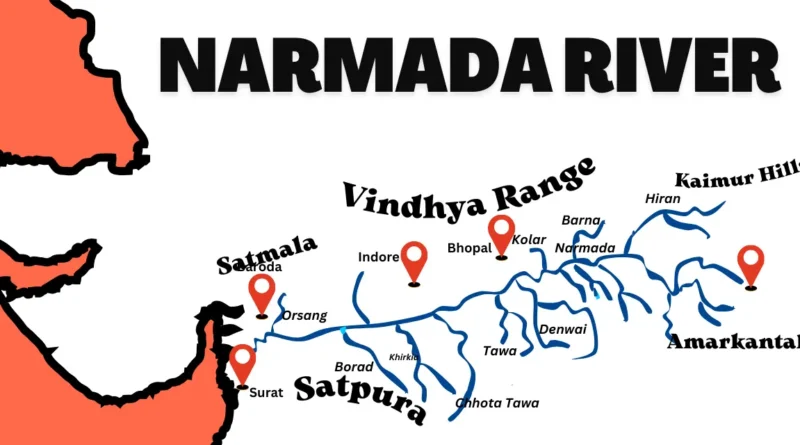
Many of India's famous rivers originate in the Himalayas, but many important rivers are part of the Peninsular river system. These rivers usually begin in the Western Ghats, the Vindhya Range, or the Satpura Range. Below is a list of major Indian rivers that do not start in the Himalayas:
| River | Starts From (Origin) | Flows Through | Ends In | Description |
| Narmada | Amarkantak Plateau, MP | Madhya Pradesh, Maharashtra, Gujarat | Arabian Sea | Often called the "Lifeline of Madhya Pradesh", it flows west through a rift valley between the Vindhya and Satpura ranges. It is one of the few large rivers that do not form deltas. |
| Tapi (Tapti) | Satpura Range, MP | Madhya Pradesh, Maharashtra, Gujarat | Arabian Sea | This is the twin of the Narmada and also flows westward through a rift valley. It serves as a major source of irrigation and industrial water for the Surat region. |
| Godavari | Brahmagiri Hills, MH | Maharashtra, Telangana, Andhra Pradesh | Bay of Bengal | Known as the "Vriddha Ganga", it is the second-longest river in India. It forms a massive fertile delta on the east coast and is vital for agriculture in southern India. |
| Krishna | Mahabaleshwar, MH | Maharashtra, Karnataka, Telangana, AP | Bay of Bengal | This fast-flowing river is a major source of hydroelectric power. It is famous for its extensive canal system and the massive Nagarjuna Sagar Dam, which supports millions of farmers. |
| Kaveri | Brahmagiri Hills, KA | Karnataka, Tamil Nadu | Bay of Bengal | Often called the "Ganges of the South", it is sacred to millions. It is unique among Peninsular rivers because it receives rainfall from both the Northeast and Southwest monsoons. |
| Mahanadi | Sihawa, Chhattisgarh | Chhattisgarh, Odisha | Bay of Bengal | This river is known for its devastating historical floods, now controlled by the Hirakud Dam. It carries a heavy silt load and forms a complex delta system in Odisha. |
| Luni | Aravalli Range, RJ | Rajasthan, Gujarat | Rann of Kutch | This is an endorheic river, meaning it does not reach the sea but disappears into the marshy Rann of Kutch. It is the only major river in the Thar Desert. |
| Sabarmati | Aravalli Range, RJ | Rajasthan, Gujarat | Arabian Sea | Originating in the Aravallis, it flows through major cities like Ahmedabad and Gandhinagar. Historically, it is famous for the Sabarmati Ashram established by Mahatma Gandhi along its banks. |
| Mahi | Vindhya Range, MP | Madhya Pradesh, Rajasthan, Gujarat | Arabian Sea | The Mahi is the only river in India that crosses the Tropic of Cancer twice. It is a critical water source for the tribal regions of western India. |
| Pennar | Nandi Hills, KA | Karnataka, Andhra Pradesh | Bay of Bengal | This river flows between the Krishna and Kaveri basins. It is a seasonal river that remains dry for parts of the year but supports vital groundwater recharge in Andhra Pradesh. |
5 Lesser-Known Facts About Peninsular Rivers
Here are the 5 lesser-known facts about rivers that do not originate from the Himalayas:
1. The Inverse Flow
Unlike most major Indian rivers that flow east into the Bay of Bengal, the Narmada and Tapi flow west. This occurs because they are trapped within deep "rift valleys" formed by tectonic shifts.
2. The Ancient Waterways
Geological studies indicate that Peninsular rivers are much older than Himalayan rivers. While the Himalayas are "young" mountains, the river beds of the south have been stable for millions of years.
3. The Seasonal Pulse
Most of these rivers are entirely rain-fed rather than glacier-fed. Their water levels fluctuate significantly, often shrinking during the summer and swelling rapidly during the monsoon season.
4. The Dakshin Ganga
The Godavari is the second-longest river in India and is frequently called the "Ganges of the South". It covers nearly 10% of India's total geographical area.
5. Natural Mineral Filtration
The Kaveri River is known for its high water quality, thanks to the specific volcanic rocks and vegetation along its course. These natural elements act as a filter, maintaining the river's unique chemical composition.
Which Rivers Do Not Originate From The Himalayas?
The rivers that do not originate in the Himalayas are primarily Peninsular rivers. These include major waterways like the Narmada, Tapi, Godavari, Krishna, and Kaveri. Unlike Himalayan rivers, which are fed by melting glaciers, these rivers are rain-fed and originate in internal mountain ranges such as the Western Ghats, Vindhyas, and Satpura. They are geologically older and have smaller basins compared to their northern counterparts.
Which River Does Not Originate In India?
The Brahmaputra, Indus, and Sutlej are the main rivers that do not begin within India. Each one starts near Lake Mansarovar in Tibet, China. Although these rivers are important for India's geography and economy, they flow through other countries, such as Tibet or Pakistan, for much of their journey before or after entering India.
What are the non-Himalayan rivers?
Non-Himalayan rivers, also known as Peninsular rivers, flow across the Indian Plateau. They are divided into east-flowing rivers, such as the Mahanadi and Godavari, which drain into the Bay of Bengal, and west-flowing rivers, such as the Narmada and Sabarmati, which drain into the Arabian Sea. These rivers rely entirely on monsoon rainfall for their water volume.
How Many Rivers Originate From The Himalayas?
The Himalayas give rise to thousands of small streams, which eventually merge into three massive systems: the Indus, Ganga, and Brahmaputra. While it is difficult to give an exact number due to the vast network of tributaries, these three primary basins support a web of over 19 major rivers. These glacier-fed systems provide a perennial water supply to the entire northern plains.