Persian Gulf Strait Authority; Iran's New Maritime Regulatory Body to Control Strait of Hormuz
Iran established a new maritime regulatory body named as Persian Gulf Strait Authority to Control Strait of Hormuz, a global oil shipping route. Read and more about the What is the Persian Gulf Strait Authority (PGSA) and its role.
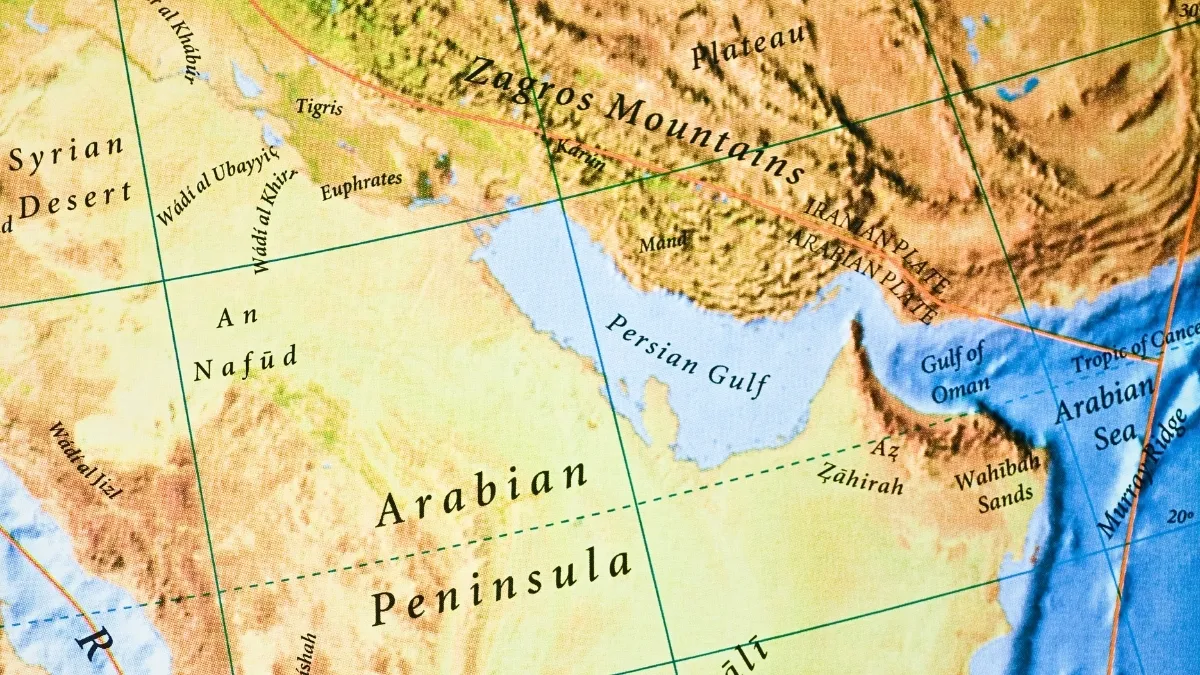
Iran has officially established a Persian Gulf Strait Authority (PGSA) to take control over the strait of Hormuz. It is backed by Iran’s Supreme National Security Council and the Islamic Revolutionary Guard Corps Navy (IRGCN). It mandates that all commercial vessels obtain explicit transit permits and strictly coordinate with Iranian authorities to pass through the Strait of Hormuz.
What is the Persian Gulf Strait Authority (PGSA)?
The Iranian Government established a body called the Persian Gulf Strait Authority (PGSA) to institutionalize and enforce Tehran’s sovereign control over the Strait of Hormuz which is one of the world's most critical maritime oil and energy chokepoints. It is backed by Iran’s Supreme National Security Council and the Islamic Revolutionary Guard Corps (IRGC), its core functions include:
-
A Controlled Maritime Zone: The PGSA regulates a defined boundary stretching between Iran and the UAE by declaring any unauthorized passage within this zone will be considered as illegal.
-
Eastern Boundary: A line connecting Kuh Mobarak (Iran) to the south of Fujairah (UAE).
-
Western Boundary: A line connecting the westernmost end of Qeshm Island (Iran) to Umm Al Quwain (UAE).
-
Mandatory Transit Permits: Commercial vessels are required to submit extensive operational data including crew manifests, cargo details, and ownership nationalities to obtain explicit clearance before entering the strait.
-
Transit Tolls: The authority formalizes a system requiring shipowners to pay transit fees reportedly up to $2 million, often settled in Chinese Yuan or digital assets for safe passage.
-
Geopolitics: The PGSA actively blacklists Israeli-linked vessels and severely restricts U.S. or Western-aligned naval ships from traversing the waterway.
New Transit Mandates
Under the PGSA governance, the old protocol of free transit passage is being actively replaced by a stringent permitting pipeline.
- Mandatory Communication: Commercial vessels intending to traverse the strait are contacted via official digital communication via info@PGSA.ir outlining newly implemented regulations.
-
Pre-Approval Permits, ships are required to submit an extensive compliance file and secure an official transit permit before entering the designated supervision area under the PGSA.
-
Data Requirements, shipping lines must supply over 40 distinct points of information, including vessel identification numbers, cargo specifications, origin and destination points, and exact crew, owner, and operator nationalities.
-
The PGSA has explicitly warned that any navigation through the strait without explicit permission will be treated as illegal and prompte interception or denial of passage by the IRGC Navy.
Economic and Strategic Implications on Global Trade
The PGSA introduces severe operational friction to international trade and Iran has begun leveraging this bottleneck to extract hefty economic concessions.
| Operational Metric | Pre-Crisis Norms | Under PGSA Framework (May 2026) |
| Daily Vessel Crossings | 120 ships per day | 40 ships per week |
| Transit Fee Tariffs | Standard international free passage | Reported fees reaching up to $2 million (settled in Chinese Yuan) |
| Insurance Mechanism | Western maritime insurance pools | "Hormuz Safe" digital crypto-backed platform (primarily for cooperative entities) |
The international community has widely condemned the implementation of the PGSA under the United Nations Convention on the Law of the Sea (UNCLOS). The Strait of Hormuz is recognized as an international strait subject to the doctrine of transit passage which principle guarantees continuous and expeditious navigation for foreign ships, a right that coastal states cannot unilaterally suspend or condition upon prior authorization.
Although Iran signed UNCLOS in 1982, it never formally ratified it, allowing Tehran to bypass these restrictions in favor of its domestic sovereignty claims.
Also Read: Currency Swaps Explained: Objectives, Features, Significance and RBI Role

Manisha Waldia is an accomplished content writer with 4+ years of experience dedicated to UPSC, State PCS, and current affairs. She excels in creating expert content for core subjects like Polity, Geography, and History. Her work emphasises in-depth conceptual understanding and rigorous analysis of national and international affairs. Manisha has curated educational materials for leading institutions, including Drishti IAS, Shubhara Ranjan IAS, Study IQ, and PWonly IAS. Email ID: manisha.waldia@jagrannewmedia.com


