1 In 200 Men Descended From This Conqueror And His Empire Altered Asian History Forever
Genghis Khan unified nomadic tribes to establish the Mongol Empire, the largest contiguous land empire in history. Through military genius, meritocracy, and trade routes, his conquest reshaped Eurasian history, while modern genetics continues to re-examine his true ancestral legacy.

Key Points
- Modern studies refute the genetic myth of 0.5% of men being Genghis Khan's kin.
- Temüjin unified tribes and was proclaimed Genghis Khan ('Universal Ruler') in 1206.
- Genghis Khan died in August 1227, aged ~65, and was buried in a secret location.
Did you know that a very popular genetic study of 2003 revealed that almost 8%, or 16 million men shared their genes with Genghis Khan? Nevertheless, media outlets spread the false belief that 1 out of 200 men across the world are direct paternal relatives of Genghis Khan.
But the misconception has been falsified by modern genetics. The grave of Genghis Khan was kept a secret. Nobody knew about the precise location of his grave in Mongolia. Hence, it was impossible for scientists to get his precise DNA sample.
Recently, genetic researchers have conducted studies on the DNA of the elite Golden Horde from medieval times. These were aristocratic rulers and nobles who paternally shared their genes with Genghis Khan.
According to the samples collected by the researchers, the eldest son of Genghis Khan named Jochi, carried a particular sub-branch of the C3* Y-chromosome haplogroup. These results have been found in genetic research conducted in the year 2003 where a link was found between Genghis Khan and 16 million men bearing this genetic marker in Central Asia.
However, the true fact is that, as the researchers noted, such a Y-chromosome variant which is found among 16 million people today belongs to an absolutely different lineage that existed for several centuries prior to the time when Genghis Khan lived.
Thus, it can be concluded that Genghis Khan surely had numerous sons from his wives and concubines. The common belief that 0.5 percent of the world's population carrying Genghis Khan’s Y-chromosome is a pure genetic myth is refuted by modern studies.
Who was Genghis Khan?
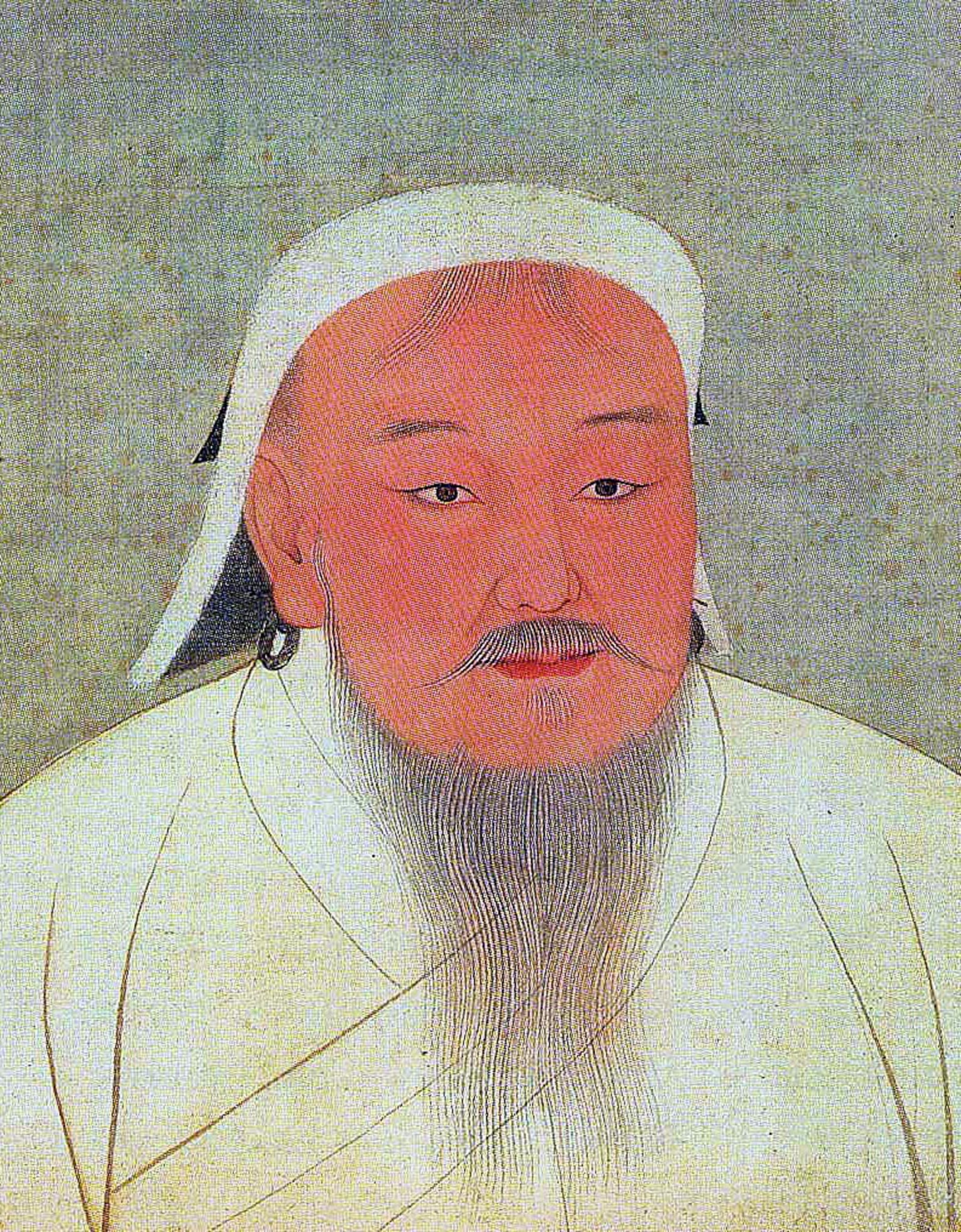
Genghis Khan was born around the year 1162 near the Onon River in modern-day Mongolia. His real name was Temüjin, which meant “of iron”. According to Mongol legend, Temüjin was born holding a blood clot in his right fist, which shamans interpreted as a good omen.
They prophesied that he would become a legendary warrior that history would remember. He was the son of the chieftain of the Mongols, Yesügei, who belonged to the elite Borjigin clan.
Temüjin was only nine years old when he was married to Börte. At the same time, he lost his father. While returning home, Yesügei was poisoned by the rival Tatars at a banquet. But misfortune fell upon him and his family.
After his father’s death, the entire Borjigin clan abandoned his family, which included his mother Hoelun and his six siblings, on the steppe to avoid feeding them. The family lost everything, and since they were extremely poor, they survived by hunting, fishing, and scrounging.
Genghis Khan at a Glance
| Aspect | Details |
| Birth Name & Year |
|
| Title |
|
| Key Wives |
|
| Primary Children |
|
| Territories Conquered |
|
| Major Defeated Powers |
|
| Key Achievements & Reforms | • Unified the nomadic tribes of the Mongolian Steppe• Established a strict meritocracy in the military• Codified the Yassa legal system• Created the Yam (express postal/courier network)• Promoted religious freedom and trade across the Silk Road |
| Death & Burial | Died on August 18, 1227 (age ~65) during the Western Xia campaign. Buried in an unmarked secret location in Mongolia |
The Rising Storm: Conflict Within the Family and Early Struggles
Life on the Mongolian steppe was not easy, and surviving there required a lot of toughness. Following his father’s death, rivalry started building up between the members of Temüjin’s family regarding their leader. In order to prove his strength and gain authority over his clan, Temüjin joined hands with his brother Qasar and killed their elder brother, Behter.
But dangers lurked all around. Realising that Temüjin could become a serious rival for them, the tribe Tayichi'ud decided to attack him and make him a slave. But being imprisoned did not defeat him; instead, it revealed his shrewdness. Temüjin managed to break free from captivity and earned himself a name for his craftiness.
Rise to Power: Unifying the Warring Tribes
In 1178, Temujin was forging himself a new destiny and married his first wife, Borte. Shortly after this event, tragedy befell Temujin because his first wife was kidnapped by the rival Merkit tribe.
Temujin sought help from two influential men, Jamukha (his boyhood blood brother) and Toghrul (Khan of the Kereit tribe). Through the efforts of these two men, Temujin successfully raided and liberated his wife, Borte.
With growing power, the rivalry between Temujin and Jamukha became very intense. Temujin thought that military prowess should be promoted based on talent and loyalty; Jamukha on the other hand, thought it was a traditional aristocratic practice to choose leaders depending on whether one belonged to the ruling class or not.
This led to the beginning of a civil war. In spite of the early setbacks, Temujin emerged as a good military strategist, and he defeated the rival tribes in the region, namely the Tatars, Kereits, and Naimans.
In 1206, after his victory over all the rival tribes, Temujin held a council (Kurultai) of all the tribal leaders. At this gathering, Temujin was proclaimed Genghis Khan meaning "Universal Ruler".
Expanding the Empire: Major Military Conquests
To keep his empire unified, he changed his army completely, grouping it into units of ten soldiers each, all the way to 10,000-soldier-strong formations called 'tumens'.
He eliminated birth-based rights of nobility, instituted a new code of laws called Yassa, and implemented Yam, the rapid system of communications by means of horses.
With his military upgraded, Genghis Khan decided to take control of northern China:
- Xi Xia kingdom (Western Xia): Firstly, he defeated the Xi Xia kingdom of Tanguts, who surrendered and paid tribute to him.
- Jin dynasty: Secondly, Genghis Khan moved towards the Jin dynasty of the Jurchens. His forces captured and plundered the capital Zhongdu (modern-day Beijing) in 1215.
- Soon after that, Genghis Khan tried to establish peaceful trade relations with the rich Islamic Khwarazmian Empire to the west of him.
- He dispatched 500 men for trading, but a local governor had his representatives executed, while the Khwarazmian Shah did not apologise or pay any reparations.
- Genghis Khan was extremely angered and attacked the Khwarazmian Empire with an army of up to 200,000 horsemen. He destroyed such trading centres as Samarkand, Bukhara, and Nishapur.
The Final Campaign and the Mysterious End
Genghis Khan went back to China in 1226 for his last military campaign against the Western Xia for having failed to supply soldiers to assist him in his war of conquest of the Khwarazmian Empire.
In the midst of laying siege to the capital of the Western Xia in August 1227, he died at about 65 years old, with the cause of his death being unclear up to now. Different possibilities have been suggested, such as being sick, being wounded in war, or falling from his horse.
According to his last will, his followers buried him in an undetermined place in Mongolia, probably near the sacred Burkhan Khaldun Mountain. It is said that the funeral team killed all persons they met on the way to hide the grave from all other people.

Kriti Barua is a skilled digital journalist and communications professional with 4+ years of experience, currently writing for the General Knowledge section at Jagran New Media. She has established herself as a subject matter expert in History, Geography, Trending National and International News, Sports, Science, and Defence, producing clear, reliable, and search-optimised content that connects with readers worldwide.
Kriti holds a BA degree from Delhi University and a one-year diploma in TV Production and Journalism, an academic background that adds research depth and strong storytelling instincts to her writing. Her experience spans brand writing, content marketing, and digital media, giving her a sharp understanding of what makes content both helpful to readers and visible in search.
At Jagran New Media, she applies this expertise to national and international news coverage, query-based articles, and in-depth pieces across her specialist subject areas. Her content is defined by easy language, factual accuracy, strong keyword strategy, and reader-friendly storytelling.


-1784559883150_t.webp)



![[OUT] RSSB Mahila Supervisor Admit Card 2026 Live: Download Rajasthan Female Supervisor Hall Ticket at rssb.rajasthan.gov.in- Link Active](https://img.jagranjosh.com/images/2026/July/2072026/Add-a-heading-(2).jpg)


![AIBE 21 Result 2026 LIVE: [Link Active] BCI XXI Exam Result Released; Check Passing Marks, Qualifying Status at allindiabarexamination.com](https://img.jagranjosh.com/images/2026/July/1872026/AIBEResult2.jpeg)