Show Key Points
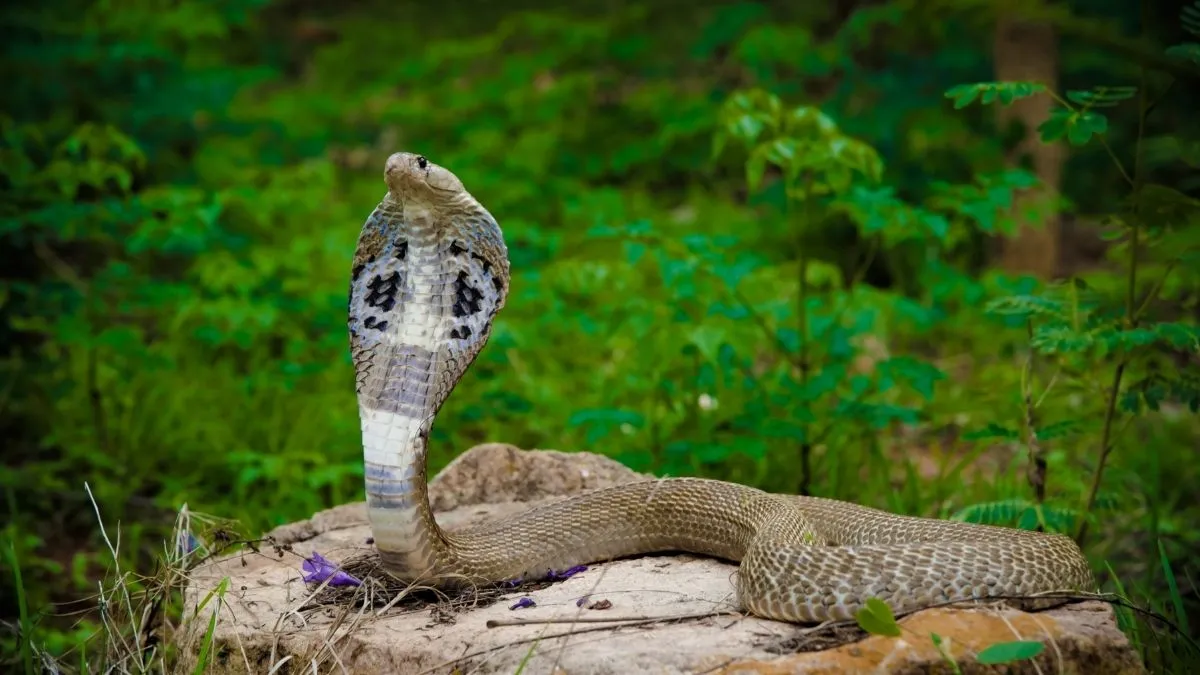
In the shadows of India's dense tropical canopies, a silent architect, often hailed as the national reptile of India, weaves a fortress of leaf litter, the only serpent on Earth to do so. This creature does not merely crawl; it can raise a third of its golden-scaled body to look a grown man in the eye, emitting a low-frequency growl that feels more like a mammalian warning than a reptilian hiss.
Often referred to as the Snake Eater, this cold-blooded reptile hints at a diet that strikes terror into other predators. As we move through 2026, this national reptile has become the center of a scientific revolution. Scientists have shown that what we thought was one species is actually four different lineages.
This majestic animal is the ultimate protector of India's forest health and the proud holder of a specific national title. It is shrouded in myth and has an intelligence that challenges our understanding of cold-blooded life.
What is the National Reptile of India?
India's official national reptile is the King Cobra. Not only is it big, up to 18 feet long, but it is also important to the environment and culture. It keeps the ecosystem in balance by eating other snakes, including venomous ones like the Spectacled Cobra and Kraits.
The Ministry of Environment, Forest and Climate Change (MoEFCC) says that the King Cobra is protected by Schedule II of the Wildlife (Protection) Act, 1972. People think that having it in a forest is a sign that it is healthy, so it is a major focus of efforts to protect biodiversity in the Indian subcontinent.
Find Out - What is the Scientific Name of a Snake?
Where do King Cobra Live in India?
The King Cobra is a specialist of edge habitats, where thick jungle meets water. Its distribution follows India’s most vital ecological corridors:
| Region | Primary King Cobra Habitat and Locations |
| Western Ghats | High-rainfall areas of Agumbe (Karnataka), Kerala, and Tamil Nadu. |
| Northeast India | The humid forests of Assam, Arunachal Pradesh, and the Sunderbans (West Bengal). |
| Eastern Ghats | Pockets of Odisha (Simlipal) and the hilly tracts of Andhra Pradesh. |
| Himalayan Foothills | Terai regions stretching through Uttarakhand and Uttar Pradesh. |
Source: Wildlife Institute of India (WII) / Zoological Survey of India (ZSI)
Check Out - 5 Mind-Blowingly Rare Orange Snakes that You’ve (Probably) Never Heard of
5 Most Interesting Facts about King Cobra
Here are some more fun, scientific facts about the national reptile of India you may not know yet:
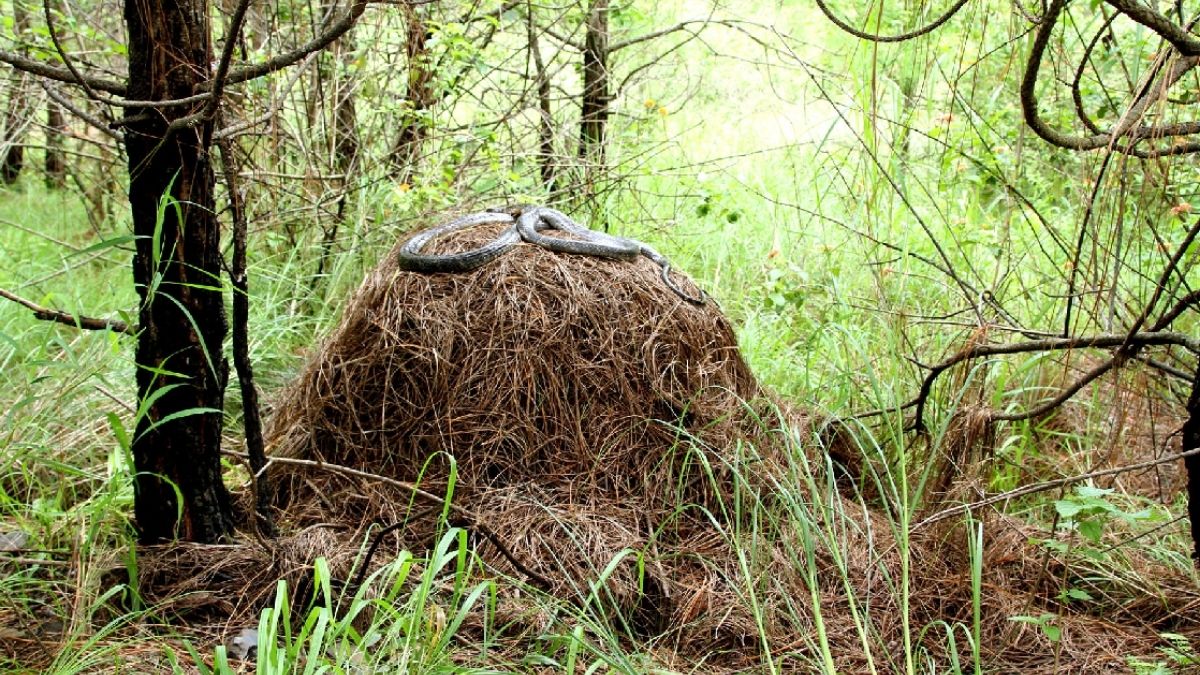
Nest of King Cobra (Credit: Reddit)
-
The Master Builder: It is the only snake in the world that makes a real nest. The female wraps leaf litter around her body to make a mound that protects her eggs until they hatch.
-
Cannibalistic Diet: It is an Ophiophage, which means that it lives mostly by eating other snakes.
-
Massive Venom Volume: While not the most toxic venom on a per-drop basis, the sheer volume it can inject in a single bite is enough to kill an Asian Elephant in less than three hours.
-
Intelligent Awareness: Most snakes only act on instinct, but King Cobras are very aware. They often watch people and recognize their handlers in controlled settings.
-
A New Scientific Discovery: In 2024-25, DNA studies confirmed the King Cobra is actually four separate species, including the newly recognized Western Ghats King Cobra (Ophiophagus kaalinga).
Also Read - List of Top 11 Colorful Snakes in the World: Updated
The King Cobra is not just a predator; it is also an ecological sentinel. It reminds us that our wilderness is a complex, intelligent system because it is the national reptile of India. Taking care of this beautiful snake will make sure that the Snake Eater stays in charge of India's forests for many years to come.



-1775042380438_t.webp)
Comments
All Comments (0)
Join the conversation