Japanese Proverb: "If you take shade, do it under a large tree"
Discover the Japanese proverb of the day: "Yoraba taiju no kage" (If you take shade, do it under a large tree). This ancient maxim offers crucial strategic guidance for professionals navigating the highly unpredictable economic shifts of 2026.
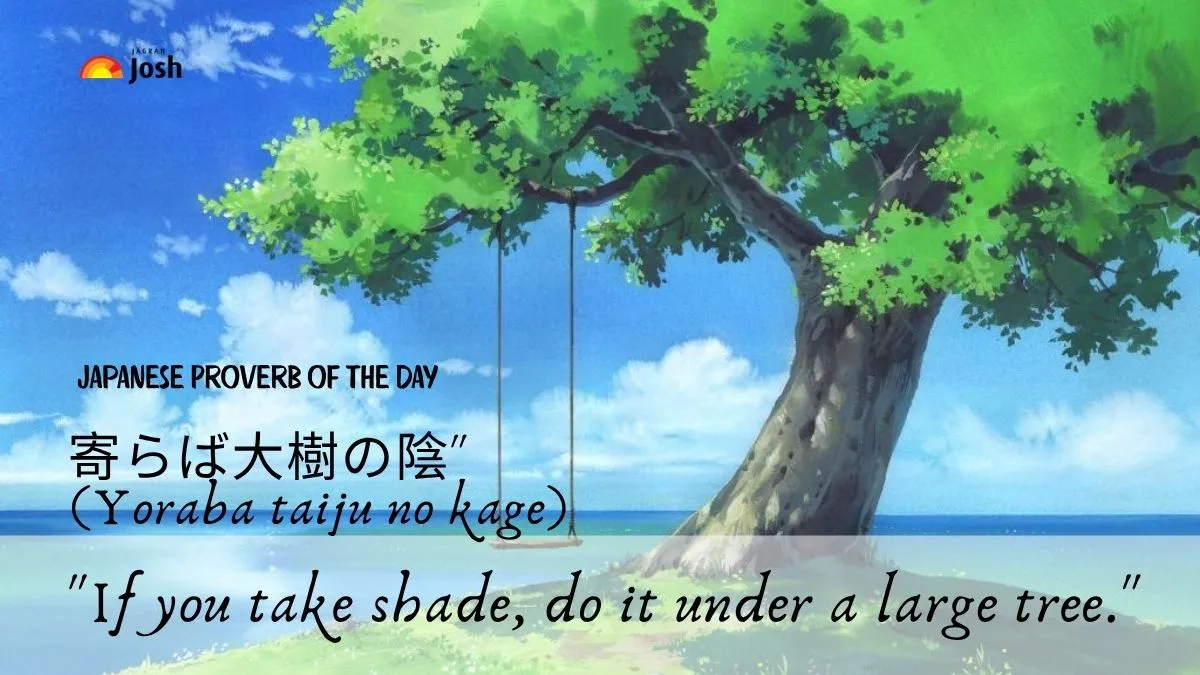
Are you being overwhelmed by the corporate restructuring and rapid tech market changes that are taking over in 2026? When the economic winds blow hard, where you choose to align yourself is important. The Japanese proverb of the day is "寄らば大樹の陰" (Yoraba taiju no kage), which literally means "If you seek shade, seek it under a large tree."
This elegant Japanese saying goes beyond the mere taking of physical shelter from the rain. It is a highly practical guide to modern career security, strategic networking, and risk management. If you are looking to safeguard your future this year, choosing the right big tree is your ultimate power move.
Japanese Proverb of the Day
Japanese Proverb: 寄らば大樹の陰" (Yoraba taiju no kage)
Literal English Translation: "If you take shade, do it under a large tree."
Meaning of "If you take shade, do it under a large tree" Japanese Proverb
At its core, this Japanese proverb is about being practical. Western proverbs like to celebrate the lone wolf, but traditional Japanese wisdom celebrates strength in existing, strong structures.
-
The Philosophy of Protection: A small, frail tree will lose its leaves or collapse entirely during a violent storm. In contrast, a massive, deep-rooted tree offers genuine safety and ample shade.
-
The Strategic Nuance: Philosophically, the proverb advises that if you must rely on an outside force, an institution, or a mentor, you should choose the most powerful, stable, and influential entity available.
It teaches us that healthy dependency is not a weakness, provided it is executed with calculated foresight.
Everyday Lessons from this Japanese Proverb in Modern-Day?
How does this ancient Japanese proverb play out in your day-to-day? In the cutthroat world of corporate mergers and AI assimilation of 2026, the ability to link arms with giants is a vital skill.
| Modern Domain | Practical Application of the Proverb |
| Career Development | Choosing a job at an established Fortune 500 company over a volatile, unbacked startup during an economic downturn. |
| Professional Mentorship | Seeking career guidance from an industry veteran with extensive influence rather than a peer with limited reach. |
| Finances & Investing | Allocating capital into blue-chip stocks or massive institutional funds rather than speculative, unproven digital assets. |
| Academic Pursuits | Attending a highly prestigious university with a vast global alumni network ensures better job placement. |
What is the Origin History of this Japanese Proverb?
Historically, this Japanese proverb was not always spelled exactly as it is today. In pre-modernization Japan, the phrase was often noted as "Tachiyoraba taiboku no kage" (If you stop, let it be in the shade of a great tree).
"During the Edo and Meiji eras, as merchants and samurai navigated massive shifts in feudal power dynamics, aligning with a powerful daimyō (feudal lord) or an established merchant guild (za) was the only definitive way to ensure family survival and commercial longevity."
Over the last 300 years, the language naturally distilled into the punchier Yoraba taiju no kage. It highlights a historical Japanese preference for collectivism and structural hierarchy over chaotic individualism.
Read More Japanese Proverbs and Their Meanings Here!
"Even Monkeys Fall From Trees."
“Fall Seven Times, Stand Up Eight.”
"A Seed That Is Not Sown Will Not Sprout."
"The Bamboo that bends is Stronger than the Oak that Resists."
Is "Yoraba Taiju no Kage" Viewed Negatively Today?
This proverb of the day has given rise to a fascinating cultural counter-movement in the current socio-economic debates. Critics say that blindly following the big tree mentality encourages conformity and stifles the entrepreneurial spirit of young professionals.
In fact, its direct philosophical antonym is the famous four-character idiom (Yojijukugo) 鶏口牛後 (Keikou Gyugo), which translates to: "Better to be the beak of a rooster than the rump of a cow."
While Yoraba taiju no kage praises the safety of big organizations, Keikou Gyugo champions being a leader of a small entity rather than a powerless follower in a giant one.
Check out Ancient Chinese Proverbs and their Meanings below!
"Crooked trees live out their full lives; straight trees are cut down first."
"If small holes aren't fixed, then big holes will bring hardship."
"When the winds of change blow, some people build walls and others build windmills."
Today, let’s embrace the wisdom of this meaningful Japanese proverb. Check your current anchors, your employer, your investments, or your mentors, and make sure you are sheltered by a stable structure. Be back tomorrow for your next daily dose of global wisdom!

Harshita Singh specializes in US affairs and general knowledge, simplifying intricate geopolitical and historical subjects into clear, digestible insights for learners. Holding a BA (Hons) in English from the University of Delhi and with over three years of experience in educational writing, she produces authoritative, thoroughly researched content that empowers readers to engage confidently with global current affairs. For inquiries, you can reach out to her at harshita.singh@jagrannewmedia.com.


