Many sports are played globally. But when it comes to Cricket, millions of people go crazy about this sport.
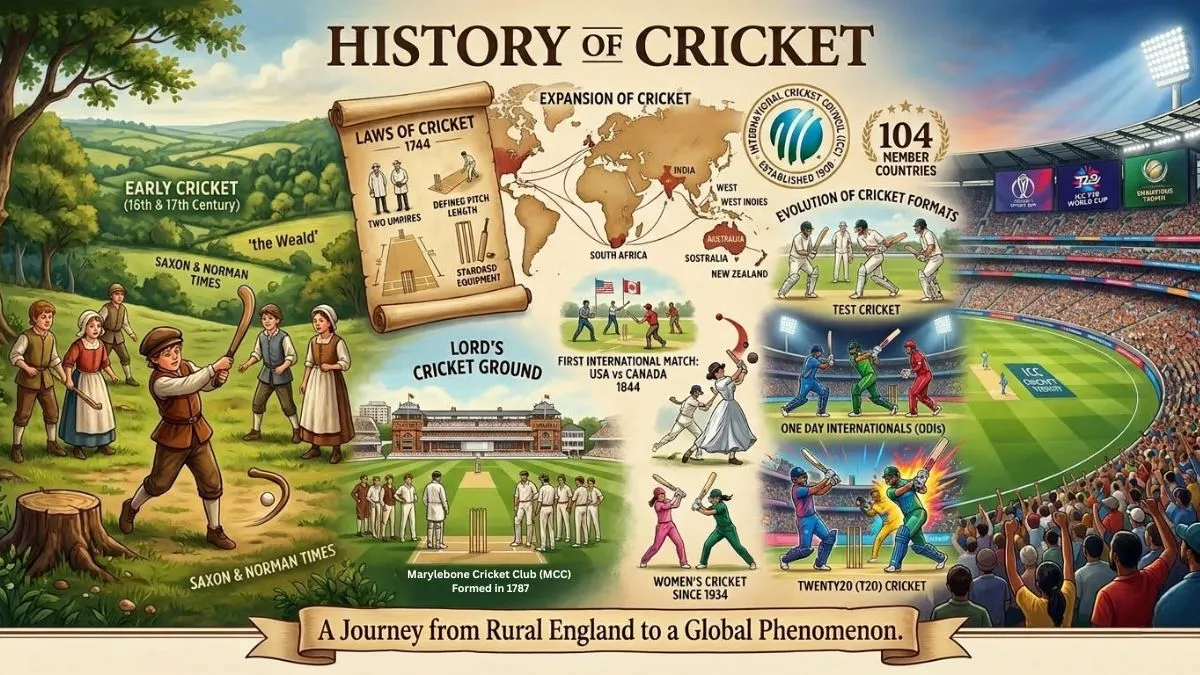
Cricket is one of the oldest and most popular sports in the world at present. From a basic pastime of rural England to a worldwide sport played by millions, the history of cricket goes back several centuries. The game developed slowly with the changing of rules, organised games, and different governing agencies internationally, which helped to turn the game into what we know today.
Cricket is a sport that combines strategy, skill, athleticism, and mind games.
It is played between two teams, and each team has 11 players. The team is composed of good batsmen, bowlers, a wicket-keeper, and if an all-rounder is there, then it plays an important role in the team.
But many people ask about the History of Cricket. From where & when it originated, who has given the rules, and many such questions.
So, let’s explore the complete history of cricket, which is based on the historical record and information reference from the International Cricket Council (ICC).
History of Cricket (Early Cricket 16th & 17th Century)
Source: ICC
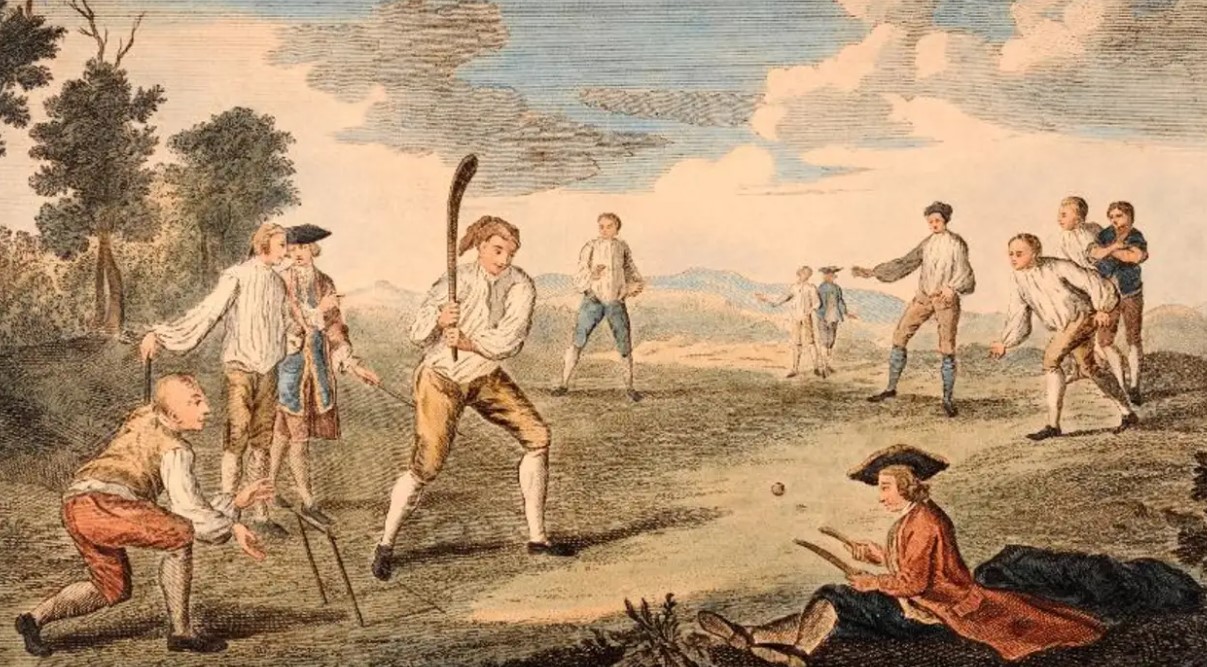
As per the ICC, cricket may have been invented during the Saxon or Norman times by children living in the Weald, an area of dense woodlands and clearings in south-east England.
The first known references to cricket were in 1611 as an adult game, and in the same year, a dictionary defined cricket as a boy’s game.
But, later on, in the 20th century, women also took a significant role in Cricket.
In the early days, cricket was played with simple equipment such as wooden bats and balls. Over time, local communities started to hold matches, and this helped the sport to gain popularity.
During the early years of cricket, there were no such rules and regulations to follow in cricket from region to region.
But it came in the 18th century.
When was the first law of cricket made?
In the 18th century, there was a turning point in cricket when the first written Laws of Cricket were officially documented in 1744. These rules include the basic structure of the game, which are:
-
Use of Two Umpires
-
Defined the pitch length
-
Standard equipment must be used, such as Bats, balls, and stumps
-
Match Regulation
These laws were revised later in 1774, leading to a series of laws such as the Leg Before Wicket (LBW) law and a third stump.
When was the Marylebone Cricket Club (MCC) formed?
Marylebone Cricket Club (MCC) was formed in 1787 at Lord's Cricket Ground in London; in a short time, it became the most influential institution in the field of cricket.
After the MCC was formed, all the responsibilities for maintaining and updating the rules of cricket were handed over to the MCC in 1788.
For almost two centuries, MCC served as the body that was the supreme authority of cricket and played a significant role in the history of the rules and traditions of the sport.
Source: ICC
Expansion of Cricket around the world in 19 Century
During this era, cricket has been expanding worldwide, and the credit goes to the British Empire. British soldiers, traders, and colonists have introduced cricket in these countries, including:
-
India
-
Australia
-
South Africa
-
New Zealand
-
West Indies
The first International Cricket match ever recorded was between the United States and Canada in 1844 in New York.
When was the International Cricket Council (ICC) established?
In 1909, representatives of England, Australia and South Africa formed the Imperial Cricket Council, and currently, it is known as the International Cricket Council (ICC).
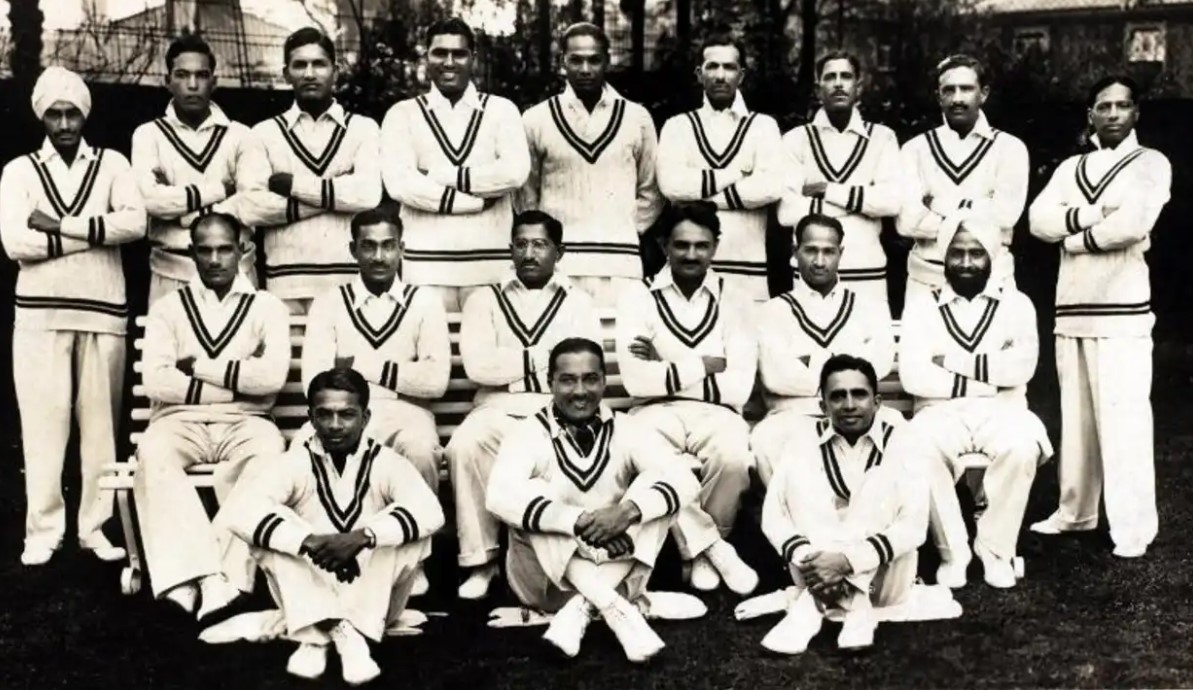
However, the West Indies became a member in 1928, New Zealand in 1930, India in 1932, before the Second World War, and Pakistan became a member in 1952.
The ICC was formed to:
-
Standardise the rules of international cricket
-
Organise international matches
-
Maintain equitable competition between nations
Over the years, an increasing number of countries joined the ICC, making cricket a sport that was regulated all around the world.
Evolution of Cricket in the 20th Century
Over time, cricket has evolved more in different formats, and women’s Cricket also took a significant role at the international level in starting of the 20th Century, and the first ever test match was played between England and Australia in the women's Cricket format in 1934.
The International Women’s Cricket Council was established in 1958, but in 2005, it merged with the ICC.
Other than this, there are mainly three format was evolved in cricket, which are:
Test Cricket
-
The longest format of the game
-
Matches last up to five days
One Day Internationals (ODIs)
-
Introduced in 1971
-
Limited to 50 overs per side
-
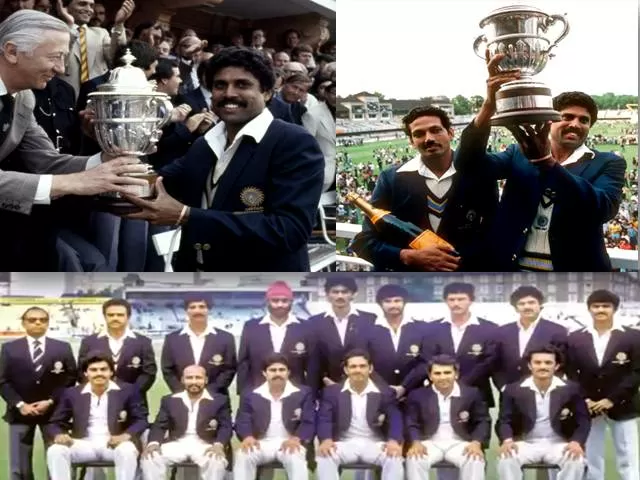
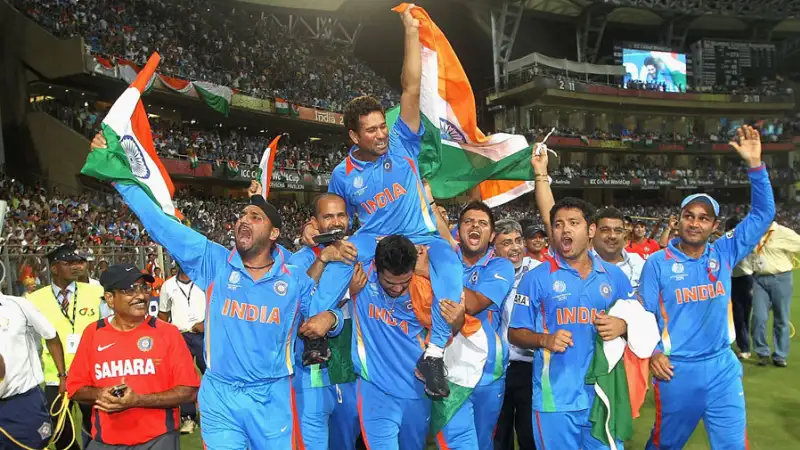
India Won its first ICC World Cup in ODIs format in 1983 under the Kapil Dev captaincy.
Twenty20 (T20) Cricket
-
Introduced in 2003
-
Fast-paced format with 20 overs per side
These formats helped cricket attract new audiences and increase its global popularity.
Cricket in the 21st Century
In the 21st century, cricket is at the forefront, and there are 104 Member countries of the International Cricket Council (ICC). This includes 12 Full Members and 92 Associate Members.
Source: ESPNcricinfo
There are various International tournaments included in this format of tournament, which are:
-
ICC Cricket World Cup
-
ICC T20 World Cup
-
ICC Champions Trophy
-
World Test Championship
Conclusion
The History of Cricket shows how a simple rural game from England has evolved into one of the most popular sports worldwide.
From the early 16th century to modern international tournaments, Cricket has evolved with its rules and regulations, which are now managed by the International Cricket Council (ICC).
With its growing popularity and with the billions of fans of cricket all around the world, cricket always keeps its tradition preserved that shaped its long and fascinating history.



Comments
All Comments (0)
Join the conversation