Key Points
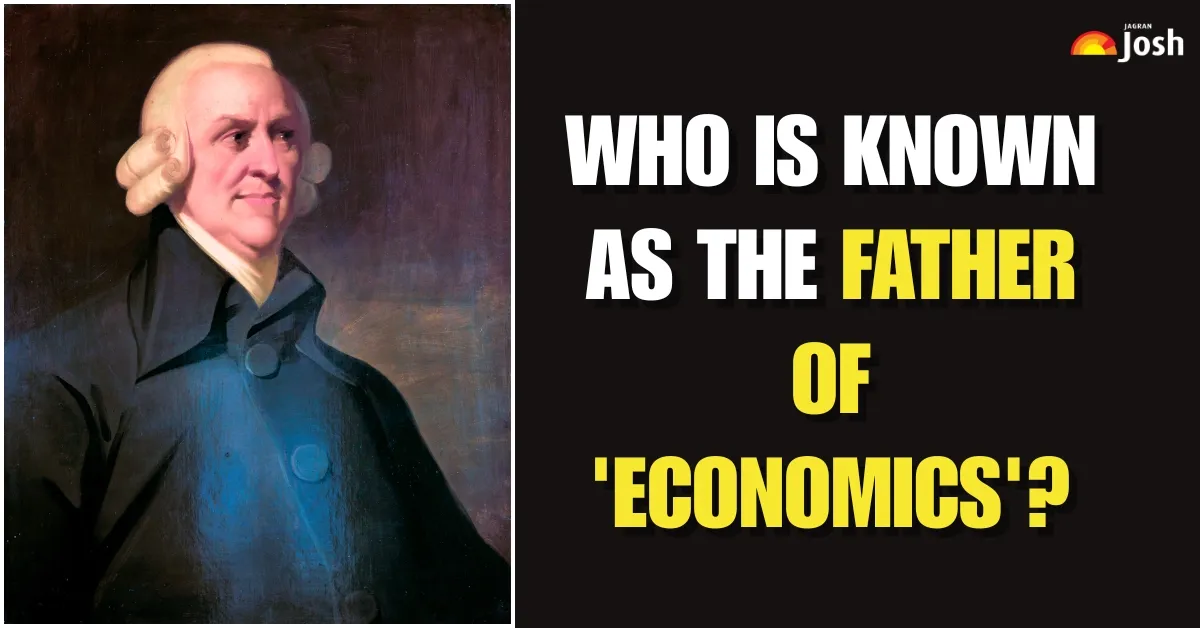
- Adam Smith, born in 1723, is known as the "Father of Economics."
- His book, "The Wealth of Nations", published in 1776, changed views on wealth.
- Smith's "Invisible Hand" theory explains market balance through self-interest.
Every time you decide whether to buy a coffee or save your money, you are using a basic idea from science. Economics looks at how people, businesses, and countries make choices.
It explores how we use limited resources to meet our endless needs and wants. In short, economics is the science of decision-making.
Have you ever thought about where these ideas started? A long time ago, a smart philosopher wrote a book that changed how people understood wealth.
He believed that when people work for their own good, they also help society without meaning to. Many people call him the greatest thinker in the history of trade and markets.
In this article, we will explore the life and work of this famous figure. Do you know who is called the father of economics?
ALSO READ| Who Is Known As The Father Of Geography?
Who Is Known As The Father Of Economics?
Source: The Great Thinkers
Adam Smith is known as the "Father of Economics". He was an 18th-century Scottish philosopher and economist. Before Smith, people did not treat economics as its own subject.
He was the first to organise the study of the economy. His important book, published in 1776, changed how people thought about wealth. Usually, people combined economics with politics or religion, but Smith changed this by studying money and markets as a science.
Quick Facts: Adam Smith
He earned this title because he was the first person to explain how a free-market economy works. He argued that when people are free to trade, it leads to prosperity for everyone.
| Feature | Details |
| Full Name | Adam Smith |
| Known As | The Father of Economics / The Father of Capitalism |
| Born (Baptised) | June 5, 1723 |
| Birthplace | Kirkcaldy, Fife, Scotland |
| Died | July 17, 1790 (Aged 67) |
| Education | University of Glasgow & Balliol College, Oxford |
| Most Famous Book | An Inquiry into the Nature and Causes of the Wealth of Nations (1776) |
| Major Theory | The "Invisible Hand" Theory |
5 Quick Short Facts
- When he was just three or four years old, he was briefly kidnapped by a group of passing "gipsies" but was quickly rescued by his uncle.
- He was an academic prodigy and started studying at the University of Glasgow when he was only 14 years old.
- He was the first Scotsman to ever appear on an English banknote (the £20 note).
- He was famous for being very absent-minded. Once, he reportedly put bread and butter into a teapot, drank it, and complained it was the worst tea he ever had!
- While The Wealth of Nations is most famous, he actually considered his other book, The Theory of Moral Sentiments, to be his superior work.
Other Key Details
- The "Invisible Hand": Interestingly, the famous phrase "Invisible Hand" only appears once in The Wealth of Nations and once in his earlier book.
- Lifelong Bachelor: Adam Smith never married and lived most of his life with his mother, to whom he was very close.
- Final Wishes: Before he died, he insisted that almost all of his unpublished manuscripts and private notes be burned and destroyed.
What is the Famous Book Written by Him?

In 1776, Adam Smith published a book titled An Inquiry into the Nature and Causes of the Wealth of Nations. Today, it is simply known as The Wealth of Nations. This is considered one of the most influential books ever written.
Why is this book important?
- The Foundation of Economics: It shifted the focus from how much gold a king had to how much a nation produced.
- Criticising Old Systems: He spoke out against "Mercantilism," a system in which the government controlled all trade.
- Division of Labour: Smith explained that if workers specialise in one task, they can produce much more.
The Pin Factory Example
In his book, Smith used a famous example of a pin factory. He showed that one man working alone might make one pin a day. But ten men, each doing a different small task, could make thousands of pins. This is called Specialisation.
IN CASE YOU'RE INTERESTED| Who Is Known As The Father Of English Literature?
What is the "Invisible Hand" Theory?
Source: Collidu
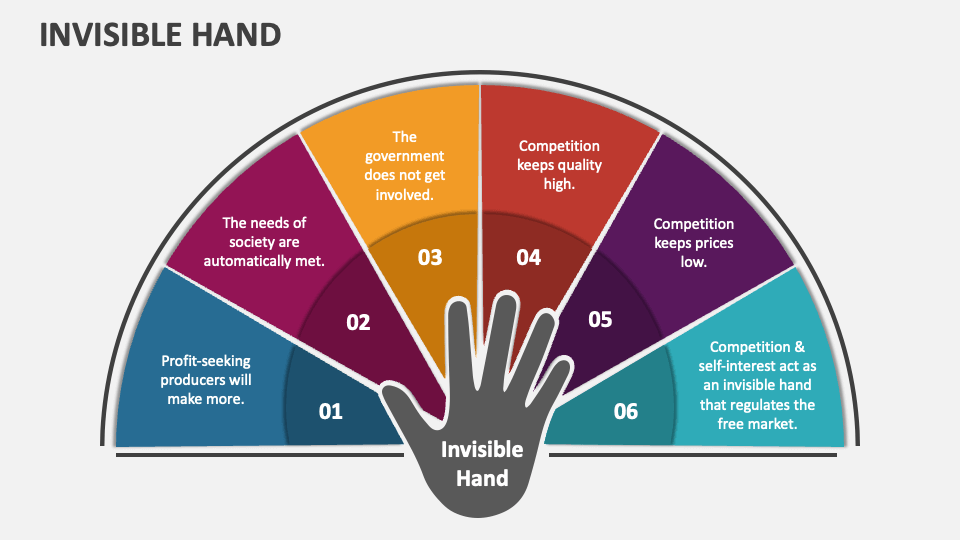
One of the most famous ideas in all of science is Adam Smith’s "Invisible Hand". It sounds like magic, but it is a very logical concept. It explains how a market stays in balance without someone "in charge".
How it Works
Smith believed that individuals usually act in their own self-interest. However, in a free market, this self-interest actually helps society.
- Self-Interest: A baker doesn't bake bread because he is nice; he does it to earn money.
- Competition: To earn money, he must bake good bread and sell it at a fair price, or people will buy from someone else.
- The Result: Without any government telling him what to do, the baker provides a good product at a low price.
Why it Matters
The "Invisible Hand" suggests that the market will naturally reach a balance of supply and demand. If a product is scarce, the price goes up, and more people start making it. If there is too much, the price goes down.
Why is He Considered the Father of Economics?
Adam Smith is called the "Father" because his ideas created the blueprint for the modern world. Every time we talk about GDP, taxes, or international trade, we are using concepts he developed.
His Lasting Legacy
- Free Trade: He proved that nations become rich by trading with each other, not by hoarding gold.
- Role of Government: He defined what a government should do: protect the country, maintain law and order, and build public works like roads.
- Human Behaviour: He was the first to realise that economics is really about human nature and how we interact.
Summary of Impact
- Capitalism: His ideas formed the basis of the capitalist system used by most of the world today.
- Economic Liberty: He championed the idea that individuals should have the freedom to choose their own work and trade.
YOU MIGHT LIKE| Who is Known as the Father of Modern Chemistry?
Other ‘Fathers’ of Economics:
| Name | Title | Contribution |
| John Maynard Keynes | Father of Modern Macroeconomics | Developed theories on how government spending can stabilise an economy during recessions. |
| Alfred Marshall | Father of Microeconomics | Standardised the use of supply and demand curves. |
| Chanakya (Kautilya) | Father of Indian Economics | Wrote the Arthashastra centuries before Smith, covering statecraft and economic policy. |
Conclusion
To sum up, Adam Smith’s ideas had a lasting impact on the world. He moved the focus from collecting gold to supporting free markets and individual effort, which helped shape modern prosperity. His concepts of the "Invisible Hand" and specialisation still influence global trade and policy today.
WHAT'S NEXT| Who Is Known As The Father Of History?




Comments
All Comments (0)
Join the conversation