What is the Kitchen Cabinet Ministry? Role, Significance & Does the Kitchen Cabinet Have Constitutional Status?
What is the Kitchen Cabinet Ministry? Learn about its role, significance, constitutional status, and the key differences between the Cabinet, Council of Ministers and Kitchen Cabinet in India.
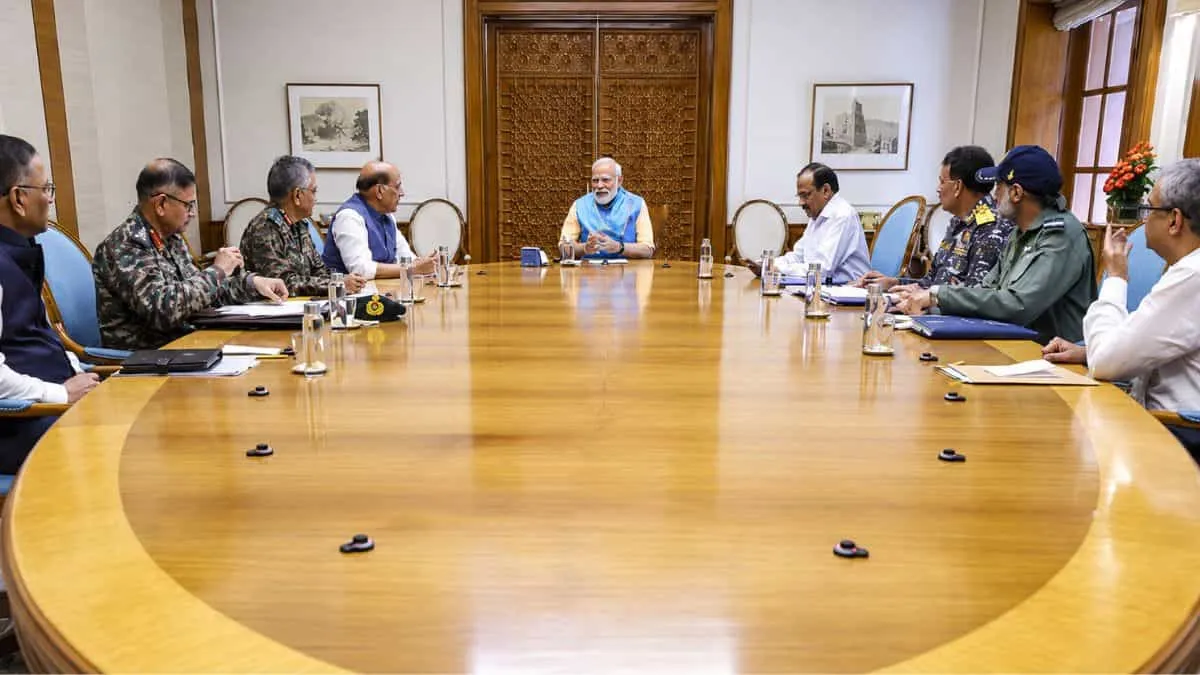
In India, the Council of Ministers is a formal and constitutional body that helps the Indian Prime Minister run the government, but within this group, the Cabinet is the main decision-making body.
But sometimes, the Indian Prime Minister has to discuss important issues with only a few trusted members. For this purpose, the Kitchen Cabinet has been formed, and this cabinet was formed by the first Prime Minister of India, Pandit Jawaharlal Nehru.
Basically, the Kitchen Cabinet is a small, informal group of the Prime Minister's most trusted people. It is not written anywhere in the Constitution of India, but it is one of the most important & powerful groups in the government.
Let’s explore this article in detail & know more about what is KItchen Cabinet, its role & significance, why it is called the Kitchen Cabinet, whether it has constitutional status, and a comparison between the Cabinet vs the Council of Ministers vs the Kitchen Cabinet
What Is a Kitchen Cabinet?
The Kitchen Cabinet is an informal group of the Prime Minister and a few trusted members from the ministry of council.
It is usually composed of two to four trusted colleagues only, which include,
-
The Prime Minister
-
A few important Cabinet Ministers
-
Other trusted political leaders
-
Sometimes outside of the government whom the Prime Minister has trust in.
Note: The exact number of the kitchen cabinet is not fixed, and the numbers can be changed as per the Prime Minister's wishes.
Why Is It Called "Kitchen Cabinet"?
The name 'Kitchen Cabinet' is not taken as any formal name, and all the discussions do not take place in this cabinet only.’
This term is used because, for important discussions, sometimes it needs to be discussed and prepared within a small group. Discussion around its pros & cons takes place before any final verdict is placed in front of the cabinet for formal discussion and approval.
Role and Significance of the Kitchen Cabinet
Sometimes there is a need to take quick decisions and implement them on a few matters, and in a large cabinet, sometimes it is too late to take quick decisions.
So, at that time, the Kitchen Cabinet plays a very important role because a small group can discuss matters more quickly than a large group.
Significance of the Kitchen Cabinet:
-
Quick decisions: A small group can discuss important matters quickly.
-
Confidential discussions: Sensitive political and government matters can be discussed privately.
-
Advice to the Prime Minister: Trusted members can give advice on important issues.
-
Political planning: It can help the Prime Minister think about political strategies.
-
Administrative advice: It may help in discussing important government policies.
-
Better coordination: Trusted colleagues can help the Prime Minister coordinate important decisions.
Does the Kitchen Cabinet Have Constitutional Status?
No, the Kitchen Cabinet is not written anywhere in the Constitution, and it does not have any constitutional status in India.
It is an informal group or extra-constitutional arrangement which is created by the Prime Minister of India to discuss close and important issues with two to four trusted members only.
The Constitution recognises the Council of Ministers and the Cabinet system, but it does not mention any body called the "Kitchen Cabinet".
Therefore,
Kitchen Cabinet = Informal Group and Extra-constitutional
Thus, it means the Kitchen Cabinet can change or influence government decisions, but it is not a constitutional body created by the Constitution.
Constitutional Provision of Union Council of Ministers
The Constitution provides the framework for the Union Council of Ministers, which are:
Article 74
Under Article 74, the Council of Ministers, headed by the Prime Minister, aids and advises the President.
Article 75
Article 75 deals with important provisions related to the appointment and responsibility of ministers.
Important Point
The term "Kitchen Cabinet" is not mentioned in the Constitution.
So, it should not be confused with the formal Cabinet or Council of Ministers.
Cabinet vs Council of Ministers vs Kitchen Cabinet
| Feature | Council of Ministers | Cabinet | Kitchen Cabinet |
| Meaning | Large group of all ministers | Smaller group of senior ministers | Very small informal group |
| Head | Prime Minister | Prime Minister | Prime Minister |
| Nature | Constitutional | Constitutional | Informal |
| Members | All categories of ministers | Mainly Cabinet Ministers | Few trusted people |
| Size | Large | Smaller than Council of Ministers | Very small |
| Main work | Helps the government run | Takes major government decisions | Helps the PM discuss important matters |
| Constitutional status | Yes | Yes | No |
| Fixed membership | Based on government appointments | Based on government appointments | No fixed membership |
| Can outsiders be included? | No, it consists of ministers | No, Cabinet consists of ministers | Yes, sometimes |
| Decision-making power | Works through the constitutional system | Main formal decision-making body | Influences decisions informally |
The Kitchen Cabinet is a small and informal circle of trusted people around the Prime Minister. It can help in discussing important political and administrative matters quickly and privately.
However, it is important to remember that the Kitchen Cabinet is not a constitutional body. The Constitution formally recognises the Council of Ministers and the Cabinet system, while the Kitchen Cabinet works as an informal arrangement.

Prabhat Mishra is a Subject Matter Expert and digital journalist with an extensive background in the competitive exam landscape and over 4 years of experience in education, national and international news, and current affairs. Over his tenure with top knowledge platforms like Mentorship India, IAS BABA, IAS SARTHI, and now Jagran Josh, he has a deep understanding of government exams like UPSC and State PCS, including UP and Bihar, as he has already qualified for the UPPCS 2022 Mains and Bihar 68th Mains. With his core expertise in history, polity, geography & current affairs, he specialises in creating well-researched, aspirant-centric content and simplifying complex topics for competitive examinations.








![[OUT] UGC NET Answer Key 2026: Download June Session Response Sheet PDF at ugcnet.nta.nic.in - Direct Link Here](https://img.jagranjosh.com/images/2026/August/1682026/NTA-UGC-NET-June-Answer-Key-2026.jpg)