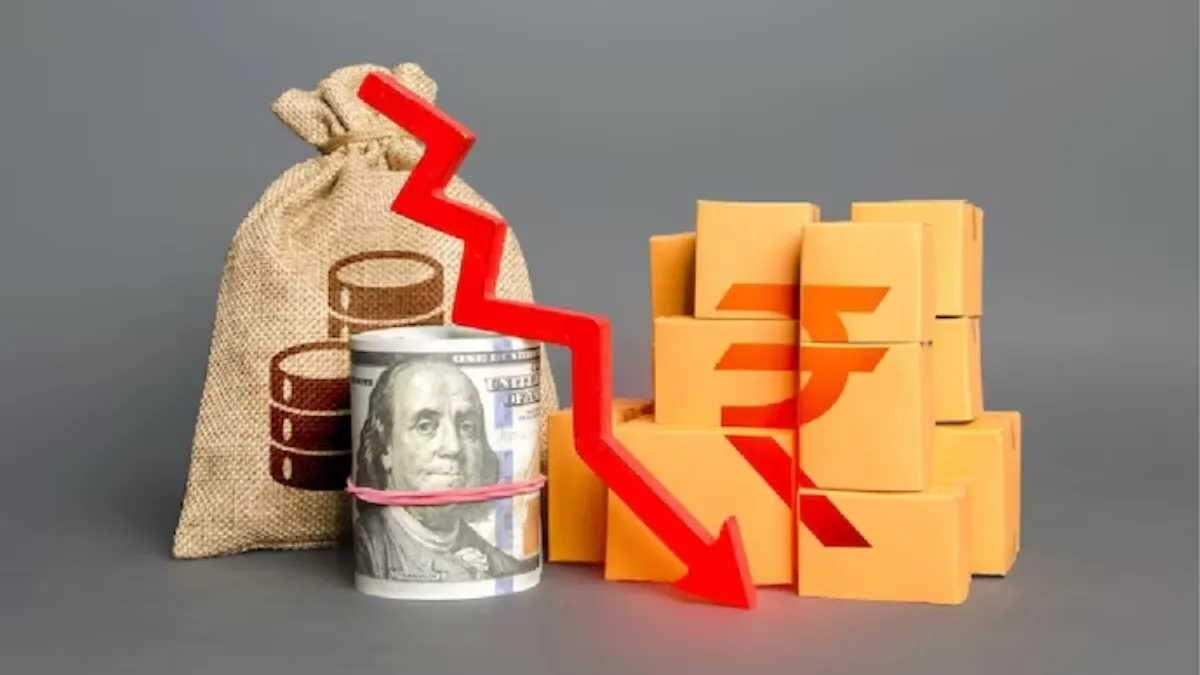
The value of a currency of any country is one of the most important indicators of a country’s economic health. In recent years, the Indian rupee has repeatedly faced downward pressure/depreciation against foreign currencies like the US dollar, which has often sparked debates about inflation, trade deficits, foreign investments and global market volatility.
What is the devaluation of the Indian rupee?
Devaluation refers to the deliberate downward adjustment of a country’s currency value by its government or central bank under a fixed or semi-fixed exchange rate system to boost exports.
In India, the Central Bank technically follows a market-determined exchange rate called “rupee devaluation”, which is largely rupee depreciation, a fall in the currency’s value due to market forces such as demand and supply, usually to make exports cheaper and imports costlier.
The Indian rupee has seen recent downward trends due to capital outflows, trade deficits and global imbalances. To counter this, the Reserve Bank of India (RBI) intervened, prompting the other options, like sell-swaps, to stabilise the currency's value at a certain level.
Major Reasons Behind the Devaluation/Depreciation of the Indian Rupee
1. Current Account Deficit (CAD):
India's economy mostly imports more than it exports, particularly crude oil, electronics, gold, and manufactured goods. Rising import bills raise demand for dollars, causing the Indian rupee to weaken and the current account imbalance to widen.
2. Rising Global Crude Oil Prices:
Hostile geopolitical situations around the world, particularly in the Middle East (the Iraq and Israel conflict) and Russia and Ukraine, which have led to a significant rise in the global crude oil prices in recent months. Recently, Brent Crude touched $85 per barrel due to the supply chain disruptions.
For India, it imports nearly 85% of its crude oil, which poses potential challenges for India. Higher oil prices: the immediate impact is weakening the value of the rupee, due to the increased demand of the dollar outflows.
3. Capital (FII/FPI) Outflow:
Foreign investors withdrawing funds from Indian markets lower the inflow of dollars while increasing the supply of rupees. Geopolitical tensions, fear of global financial crises, higher US interest rates, and tepid corporate earnings are all having an impact on market stability, exchange rates, and foreign investment, driving investors to "safe-haven" assets such as the US dollar, causing demand for dollars and rupee depreciation.
4. Domestic Inflation and Slow Growth:
Higher domestic inflation compared to other countries impacts the purchasing power of the Indian rupee in the foreign exchange, real effective exchange rate and export competitiveness due to the increased imports, which create trade deficits, reduce foreign currency inflows and lower currency values.
5. High Import Dependency:
India's balance of payment has a higher weighting of the imported goods than the exported one; higher import dependency for crude oil, gold, electronics and manufacturing raw materials causes the trade imbalance, increasing the demand for dollars and weakening the value of the Indian rupee in the foreign exchange market.
Impact of Rupee Devaluation on the Indian Economy
Positive Impacts on the Indian Economy:
Devaluation of the Indian rupee boosts exports as Indian goods become cheaper in foreign markets; foreign buyers can purchase the Indian goods at cheaper prices compared to the other currencies, like the US dollar. The lower price of the Indian goods and services in the global market enhances their export competitiveness and decreases demand for dollars.
Negative Impacts on the Inidan Economy:
-
As the value of the rupee decreases, the prices of imported goods like oil, gold, and electronics increase, which impacts the domestic markets as well, such as the rising cost of fuel.
-
The pass-through effect of higher input costs, notably higher energy prices, can lead to domestic cost-push inflation (increasing of WPI & CPI), which forcing the RBI to tighten (increase interest rate) monetary policy.
-
If the external debt of the government payments increases in terms of rupee, an increased import bill may increase the government's subsidy burden.
-
Consistent depreciation of the currency could discourage FPI and FDI due to concerns about future currency risk and economic instability, which would lead to capital flight and further weakening of the INR.
How do the government and RBI control the rupee fall?
-
The Reserve Bank of India sells the US dollars from its foreign exchange reserves to increase dollar supply to counter the effect.
-
RBI can raise the repo rates by adjusting the monetary policy to attract foreign investments by strengthening the Indian rupee.
-
The government can apply import restrictions on the imports of non-essential goods like gold and diamonds. For example, tax is collected at the source of foreign goods.
-
The government can introduce policy reforms and incentives to promote domestic goods to boost the exports, increase more foreign currency, and improve the trade balance.
-
For example: incentives for manufacturing industries under schemes like Make in India and Remission of Duties and Taxes on Exported Products (RoDTEP).
-
RBI can strengthen forex reserves by reducing the dependency on the US dollar by increasing gold and SDR holdings and encouraging FDI inflows for broader stability.
The devaluation or depreciation of the Indian rupee is impacted by both global economic trends and internal structural issues. A weaker currency can boost exports, but it also increases inflation and vulnerability to inflation.





Comments
All Comments (0)
Join the conversation