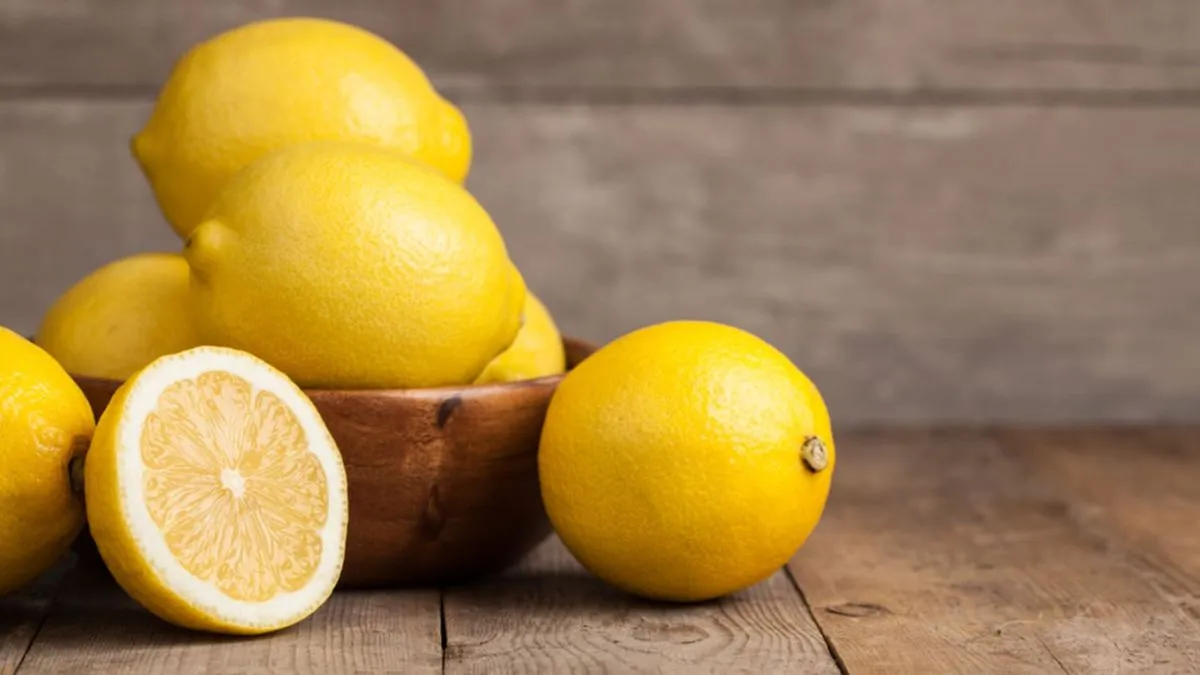
Did you know a true lemon is a hybrid of the citron and the bitter orange? Some evidence suggests that lemons originated during the 1st millennium BC in what is today's northeastern India.
The origin of the word 'lemon' has Middle Eastern, Persian, and Sanskrit roots, likely originating from the Persian word limun and the Sanskrit word nimbu.
In 2024, the world production of lemons (along with limes) was 23 million tonnes, which was led by India and Mexico with 31 per cent of the total. China and Argentina were secondary producers.
The yellow fruit of the lemon tree is primarily used throughout the world for its juice. Lemon juice is the acidic, sour, and nutrient-rich liquid extracted from the yellow fruit of the citrus tree (Citrus limon). It is widely used as a culinary ingredient used for flavouring beverages, dressings, and desserts.
Now it is to be noted that lime and lemon are distinct citrus fruits with key differences in their appearance, taste, and use. Lemons are typically larger, yellow, and oval-shaped with a sweet-tart flavour. Whereas limes are smaller, round, and green-coloured with a more acidic sour taste.
In this article, we will explore the chemistry of lemons. We will learn the chemical name of lemon juice.
What is the chemical name and formula for lemon juice?
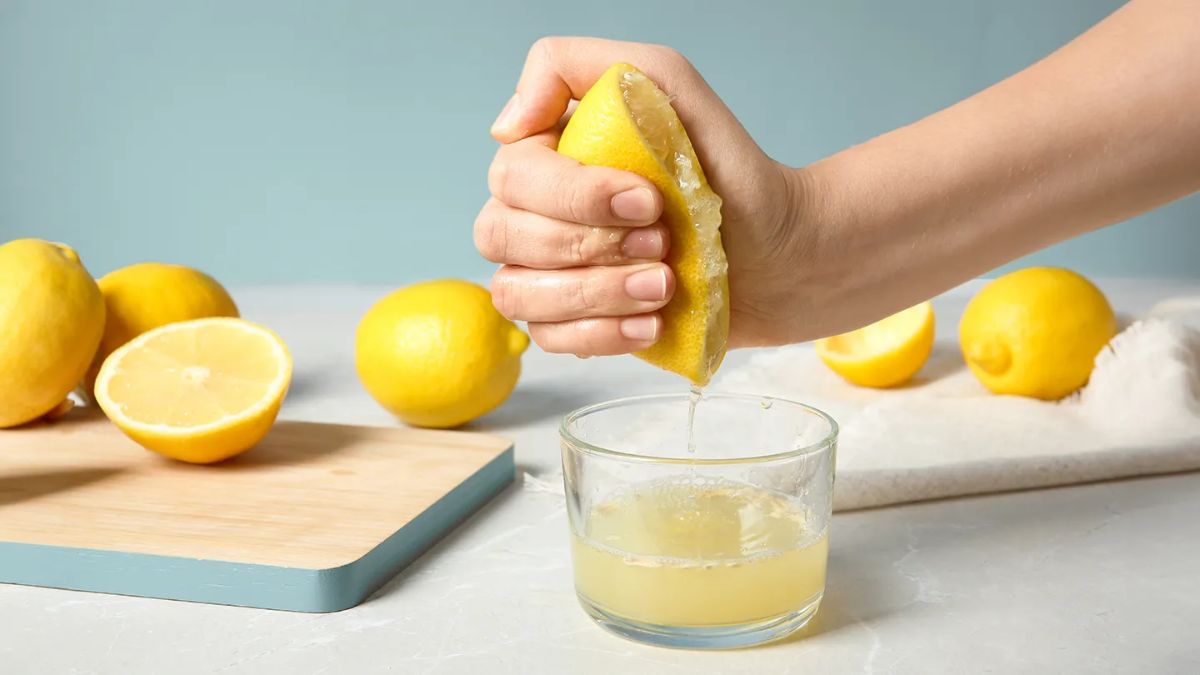
The main chemical compound in lemon juice is citric acid, with the formula C₆H₈O₇. The systematic IUPAC name of citric acid is 2-hydroxypropane-1,2,3-tricarboxylic acid.
Citric acid is a weak organic acid that gives lemons the sour taste and acts as a natural preservative.
Properties of Citric Acid
Citric acid is a white, crystalline solid, odourless with a strong sour taste. It is used as a preservative, flavour enhancer, and chelating agent. Below, we have shared the physical and chemical properties of citric acid.
Physical Properties of Citric Acid
Appearance: Colourless or white powder
Odour: Odourless
Taste: Strong, sour, acidic
Melting Point: Around 156 degrees Celsius
Boiling Point: Around 310 degrees Celsius
Density: About 1.66 g/cm3 (anhydrous), 1.542 g/cm3 (monohydrate)
Solubility: Highly soluble in water, also soluble in acetone, ether, ethyl acetate
Chemical Properties of Citric Acid
Composition: C₆H₈O₇
Acidity: Weak, tribasic organic acid
pH: Forms acidic solutions in water
Chelation: Binds with metal ions
Antioxidant: Helps prevent oxidation, extending shelf life
Uses of Lemon Juice
Lemon juice has various applications such as culinary, health and wellness, and household uses. Let us quickly look at the uses of lemon juice.
Culinary: Flavour enhancer, preservative, baking, marinading and tenderizing, and beverages like lemonade, cocktails, teas, and lemon water.
Health and wellness: Kidney health, digestive aid, skincare, iron absorption, immunity
Household: Natural cleaning agent for microwaves, cutting boards, polishing metals, odor eliminator, whitening, insect repellent.





Comments
All Comments (0)
Join the conversation