Key Points
- Magna Carta (1215) & Althing (930 AD) are early forms of representative governance.
- American (1776) & French (1789) Revolutions shaped modern representative democracy.
- India's 2024 elections (642M voters, 66.6% turnout) show resilience despite challenges.
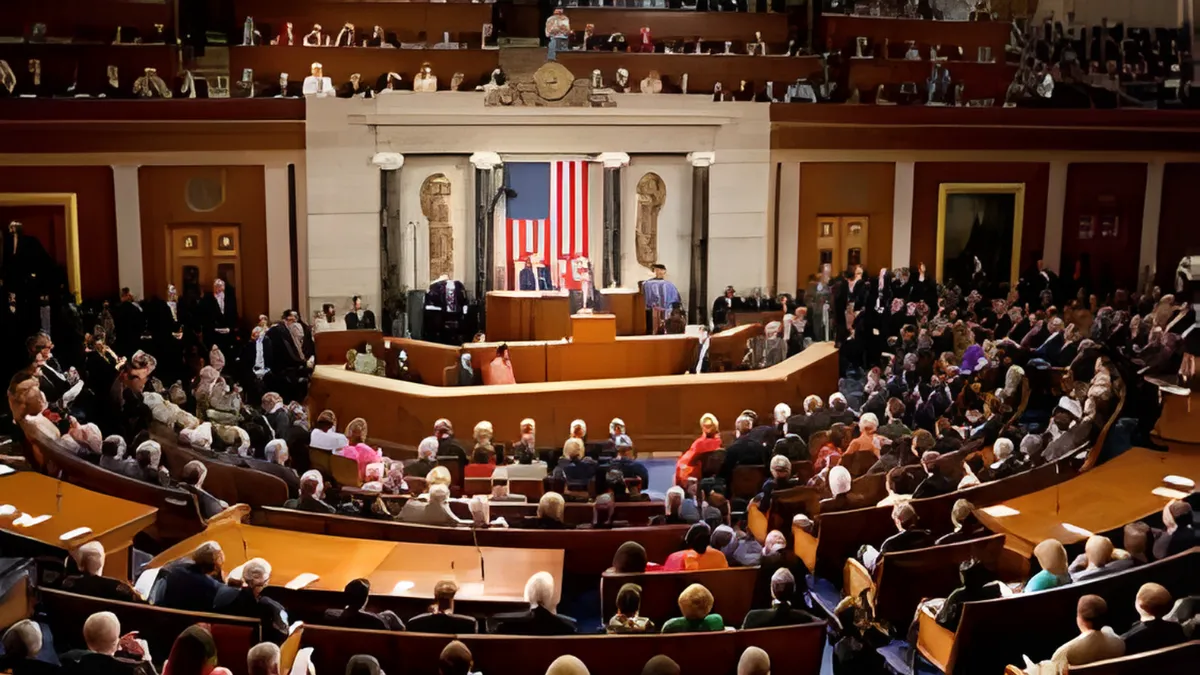
Representative democracy empowers the citizens of the big societies, as they elect the representatives to act on behalf of the people and maintain accountability as the citizens are elected through regular elections.
What is Representative Democracy?
According to Cambridge Dictionary, Representative democracy is a form of governance where the people elect individuals through free and fair elections to represent them in the legislative houses, make laws and check the executive.
These are the representatives, including the members of parliament or congress, who discuss the policies, and this is the reason why they have to balance the various views of the people, with the expertise of the person instead of making all the citizens vote on all matters directly.
In contrast to absolute monarchies, dictatorships, or pure democracies, it is focused on popular sovereignty, in which sovereignty is vested in the people, mediated by elected representatives who are required to represent the will of the constituents but are free to act in discretion.
What is the difference between Representative and Direct Democracy?
Direct democracy means that the people are directly involved in the law making process, such as in ancient Athens, with the free men of the country meeting and voting on the policies, or referenda such as those in Switzerland.
In representative democracy, this is scaled to millions by delegating power to elected officials, avoiding logistical meltdown, but introducing such risks as agency problems between principals and agents who will serve the interests of their constituents not their own or the voters.
It is appropriate to large, complicated states in that it enables the division of labor but its opponents claim that it places citizen power on a thin, as compared to direct systems.
Where and When Came Representative Democracy?
Its origins can be traced to medieval Europe where the Magna Carta of England (1215) restricted the powers of the king through the baronial councils, and the earliest parliaments called on the commoners to consent to taxes.
The Althing (930 AD), the oldest parliament in the world, of Iceland had chieftains as representatives of clans.
The intellectual foundations were made by enlightenment thinkers such as John Locke (consent of the governed) and Montesquieu (separation of powers), and they shaped feudalism-to-democracy transitions.
What was the Contribution of the American and French Revolutions?
The modern representative form of democracy, with a bicameral Congress elected by the states, presidential election by electors and a system of federalism separating powers, was pioneered by the American Revolution (1776) and the U.S. Constitution (1787), but specifically shunned pure direct rule as feared by the Anti-Federalists of mob rule.
The Revolution of 1789 in France was a replacement of absolutism by the National assembly, and it gave ideas of elected assemblies to Europe; it has been interrupted by Napoleon, and even after Napoleon, the ideas of the elected Assembly have spread all over the world, and reforms such as the 1832 Reform Act in Britain have been inspired by the ideals of the National Assembly.
Which are the Pillars that Need to be in Place?
The most important tenets are universal adult suffrage (one person, one vote), free and fair elections, free of coercion, the rule of law binding everyone, including leaders, civil liberties (Speech, assembly) and the majority rule limited by minority rights.
These are codified in constitutions, such as specification of electoral systems and duration of terms, and checks such as judicial review.
Political equality does not allow any undue influence, and pluralism prevails as mutual points of view are in conflict.
What is the Importance of Electoral Accountability?
Elections serve as post facto: voters will reward or punish representatives depending on performance, which makes them responsive. This is enforced by mechanisms such as fixed terms (e.g. 2-6 years), recalls (certain U.S. states) and, in parliamentary systems, no-confidence votes.
Lack of accountability makes representation degenerate into oligarchy as witnessed by historical critics such as James Madison.
Key Components of Representative Democracy
What organizations are its support structure?
The legislature (usually unicameral or bicameral, to debate and make laws), the executive (presidents or prime ministers to implement policy), the independent judiciary (deciding on the interpretation of laws, the protection of rights), and the electoral organs (e.g. the Election Commission in India, to ensure integrity) are core institutions.
Candidates are nominated by political parties, who consolidate voter choice and constitute governments; they are checked by the civil society, media and ombudsmen.
What is the working of elections?
Elections include voter registration, nomination of candidates, campaigns, secret ballots, and counts through systems, such as first-past-the-post (winner-takes-all, such as India, UK), proportional representation (party lists proportional to vote share such as Germany), or a combination (such as New Zealand).
Voter participation, constitution of constituencies and adjudication of disputes make the results legitimate; digital applications such as EVMs make the elections modernistic but controversial.
What is the Role of Representative Democracy in India?
The Constitution of India grants India a parliamentary federal republic 543 Lok Sabha MPs directly elected under the FPTP system every 5 years, Rajya Sabha indirectly elected, President ceremonial, PM of Lok Sabha majority.
The system of Panchayati Raj is extended to the local levels; SC/ST/OBC reservations are used to guarantee equity.
What are the special problems of India?
It is plagued by dynastic politics (e.g., Nehru-Gandhi family), instability in coalitions, EVM tampering claims and power through money muscle politics.
However, the results of 2024 (642 million voters, 66.6% turnout) and judicial interference (e.g., NOTA) are a vote of resiliency.
It is improved by campaign finance restrictions, ranked-choice voting (to minimize negatives), citizen assemblies (abortion reform in Ireland), and such technology as blockchain voting. Artificial intelligence-based deliberation or participatory budgeting in the form of hybrid models would rejuvenate participation.
Also Read: Who is Rouble Nagi? Indian Won Global Teacher Prize 2026



Comments
All Comments (0)
Join the conversation