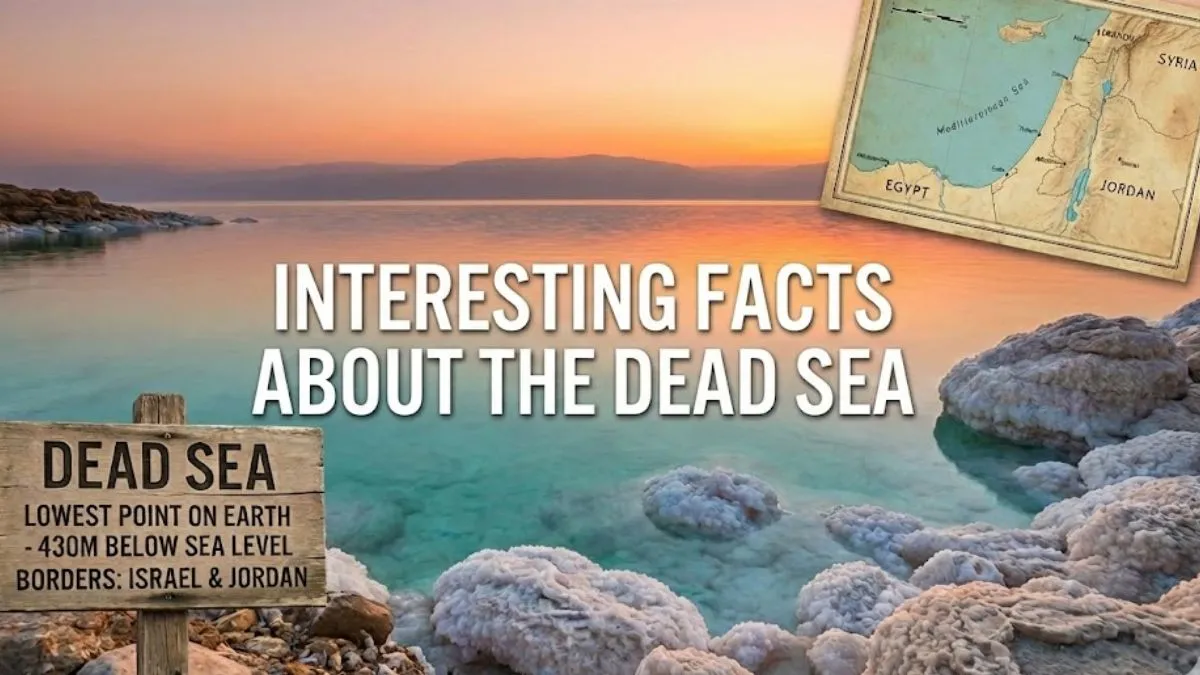
The Dead Sea is among the most illustrious natural features in the Middle East. Dead Sea, which is also known as Yam HaMelach in Hebrew (Yam meaning sea and Melach meaning salt). It is the largest lake in the world, which is famous due to its high level of salinity, mud laden with minerals and its medicinal properties. It is long and wide, and with a length of about 76 km and a width of 18 km, it is well known to be the most salty water on the surface of the earth.
In this article, we will uncover some Interesting Facts about the Dead Sea. Let’s dive into this article for more details.
Interesting Facts about the Dead Sea
Source: Tourist Jordan
1. The Dead Sea is in the Middle of Two Nations.
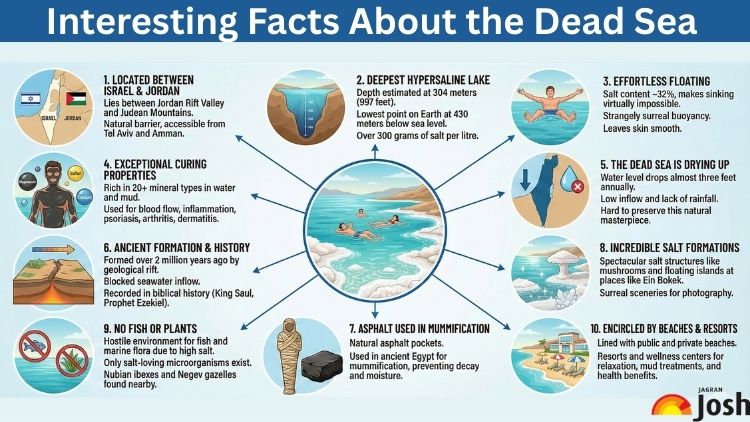
The Dead Sea lies between the Jordan Rift Valley on the east and the Judean Mountains on the west, creating a natural barrier between Israel and Jordan. It is located on the tip of the Jordan River, and it can be accessed in approximately 2.5 hours out of Tel Aviv or about 1 hour out of Amman. People traversing the Israeli territory to the Jordanian one can use the Jordan River/Sheikh Hussein Border Crossing and then make a short trip to the north-western part of the lake.
2. It is the Deepest Hypersaline Lake on Earth.
The Dead Sea is the deepest hypersaline lake on the planet, at an estimated depth of 304 meters (997 feet). It's water bears more than 300 grams of salt in every litre, and just to add to it, the surface is situated 430 meters below the sea level and is the lowest point on the Earth.
3. Floating can be done very easily
The salt content of the water varies at approximately 32, and thus, it renders sinking virtually impossible. When you put your foot in, you will find that the body somehow lifts towards the surface; it is a strangely surreal feeling. This strange buoyancy attracts tourists who come to fulfil their world as well as leaves your skin in a smooth and cool condition after absorbing the mineral water.
4. Its Waters have exceptional curing liabilities.
There are over 20 mineral types that are present in the water and mud of the Dead Sea that including magnesium, sulfur as well and calcium. Tourists usually smear the thick black mud on their bodies to enhance blood flow and lessen inflammation, and also treat long-term diseases like psoriasis, arthritis, and dermatitis. The therapeutic fame of the Dead Sea has been decades old.
5. The Dead Sea is Drying Up
In case visiting it is the item on your bucket list, you should plan it. The water level in the lake has been lowering by almost three feet annually. The decrease is primarily caused by low inflow of natural water sources and lack of rainfall. The experts suppose that the lake has been shrinking, yet at some point water can be at the same level; however, it is hard to preserve the remaining natural masterpiece.
6. When was the Dead Sea formed?
The history of the Dead Sea dates back more than two million years, when there was a geological change and a rift led to an elevation of land that was between the Mediterranean Sea and the Jordan Rift Valley.
This blocked the inflow of seawater to the area, leaving an inland lake isolated. It took several thousand years to have layers of clay, salt, sandstone and other sediments. The lake started evaporating more than 7,000 years ago, and this is the shape that it has today.
It is also recorded in biblical history, and some characters like the king Saul and the prophet Ezekiel are reported in the region.
7. It's Asphalt was used once to serve in the Ancient Mummification.
The lake has natural asphalt (bitumen) pockets deep in it. This substance was used in ancient times and was brought to Egypt, where it was supposed to help in the process of mummification, without the dead body decaying and keeping the moisture out. Its preservation and ritual value were due to the power of disinfectants it possessed.
8. Incredible Salt Formations adorn the Shore.
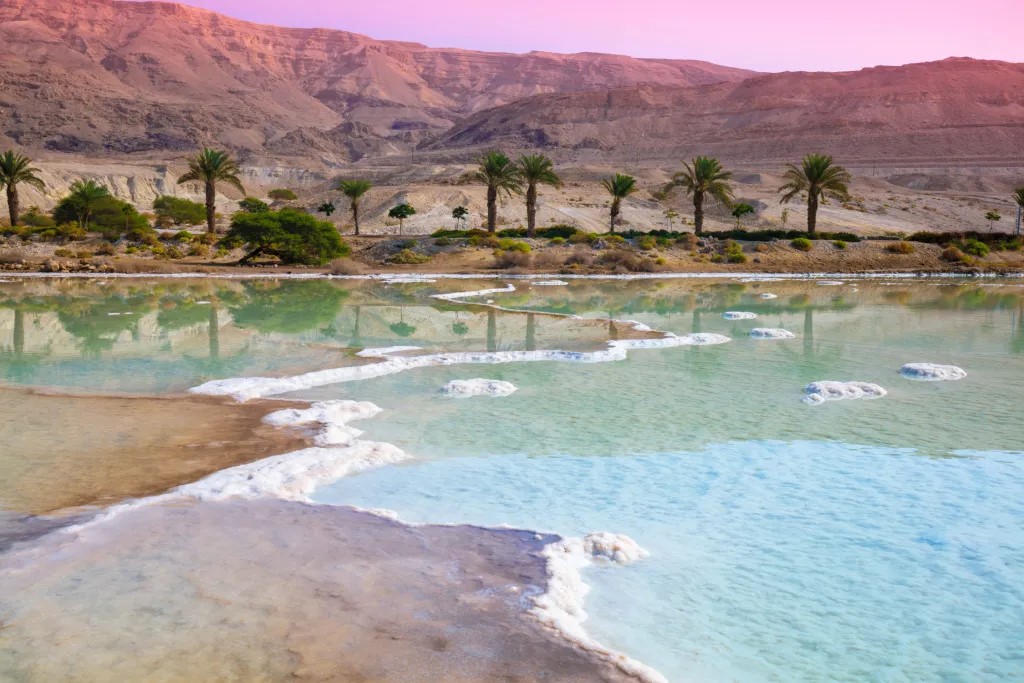
With water slowly dropping, spectacular salt structures, some mushroom-shaped or floating white water islands, appear in areas such as Ein Bokek Beach. These crystal-like and glittering buildings produce remarkable, surreal sceneries that are ideal for taking photographs, and provide an insight into the perpetual change of the lake.
9. There are no fish or plants that comprise the Dead Sea.
Its exceedingly high salt content renders the Dead Sea totally hostile to fish, flora and other marine hence its name. The waters are otherwise lifeless except in the case of some salt-loving microorganisms. But around the desert area, there are animal species like the Nubian ibexes and Negev gazelles that can be frequently found around the rocky area.
10. The lake is encircled by numerous Beaches.
Although the surroundings are very harsh, the beaches along the Dead Sea are beach-lined with public and private beaches, wherein the visitors can relax, enjoy themselves, float in the sea and have mud treatment. The coastline has resorts and wellness centres, which make it one of the favoured destinations by travellers who want to relax, appreciate nature, and acquire health benefits.
Conclusion
The Dead Sea is still among the most interesting natural phenomena in the world with a rich history, minerals, and amazing experiences. This ancient lake is still enticing curiosity and amazement since it can instinctively float or it is highly striking in its salt formations. It needs to keep its beauty which would allow people to observe its extraordinary beauty which is extremely rare in the future.


Comments
All Comments (0)
Join the conversation