
Each month, the Moon completes its orbit around the Earth and exhibits a cycle of changes known as moon phases. The Moon phases are the result of the variations in orbital positions of the Moon, the Earth, and the Sun, which determine how much of the Moon’s surface is illuminated when viewed from Earth. From the absent shape of the New Moon to the bright shape of the Full Moon, each moon phase is unique and has specific meanings, charms, and significance to science.
Moon phases have been used to create calendars, develop agricultural systems, and support different cultural and spiritual practices throughout history. By seeing how the moon's appearance changes over time, we can connect with the cyclical nature of the world around us, and we learn more about how celestial objects interact with one another in the universe. Whether you are an astronomer, sky-watcher, or someone who follows lunar rituals, learning about moon phases will enhance both your understanding of the night sky and your appreciation of its beauty.
Check Out: The History of Black Friday: How It Became America’s Biggest Shopping Day?
What are the different moon phases?
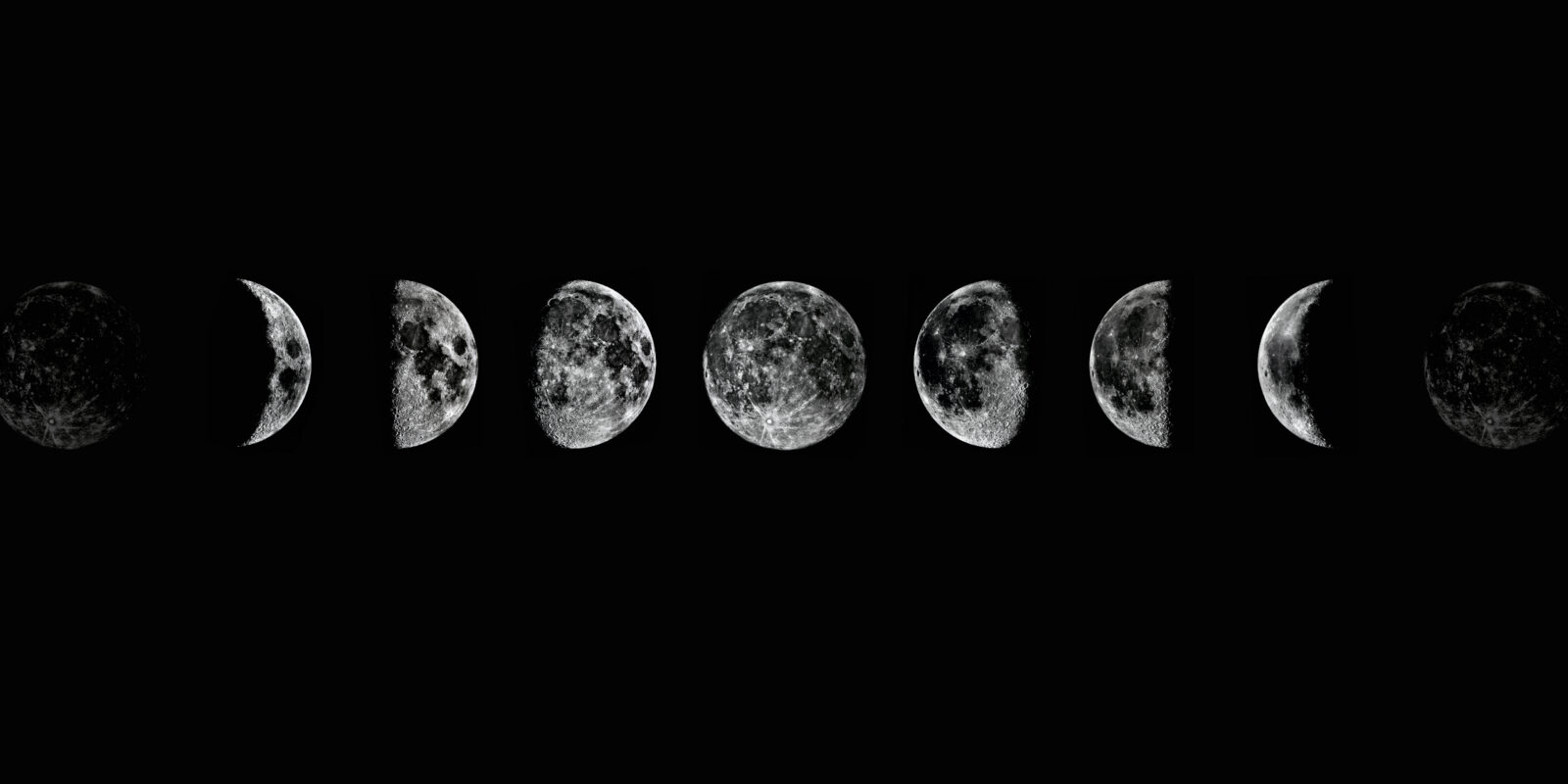
The eight main phases of the moon during the moon's 29.5-day cycle are as follows:
The moon revolves around the earth; thus, when the light from the sun hits, we see some of the illuminated half. Therefore, we refer to the phases of the moon.
1. The new moon is when the moon is positioned between the earth and the sun. The elumination (lighting) is hidden from the view of the Earth.
2. Waxing crescent - An illuminated sliver on the right of the moon is now present.
3. First Quarter - The moon looks like a full half circle illuminated on the right half of the moon
4. Waxing gibbous - The moon is more than a half-circle illuminated and close to a full circle, lit on both sides.
5. Full Moon - The entire face of the moon is illuminated and bright.
6. Waning gibbous - The lighting begins to lessen after full illumination.
7. Last quarter (third) is half-lit and illuminated on the left side.
8. Waning crescent - Only a small sliver of light remains; then the new moon reappears.
The full moon will repeat the above eight phases every month to give us the monthly routine.
What is today’s moon phase?
The Waning Gibbous phase of the Moon will occur in the United States on December 6, 2025 (one night after the Full Moon). This phase represents the Moon beginning to return towards Last Quarter, with a little bit of the surface area gradually dimming. Although the Waning Gibbous will be bright enough throughout the night, it will not be quite as bright as it was the previous night, so it is excellent for relaxing and observing the night sky late at night. The moon will be less blindingly bright than it was on the last night, giving the observer a more calming glow than the bright light of the Full Moon.
When is the next full moon?
Following the Cold Moon of December, the next Full Moon, known as the Wolf Moon, will rise on January 3, 2026, marking the first Full Moon of a new year as well as the beginning of a new lunar cycle after December's Cold Moon.
Conclusion
Each year has a unique cycle of the Moon's phases, which adds to the beauty of the night sky through its own distinct rhythm. December might contain a supermoon, or it may completely lack one. However, regardless of a particular year's December phase and supermoon cycle, the Moon will continue to travel gracefully through the sky each evening, regardless of what happens within the December cycle.




Comments
All Comments (0)
Join the conversation